Choosing a socket set can feel overwhelming with the variety of drive sizes, point configurations, and material options available. This guide explains the differences between 1/4, 3/8, and 1/2 inch drives, compares 6-point and 12-point sockets, covers chrome versus impact-rated sockets, and helps you select the right ratchets, extensions, and storage for your projects.
What a Socket Set Is and Who It Suits
A socket set is a collection of sockets, a ratchet handle, and often extensions and accessories that allow you to tighten or loosen nuts and bolts. Socket sets are essential for automotive work, furniture assembly, appliance repair, and general home maintenance. They suit anyone from a beginner DIYer to an intermediate hobbyist who needs a reliable way to fasten or remove threaded fasteners.
If you are building a home toolkit, a well-chosen socket set will cover most of the fasteners you encounter. For more guidance on building a complete toolkit, see our guide to home hand tool kits.
Drive Sizes and Their Typical Uses
The drive size refers to the square drive on the ratchet that the socket attaches to. The three most common drive sizes are 1/4 inch, 3/8 inch, and 1/2 inch. Each is suited for different fastener sizes and torque levels.
| Drive Size | Typical Socket Sizes (SAE) | Typical Socket Sizes (Metric) | Common Uses |
|---|---|---|---|
| 1/4 inch | 1/4 to 9/16 inch | 6 to 14 mm | Small fasteners, electronics, furniture assembly, light automotive work |
| 3/8 inch | 3/8 to 7/8 inch | 10 to 19 mm | General automotive, home repairs, medium-duty fasteners |
| 1/2 inch | 7/16 to 1-1/4 inch | 14 to 24 mm | Heavy automotive, suspension, large bolts, high-torque applications |
A 1/4 inch drive set is compact and ideal for tight spaces and low-torque work. A 3/8 inch drive is the most versatile for general home and automotive use. A 1/2 inch drive handles larger fasteners and higher torque, such as lug nuts and suspension bolts. Many DIYers start with a 3/8 inch set and add a 1/2 inch set later for heavier jobs.
6-Point vs 12-Point Sockets
Sockets are available in 6-point and 12-point configurations. The number refers to the number of corners inside the socket that engage the fastener.
6-Point Sockets
A 6-point socket has six internal corners and contacts the fastener flat on each side. This design provides a more secure grip and is less likely to round off the corners of a bolt or nut. For this reason, 6-point sockets are the preferred choice for most automotive and heavy-duty work, especially when the fastener is tight or rusted. They also allow for higher torque application without slipping.
12-Point Sockets
A 12-point socket has twelve internal corners, which allows it to engage the fastener in more positions. This makes it easier to use in tight spaces where the ratchet swing is limited, because you do not need to rotate the socket as far to find a new engagement point. However, 12-point sockets have less contact area on each flat of the fastener, making them more likely to round off the corners, especially on worn or soft fasteners. They are commonly used for applications where clearance is tight and torque is moderate.
For most home DIY work, a set of 6-point sockets is the better all-around choice. If you frequently work in confined areas, a few 12-point sockets in commonly used sizes can be helpful.
Shallow vs Deep Sockets
Sockets come in shallow (standard) and deep lengths. Shallow sockets are shorter and work well for fasteners that do not have a long threaded shaft or where clearance above the fastener is limited. Deep sockets are longer and can reach nuts on long studs or bolts, such as those found on exhaust manifolds or suspension components. A typical socket set includes both shallow and deep sockets in the most common sizes.
Chrome Sockets vs Black Impact-Rated Sockets
Chrome sockets have a shiny, plated finish and are designed for hand tool use with a ratchet or breaker bar. They are not intended for use with power tools, especially impact wrenches or impact drivers. Chrome is hard and brittle, and using a chrome socket on an impact tool can cause the socket to crack or shatter, sending sharp fragments flying. This is a serious safety hazard.
Impact-rated sockets are typically black in color (often with a phosphate or black oxide finish) and are made from a tougher, more ductile steel. They are designed to withstand the high torque and vibration of impact tools. Impact sockets are thicker-walled than chrome sockets and have a matte finish. Always use impact-rated sockets when working with any impact tool. Never use chrome sockets on an impact wrench or impact driver.
For hand ratchet use, chrome sockets are perfectly fine and often have a smoother finish that is easier to clean. For power tool use, impact sockets are required. Some DIYers choose impact sockets for all uses to avoid confusion, though they are heavier and bulkier than chrome sockets.
Features That Matter: Ratchets, Extensions and Storage
Ratchet Tooth Count
The tooth count of a ratchet determines how many degrees the handle must swing to engage the next tooth. A higher tooth count means a smaller swing arc, which is useful in tight spaces. Common tooth counts range from 24 to 72 or more. A 24-tooth ratchet requires about a 15-degree swing, while a 72-tooth ratchet requires only about a 5-degree swing. For most home use, a ratchet with 36 to 60 teeth offers a good balance of smooth operation and durability. Higher tooth counts often have finer internal mechanisms that can be more susceptible to damage under extreme torque, but for typical DIY work they perform well. Worth reading next: 7 Best Milwaukee Impact vs DeWalt Impact Options for 2026.
Extensions and Universal Joints
Extensions allow you to reach fasteners that are recessed or behind obstructions. They come in various lengths, typically 2, 3, 6, and 10 inches. A set of extensions in 1/4, 3/8, and 1/2 inch drive sizes gives you flexibility. Universal joints (also called swivel joints) allow the socket to pivot at an angle, which helps when the fastener is not aligned with the ratchet. Use universal joints with caution at high torque, as they reduce the amount of torque that can be safely applied and can wear out over time.
Storage Rails and Cases
Socket sets come in various storage options. Plastic or metal rails with clips hold sockets in place and keep sizes organized. Blow-molded cases keep everything together in a compact package. Metal cases are durable and stackable. For home use, a case or rail system that clearly labels each socket size is helpful. Some sets include a foam insert with cutouts for each socket, which makes it easy to see if a socket is missing. Choose storage that fits your workspace and keeps your sockets clean and organized.
SAE vs Metric
Socket sets are available in SAE (inch-based) and metric (millimeter-based) sizes. In the United States, many older vehicles and appliances use SAE fasteners, while newer vehicles and imported equipment use metric. For comprehensive coverage, consider a set that includes both SAE and metric sockets. Many socket sets are sold as combination sets with both systems. If you work primarily on one type of equipment, you may choose a set that focuses on that system. A typical home socket set includes sizes from 1/4 to 3/4 inch SAE and 6 to 19 mm metric, which covers most common fasteners.
Common Buying Mistakes
- Buying a set with too many 12-point sockets: As noted, 6-point sockets are less likely to round fasteners. Look for sets that are predominantly 6-point.
- Using chrome sockets with impact tools: This is dangerous and can cause socket failure. Always use impact-rated sockets with impact wrenches and drivers.
- Choosing a set with a low tooth-count ratchet: A ratchet with a coarse swing arc can be frustrating in tight spaces. Aim for at least 36 teeth.
- Buying only SAE or only metric: If you work on a mix of equipment, a combination set saves frustration.
- Ignoring storage quality: A set with poor storage can lead to lost sockets and disorganization.
- Buying a set with missing common sizes: Check that the set includes the sizes you use most often, such as 10, 13, 14, 15, 17, and 19 mm for metric, and 3/8, 7/16, 1/2, 9/16, and 3/4 inch for SAE.
For more on selecting hand tools, see our hand tools overview.
Care, Cleaning and Upkeep
Keep your sockets and ratchets clean and dry. Wipe off grease and dirt after each use with a clean rag. If sockets become rusty, clean them with fine steel wool or a wire brush and apply a light coat of oil. Ratchets should be lubricated periodically with a few drops of light machine oil on the head mechanism. Do not use penetrating oil as a lubricant, as it can wash out the internal grease. Store sockets in their case or on a rail to prevent them from rolling around in a drawer. Inspect sockets for cracks or wear, especially impact sockets that have seen heavy use. Replace any socket that shows signs of damage.
Safety Reminders
Always wear eye protection when using any socket tool, especially with impact tools. Ensure the socket is fully seated on the fastener before applying torque. Never use a socket that is cracked or worn. When using an impact tool, confirm that the socket is impact-rated. Keep hands and fingers clear of the area between the ratchet and the workpiece. Read and follow the manufacturer’s instructions for all tools and accessories.
Top Picks to Compare
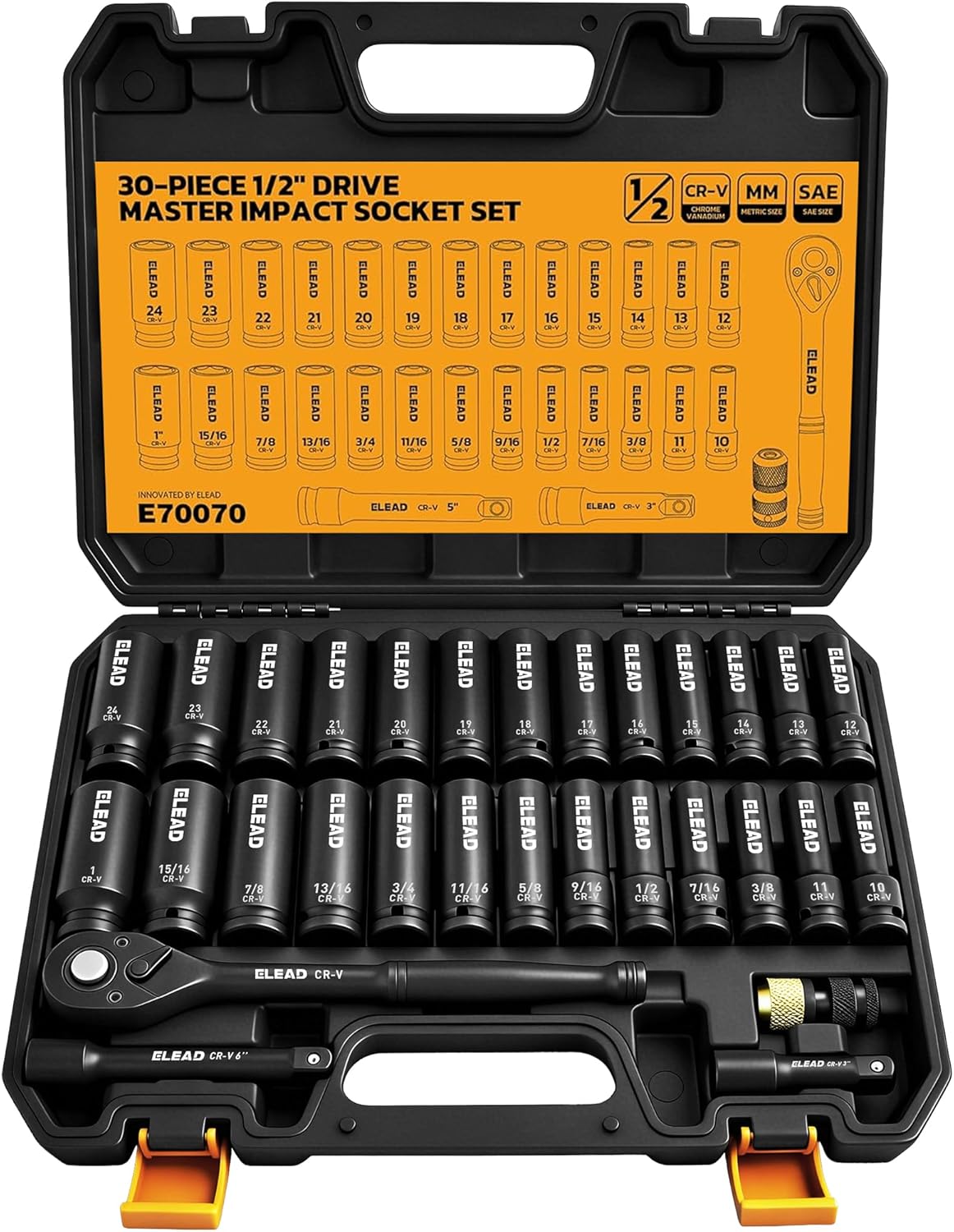
If you would rather start from a short list, these are popular options on Amazon for this search. Check each listing’s details, size and current price before you buy.




FAQ
What drive size should I start with?
Most DIYers find a 3/8 inch drive set the most versatile for general home and automotive work. It covers a wide range of fastener sizes and is compact enough for many applications. You can add a 1/4 inch set for small work and a 1/2 inch set for heavy jobs later.
Can I use 12-point sockets on 6-point fasteners?
Yes, a 12-point socket can fit a 6-point fastener, but it has less contact area on each flat. This increases the risk of rounding the fastener corners, especially under high torque. For critical or tight fasteners, a 6-point socket is safer.
What is the difference between chrome and impact sockets?
Chrome sockets are plated and designed for hand ratchet use. Impact sockets are made from tougher steel and have a matte black finish. Impact sockets are thicker and can withstand the vibration and torque of impact tools. Never use chrome sockets on impact tools.
Do I need both shallow and deep sockets?
Having both shallow and deep sockets in common sizes is helpful. Shallow sockets work for most fasteners, while deep sockets are needed for long studs or bolts. Many socket sets include both types.
For more detailed information on socket sets, including recommendations for building your collection, visit our socket sets guide.
Choosing the right socket set comes down to matching the drive size, socket type, and accessories to the work you do most often. Prioritize 6-point sockets for grip, use impact-rated sockets with power tools, and keep your set organized for easy access. With the right set, you will be prepared for a wide range of repairs and projects around your home.