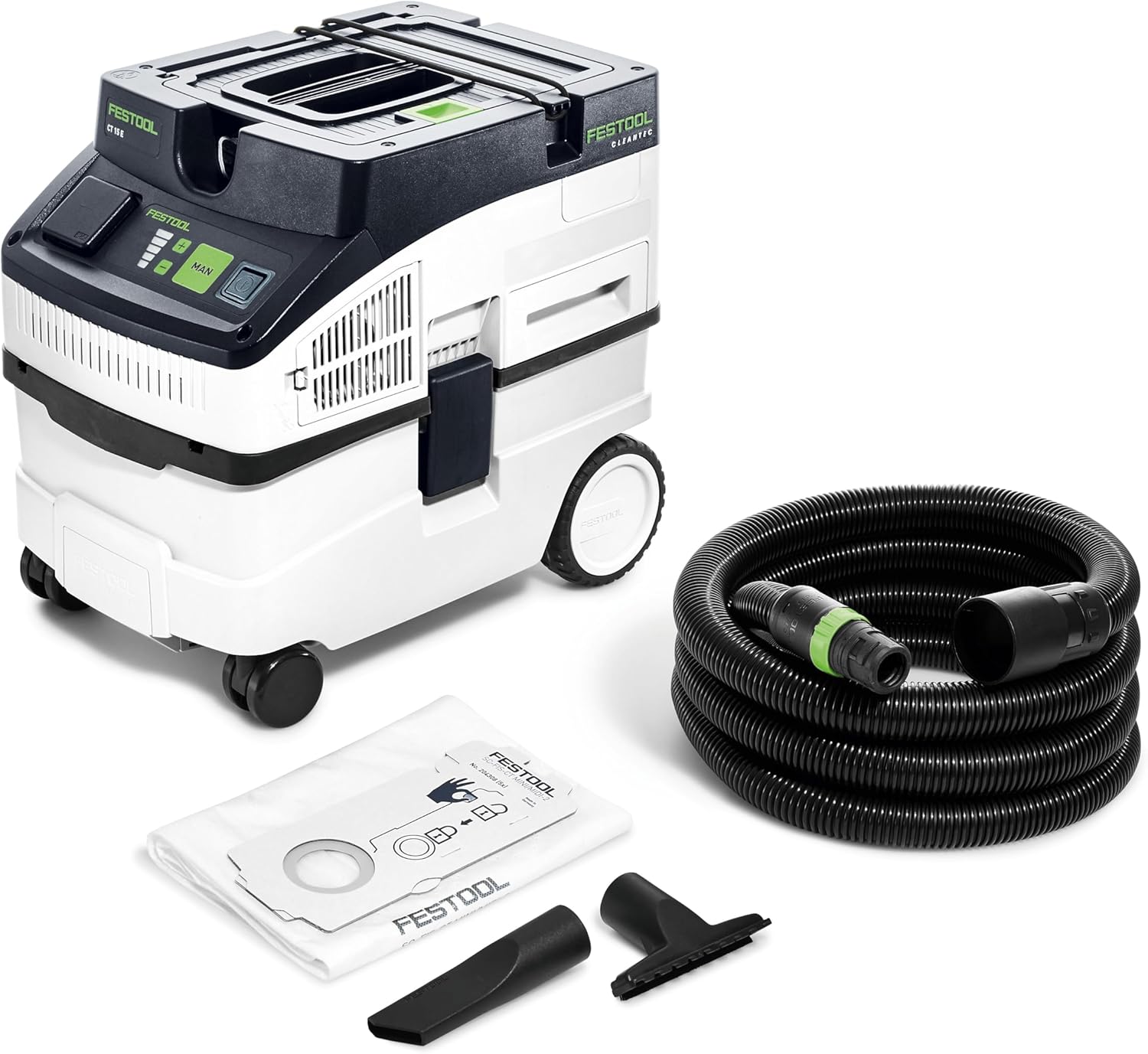
A wet/dry shop vacuum is one of the most useful tools in a home workshop. It picks up sawdust, spilled water, and general garage debris with the same machine, which is why most people reach for a shop vac before a regular household vacuum. The key is understanding what actually matters on the spec sheet: tank size, airflow, suction, hose size, and filters.
What a Wet/Dry Shop Vacuum Is
A wet/dry vac, also called a shop vac, is a canister vacuum built to handle both liquids and solids. Instead of depending only on disposable bags, it uses a tank and a filter system that handles dry dust and, on many models, water pickup. The motor pulls air through the tank, the filter catches particles, and the hose lets you direct the suction. Most units roll on casters and come with nozzles for floor, crevice, and tool cleanup.
Because they are durable and simple, shop vacuums suit beginners and experienced DIYers alike. They are the go-to tool for cleaning up after drilling, sanding, or sawing, and for the inevitable time a pipe drips or a basement collects water. You can find a model that fits your garage, closet, or utility room and expand it with accessories later. For a broader look at the category, see this shop vacuums overview.
Main Types and How They Differ
Most home-shop models fall into three broad types. Compact canister vacuums are small, light, and easy to lift or carry. They work well at a workbench, in a car trunk, or in an apartment where you need occasional cleanup. Their smaller tanks fill quickly, but they take up little storage space and are simple to haul to a job site.
Mid-size utility drums are the most common choice for a home garage or woodworking shop. They balance tank capacity, airflow, and floor footprint, and they usually come with a practical set of nozzles. A mid-size unit is a safe default when you are not sure what you need.
Large rolling models have bigger tanks, stronger airflow, longer hoses, and often easier tank access. They suit finishing a basement, gutting a room, or collecting heavy sawdust from a full shop. The tradeoffs are weight, footprint, and cost. Before choosing, compare the spec sheet and think about where the vacuum will live when it is not in use.
| Type | Best suited for | Capacity | Mobility | Watch for |
|---|---|---|---|---|
| Compact canister | Bench, car, small spaces | Small | Carry handle, light | Frequent emptying |
| Mid-size drum | Home garage and workshop | Medium | Casters, short hose | Storage footprint |
| Large rolling | Renovation, heavy cleanup | Large | Wheels, long hose | Weight when full |
Tank Size and Weight
Tank size decides how often you stop to empty the drum. A small tank is fine for quick bench cleanup but frustrating for a long sanding session or a spill that keeps coming. Large tanks let you work longer, but they are heavier and harder to move, especially when full of liquid. A full water tank is very heavy, so check how the unit rolls and whether a drain cap or detachable tank makes emptying practical.
Weight matters in two places: the empty weight of the machine and the full weight of the tank. Look at the handle, the casters, and the overall balance. A vacuum that tips over when you pull the hose is a poor fit for a busy shop. Compare the spec sheet and, if you can, push a display unit across the floor before you buy.
Airflow vs Suction: CFM and Water Lift
Two numbers matter more than anything printed in large type on the box: airflow and suction. Airflow is measured in cubic feet per minute (CFM) and describes how much air the vacuum moves. Airflow carries loose debris along the floor and through the hose. Suction, often listed as water lift, describes the strength of the pull and is measured in inches of water lift. Suction holds the nozzle against a surface and lifts heavy liquid.
The two are related but not identical. A fan that moves a huge volume of air may have modest suction, while a motor with strong suction may move less air. For workshop cleanup you want a reasonable balance. If you will vacuum a large floor area, focus on airflow. If you will clean a car interior, unclog a drain line, or pick up standing water, focus on water lift. Manufacturers usually list both, so use them together instead of relying on a single number.
Peak horsepower is a marketing figure that comes from a motor measurement with no fan attached. It does not tell you how the vacuum performs with a hose, filter, and debris. Ignore it and compare CFM and water lift instead.
Hose Diameter and Length
Hose diameter changes performance. A wider hose moves more air, which helps with sawdust and dry debris, but it is heavier and stiffer to handle. A narrower hose gives you more suction at the nozzle and fits smaller accessories, but it clogs more easily. Home-shop vacuums commonly use standard hose diameters such as 1-1/4 inch, 1-1/2 inch, and 2-1/2 inch. Make sure the hose matches the ports on your tools, or choose a model that includes a locking cuff and a step-down adapter.
Length also matters. A hose that is too short makes you drag the whole vacuum around, while a very long hose reduces airflow because the air travels farther. Most packages include a hose between 6 and 10 feet long, with longer hoses available on larger models. If you plan to vacuum a stairwell or a tall shelf, look for a unit with a longer hose or one that allows an extension. For nozzles, brushes, wands, and other add-ons, see this dust collection accessories guide.
Filters Explained
The filter is the part most people misunderstand. Standard cartridge filters catch everyday dust and work for general dry cleanup. They are washable and reusable on many models, but they do not capture very fine particles. Fine dust filters trap smaller particles and are a good upgrade if you sand often. Where a manufacturer states a HEPA rating, the filter is designed to capture even more particles and is typically used for jobs that produce very fine dust.
If you vacuum drywall dust or silica dust, you need a fine dust or HEPA-rated filter, and you must follow the manufacturer’s instructions. Without the right filter, fine dust passes through the motor and back into the air. Filter bags are an add-on that fits inside the tank. The bag catches the bulk of the debris, so the main filter stays cleaner and you empty less fine dust. Bags work well for sawdust, drywall dust, and general shop debris, but you remove them for wet pickup. For fine dust, use a bag and a fine dust filter together.
Wet Pickup and Float Shutoff
Most wet/dry vacuums can pick up water, but the filter setup has to change. Many models require you to remove the cartridge filter or switch to a dedicated wet filter before sucking up liquid. Check the manual and follow that step. Inside the tank there is a float shutoff. When the liquid reaches a certain level, the float rises and stops the airflow so the motor does not pull water into itself. When the float shuts off, turn the motor off and empty the tank.
Do not vacuum flammable liquids such as gasoline or solvent, and do not vacuum hot ashes or embers. The motor can ignite fumes, and hot material can melt or start a fire. Never vacuum hazardous dust such as drywall or silica without the right filter and the manufacturer’s guidance. If you alternate between wet and dry tasks, switch filters as the manual says, and let the tank dry before storing it.
Blower Port, Noise, and Mobility
Some vacuums include a blower port, which attaches the hose to the exhaust side of the motor. This turns the vacuum into a powered air stream for blowing sawdust out of corners, clearing a driveway, or inflating an air mattress. It is not the main reason to buy a vacuum, but it is a practical feature if the machine already lives in the shop.
Noise is a real issue with all shop vacuums. They are noticeably louder than household vacuums, so wear hearing protection and run the machine at reasonable times. Some models enclose the motor or use a larger muffler to reduce sound. Compare the spec sheet and listen to a display unit if you can.
Mobility depends on wheels, casters, and handle design. Look for wheels that roll smoothly on concrete, a handle that lets you steer without bending, and a hose that reaches the floor without pulling the vacuum over. A wide wheelbase helps stability on uneven garage floors. If you will carry the vacuum up stairs, weight matters as much as tank size.
Common Buying Mistakes
- Buying on peak horsepower. It is a marketing number and does not reflect real cleaning performance.
- Choosing an oversized tank. A huge tank is heavy and hard to store; match the size to your space.
- Ignoring filter costs. Some filters are expensive and need regular replacement; check availability.
- Forgetting wet pickup. If you plan to vacuum water, make sure the model supports it and the filter switches simply.
- Mismatching hose size. A hose that does not fit your tool ports or accessories makes the vacuum hard to use.
- Skipping dust collection. For a complete workshop setup, pair your vacuum with a dust collection and cleanup plan.
Care, Cleaning, and Upkeep
Empty the tank after every use, especially after wet pickup. A damp tank can develop odor, so rinse it out and let it dry with the lid off when you have sucked up water. Check the filter and clean or replace it according to the manual. After a job that produces fine dust, do not empty the filter into your face; wear respiratory protection and work outside if possible.
Before you change a filter, empty the tank, or clear a clog, unplug the vacuum or remove its battery. Look inside the tank for debris wrapped around the float, and clear the hose by pushing it through with a broom handle or using the reverse-airflow feature if the model has one. Wear eye protection when emptying a dusty tank or clearing a blockage. Keep the outside clean, coil the hose loosely, and store the vacuum where it will not get knocked over. Do not run the vacuum without its filter or with a damaged cord, and always follow the manual.
FAQ
Can I use a shop vac to pick up water?
Yes, if it is a wet/dry model and you set it up for wet pickup. Remove or switch the filter as the manual directs, and let the float shutoff do its job. Never vacuum flammable liquids or hot ashes.
What is the difference between CFM and water lift?
CFM measures the volume of air the vacuum moves, which helps pick up loose debris over a large area. Water lift measures the strength of the suction, which helps hold the nozzle against a surface and lift heavy liquids. Compare both numbers rather than peak horsepower.
Do I need a HEPA-rated filter?
Only if you will vacuum very fine dust, such as drywall dust or silica, or if you want maximum filtration in a shop where particles stay in the air. Choose a filter the manufacturer rates as HEPA and replace it according to the manual. For ordinary sawdust, a standard cartridge or fine dust filter is usually enough.
Should I use a filter bag?
A bag keeps the main filter cleaner and makes emptying less dusty, which helps with fine dust and frequent use. Remove the bag for wet pickup, and check the manual to confirm the bag is compatible with your model.
Choosing a wet/dry shop vacuum comes down to matching the tank, airflow, suction, hose, and filter to the jobs you actually do. Start with a mid-size model if you are unsure, upgrade the filter for fine dust, and follow the manual for wet pickup and maintenance. That approach will give you a shop vac that makes cleanup faster and safer for years.