 By Caleb Morgan
Updated November 2026
An oscillating multi tool is used for precise, short-range work where a full-size saw or sander won’t fit or would cause damage. It rapidly vibrates a flat blade back and forth through a small arc, which lets it cut, sand, scrape and grind in tight spaces. This guide explains the most common jobs, how to match an accessory to each one, and where the tool falls short. For a deeper look, How Does an Oscillating Multi Tool Work? Parts, Motion and Blade Basics covers this in detail.
What the Tool Actually Does
Rather than spinning, an oscillating multi tool moves its accessory in a small back-and-forth motion, typically a few degrees per stroke at high speed. That motion concentrates force at the blade tip and keeps heat and vibration low, which is why it works well on delicate materials. Manufacturers generally describe oscillation speeds in the range of roughly 10,000 to 20,000 strokes per minute, though exact figures vary by model. The tool is most useful when accuracy matters more than raw speed.
Shopping for one? See our guide: Cordless Oscillating Multi Tool Dewalt vs Milwaukee: Which Should You Choose?.
Common Jobs for an Oscillating Multi Tool
Most people reach for this tool for one of four families of work. Each uses a different accessory, so the job usually determines the blade.
- Cutting: plunge cuts into drywall or subfloor, flush cuts against walls or trim, and cutting nails, screws or thin metal.
- Removing material: grout removal between tiles, old caulk, adhesive residue and mortar joints.
- Sanding: detail sanding in corners, along trim, and on curved or irregular surfaces.
- Scraping: removing old paint, sealant or flooring adhesive from tight areas.
How to Match the Accessory to the Job
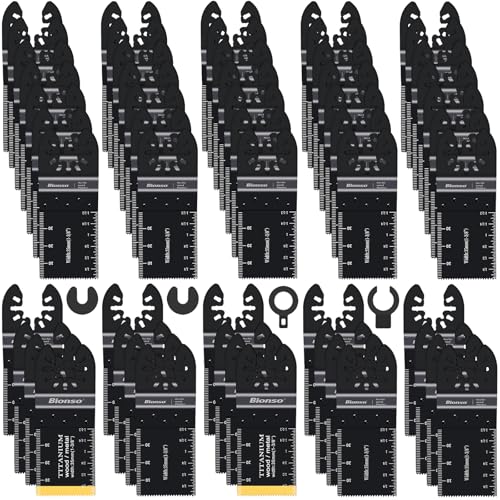
The blade does most of the work, so choosing it correctly matters more than the tool itself. Blades are generally sold in categories such as bi-metal for wood with embedded nails, carbide-grit for masonry and grout, and sanding pads or triangles in a range of grit sizes.
- Identify the material: wood, metal, grout, drywall, plastic or adhesive.
- Pick the blade category that the packaging lists for that material.
- Choose the grit or tooth pitch: coarser for fast removal, finer for a smoother finish.
- Confirm the blade shape fits the tool’s quick-change system before you buy a set.
Working Through a Typical Project
A common example is removing old grout from a tile floor. Set the tool to a moderate speed, attach a carbide grout blade, and run it along the joint with light pressure. Let the blade cut rather than forcing it, and keep it moving so it doesn’t overheat or chip the tile edges. Many homeowners find that vacuuming the debris as they go keeps the joint visible and the blade cooler.
For plunge cuts, the process differs. Tilt the blade slightly, start the tip on the surface, and gradually lower it into the material. Keeping the blade flat once it’s engaged helps avoid kickback. If you’re cutting into a wall, check for wiring and plumbing first, since the blade can’t be seen once it’s inside.
Common Mistakes to Avoid
- Pressing too hard. The tool cuts through oscillation, so heavy pressure slows it and wears the blade quickly.
- Using a wood blade on metal or masonry, which dulls fast and can break.
- Skipping a blade check before starting. Cracked or bent blades can snap during use.
- Working without eye protection and a dust mask, especially when cutting grout or drywall.
- Assuming it replaces a circular saw. It excels at small cuts, not long straight rips.
Recommended Gear
Choosing the right accessories makes the biggest difference to results.
- Carbide grout blades: designed for removing grout and mortar without rapid wear. View on Amazon
- Bi-metal blade assortment: covers wood with nails, metal and plastic in one kit. View on Amazon
- Sanding pads and triangles: useful for detail sanding in corners and along trim. View on Amazon
FAQ
Can an oscillating multi tool cut through metal?
Yes, with a bi-metal or carbide blade rated for metal, it can cut nails, screws and thin sheet metal. It’s slower than a dedicated metal saw, so it suits small jobs best.
Is an oscillating multi tool good for sanding?
It works well for sanding in tight spots, corners and curved surfaces where a random orbit sander won’t reach. For large flat areas, a larger sander is faster.
Do I need a special blade for every job?
Mostly, yes. Blades are matched to materials, so a wood blade won’t perform well on grout or metal. A general assortment covers most household tasks.
Conclusion
An oscillating multi tool is most valuable for precise cutting, material removal, sanding and scraping in confined areas. Matching the blade to the material, using light pressure and checking for hidden utilities will get you clean results. For a deeper look at specific jobs, see Uses for Oscillating Multi Tool: 8 Jobs It Handles Well (Guide) and Oscillating Multi-Tools: Blades, Plunge Cuts and Sanding Attachments.
Related reading
- What Is Oscillating Tool Used For? Common Jobs and How to Choose
- Harbor Freight Oscillating Multi Tool: What to Buy and How to Use It (2026)
Ready to choose one?
About Caleb Morgan
Caleb Morgan is part of our editorial team and reviews and edits our power tools guides, checking product details against manufacturer specifications and owner feedback.