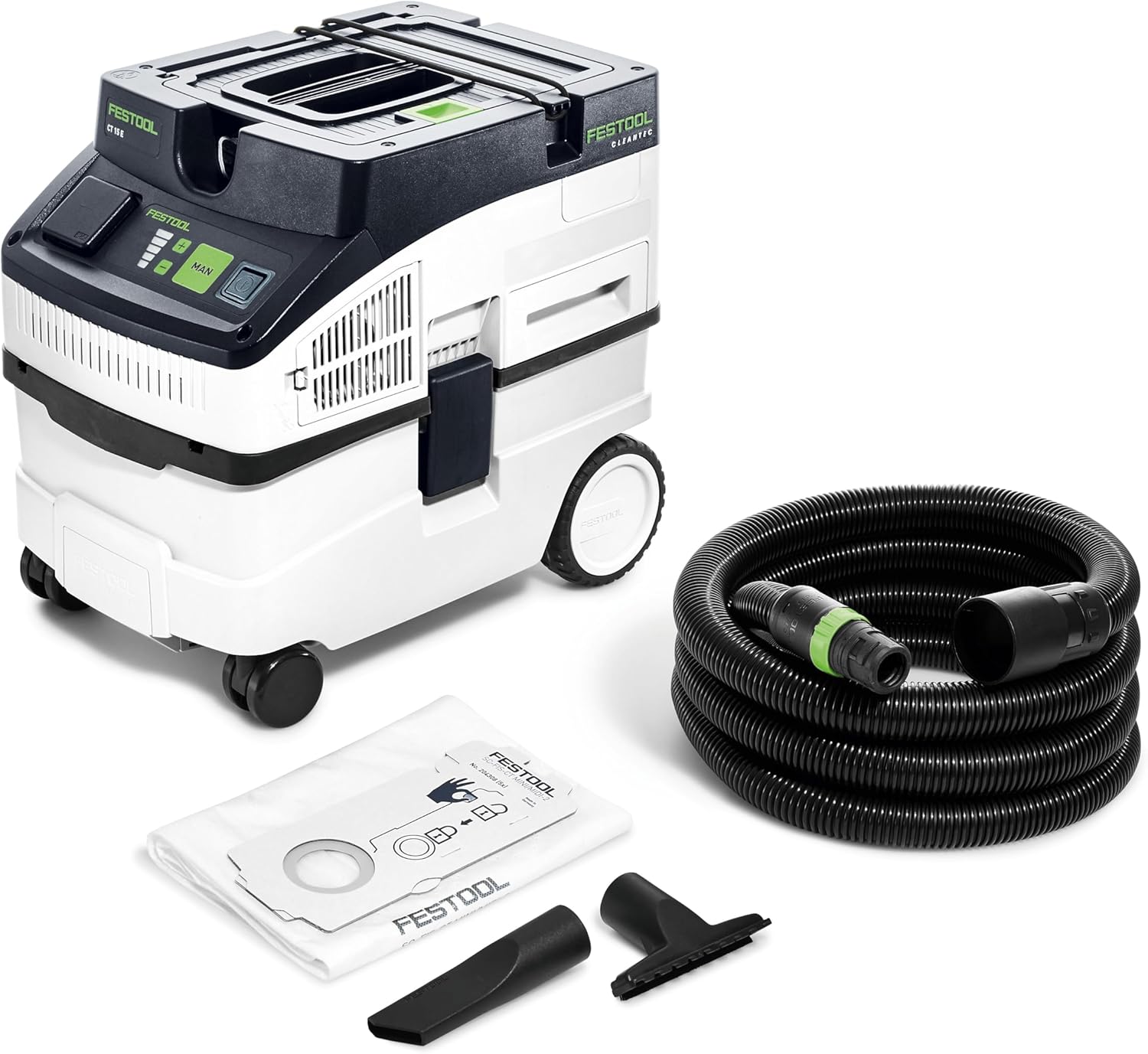
A dust extractor looks like a shop vacuum at a glance, but it is built for a different task: continuous collection of fine dust directly from a power tool. When you connect a sander, track saw, or grinder with a shroud to a dust extractor, the tool stays cleaner, the air stays breathable, and the filter keeps working instead of clogging. This guide explains how dust extractors differ from shop vacs, which features matter, and how to match the extractor, hose, and filter to your tools.
What a dust extractor is and who it suits
A dust extractor is a vacuum unit designed to capture dust at the source, usually through a hose connected to a tool’s dust port. It differs from a general-purpose shop vacuum in several key ways: it is tuned for steady airflow through a long tool hose, it has a filter system sized for fine dust, and it often includes an auto-start outlet so the extractor turns on and off with the tool you are using.
This kind of machine suits homeowners and DIYers who use power tools that produce large amounts of fine dust. Orbital sanders, track saws, circular saws, grinders with shrouds, and routers all benefit from active dust extraction. If you work indoors, in a garage, or in a space you share with family or pets, a dust extractor keeps the air much cleaner than a shop vacuum. It also suits anyone who wants less cleanup afterward, because most of the debris goes straight into the extractor drum instead of settling on shelves, floors, and workbenches.
A basic shop vacuum can still handle coarse debris like drywall chunks, wood shavings, and spilled screws. But when you are sanding paint or wood for long minutes, the fine dust quickly overwhelms a standard shop vacuum filter. A dust extractor is the better tool for that job.
How dust extractors differ from shop vacuums
Understanding the difference between a dust extractor and a wet/dry shop vacuum comes down to four main points: the air flow design, the filter system, the hose connection, and the power control.
Air flow and suction design
Shop vacuums typically generate high suction at the nozzle with a relatively closed airflow. Dust extractors are designed for a steady, high-volume airflow through a hose that stays connected to a tool. This matters because sanders and saws produce dust continuously, and the extraction system needs to keep up without stalling. Many dust extractors have a motor that produces a more consistent airflow across a range of hose lengths and tool connections.
Filter cleaning
Most dust extractors have a filter cleaning mechanism, often a button or lever that shakes the pleated filter or sends a pulse of air through it. This clears the collected dust off the filter surface so you do not have to stop work and manually tap or brush the filter as often. Standard shop vacuums rarely have this, which is why they lose suction quickly when you sand. A cleanable filter is one of the most practical reasons to choose a dust extractor for fine dust work.
Anti-static hoses and grounding
When dusty air moves quickly through a plastic hose, static electricity builds up. That charge can give you a small shock when you touch the hose or the tool, and it can also attract dust onto the hose surface. Many dust extractors come with anti-static hoses that include a conductive spiral inside, which is grounded through the extractor. This is especially useful with tools like sanders, where you hold the tool for long periods and the hose rubs against your arm or the workpiece.
Tool-matched hose diameters
Dust extractors use hoses with connection sizes that match common tool dust ports. Typical sizes are around 1-1/4 inches, 1-1/2 inches, and 2 inches, depending on the tool. A track saw or router may use a larger hose, while a small orbital sander uses a smaller one. The extractor usually includes an adapter set so you can fit different tools. The goal is a snug, airtight connection: too loose a fit means dust escapes at the joint and the suction drops.
Auto-start tool outlet
The auto-start outlet is one of the most convenient features on a dust extractor. You plug the sander, saw, or grinder into the outlet on the extractor, then switch the extractor to auto mode. When you pull the tool’s trigger, the extractor starts within a fraction of a second. When you release the trigger, the extractor runs for a short post-run time to clear the hose. This means you never reach over to turn the vacuum on and off, and you do not leave the extractor running while you reposition the workpiece.
Not every dust extractor has an auto-start outlet. If you plan to connect tools with variable speed triggers, check that the auto-start works with the tool’s electronics. Some tools with soft-start or electronic speed control draw less current at startup, and the extractor needs to detect that. Read the manufacturer’s instructions for both the tool and the extractor to confirm compatibility.
Filter classes and when certified extraction matters
Dust extractors are often classified by filter efficiency. The classes describe how much dust the filter captures and how much can leak back into the air. Higher-rated filters capture finer particles and are suitable for more hazardous materials.
Standard and intermediate filters
Entry-level dust extractors usually come with a filter that captures the majority of wood dust and general construction dust. This is fine for sanding paint, wood, drywall joint compound, and most DIY materials. The filter is often a pleated cartridge that can be cleaned with the extractor’s cleaning mechanism. For ordinary home workshop use, this level of filtration is usually enough.
High-efficiency filters and certified classes
Some dust extractors have high-efficiency filters that meet recognized standards for fine dust capture. These are rated to capture a very high percentage of particles, including the fine dust that remains suspended in the air longest. The certification classes may be labeled with letters or numbers depending on the standard used in your region. For most homeowners, a high-efficiency filter is a worthwhile upgrade if you do a lot of sanding, because it keeps the air cleaner and the filter lasts longer between cleanings.
When certified extraction matters
Concrete and masonry dust contains silica. Breathing silica dust can cause serious lung disease, and official workplace guidance in the United States requires dust controls when cutting, grinding, or drilling concrete and masonry. That is why you will see dust control requirements tied to silica exposure on job sites. For a homeowner doing a one-off task such as cutting a few concrete blocks or grinding a small patch of mortar, the safest approach is to follow official guidance: use a dust extractor with a high-efficiency filter designed for that material, use water suppression where practical, wear a respirator rated for particulate dust, and work outdoors or with strong ventilation.
If you are working under rules that require certified extraction, such as certain contractor regulations or a rental agreement, check that the extractor carries the appropriate classification for that material. The manufacturer’s documentation will state which dust classes the machine can handle. Do not use a general-purpose extractor for silica dust unless the manufacturer explicitly rates it for that task. When in doubt, check the extractor manual and the official guidance for your state or locality.
Even with the right extractor, you still need respiratory protection. A dust extractor reduces airborne dust but cannot remove every particle. For concrete, masonry, or any material that may contain silica, follow the official dust control guidance and wear a properly fitted respirator with a particulate filter rated for silica dust.
Connecting extractors to sanders, track saws, and grinders
Each tool type connects to a dust extractor a little differently. The hose diameter, the adapter, and the way the tool generates dust all affect how well the setup works.
Sanders
Orbital sanders and detail sanders usually have a small dust port that accepts a 1-1/4 inch hose or an adapter. The sander’s dust port is open to the paper, so the extractor’s airflow pulls dust through holes in the sandpaper. For best results, use sandpaper with matching dust holes and keep the paper clean. A sander that is clogged with dust cannot extract properly, and the sanding finish suffers. Most dust extractors include a small hose or a stepped adapter that fits common sander ports. You may need to hold the hose connector near the sander port if your specific sander uses a proprietary connection, but many modern tools match the common sizes.
Track saws
Track saws have a larger dust port, often around 1-1/2 inches or 2 inches. The extractor needs a hose that matches that size to handle the large volume of sawdust the saw produces. A hose that is too small or that fits with a loose adapter will leave sawdust along the cut line and reduce visibility. Track saws also blast dust upward at the blade, and the shroud around the blade directs it into the port. With the right hose and a tight connection, a track saw can cut almost dust-free, which is a major benefit for indoor work. Some track saws have a rubber collar on the dust port that creates an airtight seal with the hose.
Grinders with shrouds
Angle grinders used for cutting or grinding concrete, masonry, or metal produce a lot of debris. A grinder shroud fits over the guard and connects to a dust extractor hose. On concrete and masonry, the official guidance is to use a shroud with dust extraction and a respirator. The shroud must be designed for your grinder size and blade diameter, and it should enclose the blade as much as possible while still allowing you to see the work. The extracted dust goes through a large-diameter hose to the extractor. The airflow volume is important here, because a grinder produces heavy debris, not just fine dust. A high-efficiency filter is strongly recommended when working on concrete or masonry. Do not use a standard shop vacuum for this task unless it is equipped with a filter rated for the material and the manufacturer approves the use.
When connecting any tool, always remove the plug or battery before changing blades, discs, or sanding pads. Keep the guard and shroud in place and follow the tool manual.
Noise and mobility
Dust extractors are not quiet. They run continuously while the tool is running, so the noise adds to the sound of the sander or saw. Some extractors are quieter than others, but none is silent. If you work in a home with other people, place the extractor as far away as practical, use a longer hose, or schedule noisy work for a time when it will not disturb others. Wear hearing protection when running loud tools and the extractor together.
Mobility matters more than you might expect. A dust extractor on wheels with a hose holder and cord wrap is much easier to move around a room or between a garage and driveway. Look for a unit with a low center of gravity so it does not tip when you pull the hose across the floor. Some models have a handle that lets you tilt and roll the machine like a cart. The hose should be flexible enough to follow the tool without dragging it off the work surface.
For outdoor work, such as cutting concrete blocks, you still want the extractor close to the work area. A long hose can create enough restriction that the extractor loses airflow. Keep the hose as short and straight as the layout allows, and avoid kinks at corners.
Key features to compare before buying
When you compare dust extractors, focus on the features that affect daily use rather than the maximum rated power on the box. The most important features are the filter cleaning system, the auto-start outlet, the hose size and length, and the compatibility with your tools.
Filter cleaning system
Look for a cleanable pleated filter and a cleaning mechanism you can operate easily. Some cleaning systems require you to turn off the extractor, others can be used while it runs. A good cleaning system keeps suction strong through a long sanding session.
Auto-start and post-run function
Check that the auto-start outlet has enough power for the tool you plan to plug into it. Sanders and routers typically work fine. Large circular saws or grinders may draw more current, so confirm the outlet rating against the tool’s requirements in the manual. Also check whether the post-run time is adjustable or fixed; some models let you choose a longer or shorter delay.
Hose and connections
Hose diameter affects airflow and suction. A large hose moves more air but is heavier and stiffer. A small hose fits into tight spaces but restricts airflow. Many extractors ship with one hose and a set of adapters. If you already own tools with different port sizes, compare the included adapters before buying. Consider whether you need an anti-static hose; if you live in a dry climate or work with sanders, it is a nice feature that reduces static shock and surface dust attraction.
Noise level
Noise ratings are not always comparable between brands, but you can usually find a decibel figure in the spec sheet. A difference of a few decibels is noticeable. If you can, try to hear the extractor with a hose attached, because the sound changes when the hose is connected.
Filtration level
Decide whether you only need wood dust filtration or a higher-efficiency filter for concrete and masonry work. If there is any chance you will cut or grind cement-based materials, choose a model with a filter class rated for that duty. You can also look for bags or liners that make emptying easier; fine dust is messy to dump from a bare drum.
Common buying mistakes
One common mistake is buying a dust extractor that is too small for the tools you own. A small extractor with a narrow hose may be fine for a detail sander but will struggle with a track saw or grinder. Match the extractor to your largest dusty tool, not your smallest. Conversely, a large extractor with a heavy hose can be awkward for overhead sanding. Think about what you actually do most.
Another mistake is ignoring the filter class and using the extractor for silica dust without checking the rating. This is not just about longevity; it is a health issue. For concrete and masonry, use an extractor that is explicitly rated for the dust and wear a respirator. A second mistake is fitting a hose loosely and calling it good. A loose connection lets dust escape at the joint, which defeats the purpose. Use the correct adapter or a short section of flexible rubber to make a seal.
People also forget that filter maintenance matters. A pleated filter that is never cleaned will clog and lose airflow, and the motor may overheat in some designs. Set a simple routine: after a heavy sanding session, use the cleaning mechanism, and empty the drum before it is completely full. A full drum reduces airflow even if the filter is clean.
Care, cleaning, and upkeep
Proper care starts with the filter. Most dust extractors use a pleated cartridge filter that can be cleaned by the built-in mechanism. When the container is about two-thirds full, empty it. Dragging a drum that is overly full is heavy and can pull collected dust past the filter. Use the manufacturer’s recommended bag or liner if one is available. Bags make emptying less dusty, and they also protect the filter from the largest debris.
Check the hose and connections for cracks, especially where the hose bends at the tool. A cracked hose leaks airflow and can become a place where dust collects. Wipe the hose with a slightly damp cloth when it is coated in a layer of fine dust. The anti-static spiral inside a hose can break if the hose is crushed or kinked sharply, so store the hose coiled loosely. Do not step on the hose or drive over it, and keep it away from hot surfaces.
Store the extractor in a dry area. Fine dust can absorb moisture and cake inside the drum. Before long-term storage, empty the drum, clean or replace the filter if it is coated, and make sure the outlet holes on the motor housing are clear. If the extractor has a foam pre-filter or a cartridge with a fine secondary filter, check its condition periodically. A damaged filter cannot be repaired and should be replaced. Use only the filter and parts recommended by the manufacturer. Never run the extractor without its filter in place, because dust will reach the motor and shorten its life.
Wet or dry? A note for general use
Most dust extractors are designed for dry dust only. They are not the same as a wet/dry shop vacuum. If you need to pick up a spilled container of water or clean a flooded corner, that is the job for a shop vacuum rated for wet pickup. Using a dry-only dust extractor to pick up liquid can damage the filter and the motor. Check the manufacturer’s instructions before using any vacuum for liquids. Many DIYers own both: a dust extractor for sanding and sawing, and a wet/dry shop vacuum for general cleanup. The two serve different roles, and a shop vacuum can be a fine choice for ordinary floor debris, while the dust extractor handles the fine dust from power tools.
| Feature | Typical Dust Extractor | Typical Shop Vacuum |
|---|---|---|
| Primary purpose | Continuous fine dust capture from a tool | General wet/dry cleanup and coarse debris |
| Auto-start outlet | Common, for turning on with the tool | Rare, usually manual start only |
| Filter cleaning | Built-in cleaning mechanism | Manual cleaning or no fine filter |
| Hose design | Tool-matched diameter, often anti-static | Large bulky hose for floor and nozzle use |
| Typical use | Sanders, track saws, grinders with shrouds | Sawdust on the floor, spills, workshop cleanup |
FAQ
Can I use a regular shop vacuum with a power tool dust port?
Yes, if the shop vacuum has a fine dust filter and you can fit the hose to the tool’s dust port. However, it will lack an auto-start outlet and filter cleaning, so you will need to turn it on and off manually and clean the filter often. For occasional sanding, a shop vacuum with a fine dust filter may be acceptable. For frequent sanding or for cutting concrete and masonry, a dust extractor designed for that duty is the safer, more effective choice.
Do I need a high-efficiency filter for woodworking?
For ordinary wood sanding, a standard pleated filter on a dust extractor captures most of the dust and keeps the air significantly cleaner than no extraction. A high-efficiency filter is a good upgrade if you do long sanding sessions or work in a shared space, because it catches finer particles and helps the air stay breathable. For concrete and masonry, a filter rated for that material is necessary, not optional.
What is the best hose size for a track saw?
Most track saws are designed for a hose diameter commonly offered with dust extractors, often around 1-1/2 inches or larger. Check your track saw manual for the exact dust port size, and choose the extractor hose that matches it. A smaller hose may fit with an adapter but can restrict airflow and leave dust along the cut. A tight connection matters more than the exact number.
Why does my extractor lose suction after a few minutes?
The most likely cause is a clogged filter. Use the extractor’s filter cleaning mechanism, then check whether the drum is full. A full drum blocks airflow even with a clean filter. Also check the hose for a kink or a clog at the tool connection. If the filter is damaged, replace it. If suction is still weak, make sure the hose adapter is not partially covering the tool’s dust port.
Choosing a dust extractor is about matching the machine to the kind of dust you make. If you sand, saw, or grind often, a dust extractor with an auto-start outlet, a cleanable filter, and the right anti-static hose will make the work cleaner, safer, and more comfortable. For any task involving concrete or masonry, follow the official silica dust guidance, use an extractor rated for that material, and wear a respirator. With the right setup, a dust extractor becomes one of the most useful parts of your workshop.