
 By Caleb Morgan
Updated November 2026
Shopping for a multi tool oscillating tool means weighing motor type, speed control, oscillation angle, blade-change system and how many accessories come in the box. This list compares five well-established models on those criteria, looking at product specifications, brand support and common owner feedback patterns rather than hands-on trials.
Our top picks at a glance
- 1
 TOP CHOICEBest overallDEWALT 20V MAX XR Oscillating Multi-Tool Cordless (DCS356B)View on Amazon
- 2TOP CHOICEBest for corded valueGALAX PRO Corded Oscillating Multi Tool Kit 3.5AView on Amazon
- 3
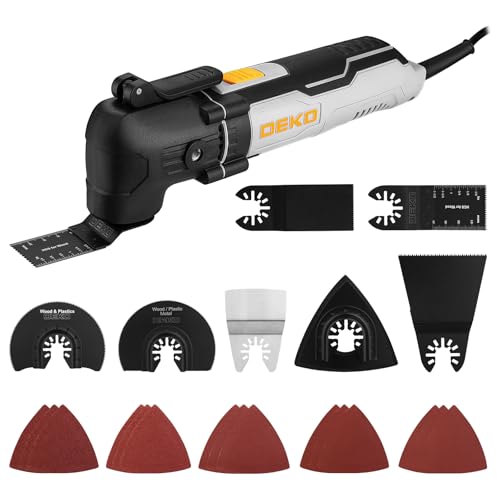 TOP CHOICEBest for accessory varietyOscillating Tool 2.5 Amp 22000RPM 3° Oscillating Multitool KitView on Amazon
- 4
 Best for a cordless starter kit20V Cordless Oscillating Tool with Battery, Brushless Variable SpeedView on Amazon
- 5
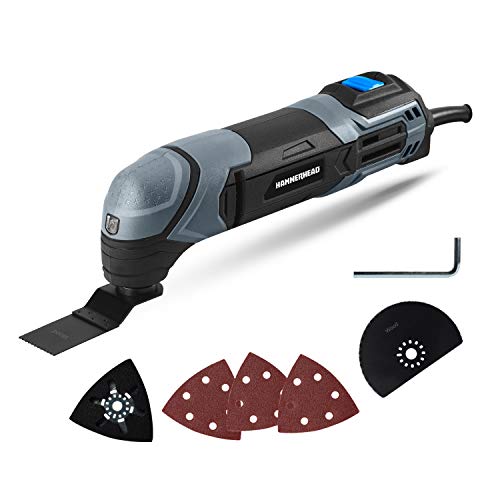 Best for light-duty home tasksHammerhead 2.2-Amp Oscillating Multi-Tool HAMT022View on Amazon
Our Top Picks
| Product | Best for | Key feature |
|---|---|---|
| DEWALT 20V MAX XR Oscillating Multi-Tool | Frequent cordless use | Brushless motor, variable speed |
| GALAX PRO Corded Oscillating Multi Tool Kit 3.5A | Shop work with an outlet nearby | 30-piece accessory set |
| Oscillating Tool 2.5 Amp 22000RPM Kit | Varied accessory needs | 22-piece kit, quick-lock blades |
| 20V Cordless Oscillating Tool with Battery | Cordless beginners | Brushless, 25 accessories |
| Hammerhead 2.2-Amp Oscillating Multi-Tool | Occasional household jobs | Starter blade and pad set |
DEWALT 20V MAX XR Oscillating Multi-Tool Cordless (DCS356B)
DEWALT 20V MAX XR Oscillating Multi-Tool Cordless, Variable Speed Brushless Motor Multitool with LED Light, Extended Runtime, Includes Two Wood Cutting Blades, Tool Only (DCS356B)
Best for: Frequent cordless use on DEWALT 20V MAX batteries.
Suited to users already invested in the DEWALT 20V platform who want a brushless, variable-speed tool that runs on shared batteries.
Pros
- Brushless motor with variable speed control
- Works with the existing 20V MAX battery line
Cons
- Battery and charger are sold separately, so total cost depends on what you already own
GALAX PRO Corded Oscillating Multi Tool Kit 3.5A
Best for: Shop and garage work where an outlet is within reach.
Well suited to people who want steady corded power and a large accessory set for woodworking and home improvement tasks.
Pros
- 3.5-amp motor provides consistent power without battery limits
- 30-piece accessory set and quick clamp blade system
Cons
- Cord limits reach in larger spaces
Oscillating Tool 2.5 Amp 22000RPM 3° Oscillating Multitool Kit
Oscillating Tool 2.5 Amp, 22000RPM, 3° Oscillating Multitool Kit with 22-Piece Accessories, 6-Speed Control, Quick-Lock Blade Change, ideal for Cutting,Sanding,Scraping&Grinding
Best for: Projects that call for many different blade types.
Aimed at hobbyists and homeowners who expect to switch between cutting, sanding, scraping and grinding in a single session.
Pros
- 22-piece accessory kit covers many common jobs
- Six speed settings and tool-free quick-lock blade changes
Cons
- Lower-tier accessory quality reported by some owners compared with name-brand blades
20V Cordless Oscillating Tool with Battery, Brushless Variable Speed
20V Cordless Oscillating Tool with Battery, Brushless Variable Speed Oscillating Multi-Tool with 3° Oscillation Angle, 25 Accessories, Ideal for Cutting, Sanding, Grinding, Scraping & More
Best for: Cordless beginners who want a battery included out of the box.
Fits buyers who want to start cutting and sanding without a cord, with a battery in the box and a 3° oscillation angle for controlled work.
Pros
- Battery included with a brushless motor
- 25 accessories ship with the kit
Cons
- Battery platform does not match other major brands, which limits shared-battery use
Hammerhead 2.2-Amp Oscillating Multi-Tool HAMT022
Hammerhead 2.2-Amp Oscillating Multi-Tool with 1pc Flush Cut Blade, 1pc Semicircle Saw Blade, 1pc Sanding pad, 3pcs Sanding Paper – HAMT022
Best for: Occasional household jobs and light trim work.
A practical match for homeowners who need a simple corded tool for the odd repair, sanding touch-up or small cut.
Pros
- Includes flush cut, semicircle and sanding accessories
- Lightweight and simple to operate
Cons
- Lower power than larger motors for dense material
Buying Guide
Power source: cordless or corded
Cordless models give freedom of movement, but battery platform matters, so check whether you already own compatible batteries. Corded tools deliver steady output without charging downtime.
Oscillation angle and speed range
Smaller oscillation angles, around 3 to 4.5 degrees, suit precise plunge cuts and sanding in tight spots. Variable speed lets you slow down for soft materials and run faster for metal or hard wood.
Blade-change system
Quick-clamp or tool-free systems save time when switching between blade types. Confirm the tool accepts standard accessory shanks so you are not locked into one brand’s blades.
Accessory kit contents
Count the blades and pads that come in the box and compare them with the jobs you plan to do. A large kit helps variety, but a few quality blades often beat a crowded set of weak ones.
Good picks for this: GALAX PRO Corded Oscillating Multi Tool Kit 3.5A and Oscillating Tool 2.5 Amp 22000RPM Kit
FAQ
What is a multi tool oscillating tool used for?
A multi tool oscillating tool rapidly vibrates a blade or pad back and forth over a small arc, which makes it useful for flush cutting, sanding in tight corners, scraping old adhesive and grinding small areas. Different attachments let one tool handle many jobs around the home or workshop. It is especially handy where a full-size saw or sander will not fit.
Is a cordless or corded oscillating multi tool better?
Cordless models offer freedom of movement and are convenient for work away from outlets or on ladders. Corded models provide steady power without battery charging, which many people prefer for longer sessions. The right choice depends on how often you work away from power and how much runtime you need.
What does oscillation angle mean for performance?
Oscillation angle describes how far the blade swings from side to side, and smaller angles like 3 degrees are common on compact tools. A tighter angle generally gives more controlled, precise cuts and less aggressive movement. Wider angles can remove material faster but may be less accurate in fine work. Worth reading next: 6 Best Oscillating Multi-Tool Blades of 2026: Buyer's Guide.
Do I need a tool-less blade change system?
A tool-less blade change lets you swap accessories by hand, which saves time when moving between cutting, sanding and scraping. Systems that need a separate wrench can slow you down, especially on jobs with frequent blade changes. For occasional use, a wrench-style system is usually fine.
Are the included accessories enough to get started?
Many kits include a mix of blades, sanding pads and sanding paper, which covers common household tasks right out of the box. Kits with larger accessory counts give more variety, though the quality of each piece matters as much as the quantity. You can always buy additional blades later for specialized materials.
Which blade types should I look for first?
Flush cut blades are a good starting point for trimming door casings and cutting close to walls, while semicircle blades suit tight curves and sanding pads help with finishing surfaces. Scraper and grout blades are useful for specific renovation work. Choose the blades that match the projects you tackle most often.
Conclusion
For most buyers who want a dependable cordless tool with strong brand support and a solid accessory set, the DEWALT model is a sensible pick, while those who prefer steady corded power and good value will find the GALAX PRO kit appealing. Budget-minded shoppers who need a broad accessory selection may look at the 2.5 Amp kit, and cordless users wanting a brushless motor and large accessory count should consider the 20V option.
Homeowners who only need occasional help with trimming, sanding and light cutting can choose among these models based on power source and included accessories, while frequent users should prioritize runtime, blade-change convenience and long-term battery availability.
Related reading
- Who Invented the Oscillating Multi Tool? The History Behind the Tool
- What Is an Oscillating Multi Tool Used For? Common Jobs and How to Start
- Using an Oscillating Multi Tool: A Step-by-Step Guide for Beginners
About Caleb Morgan
Caleb Morgan is part of our editorial team and reviews and edits our power tools guides, checking product details against manufacturer specifications and owner feedback.




