
 By Caleb Morgan
Updated November 2026
Choosing a miter saw for cutting trim comes down to three things: how wide a board it can handle, how accurately it holds common angles like 45 and 22.5 degrees, and whether it fits the space and budget you have. Baseboard, casing, quarter round and crown all demand clean, repeatable miters, and a saw that wobbles or drifts will leave gaps at every corner. The picks below were compared on specifications, brand reputation and the patterns owners tend to report, with a focus on accuracy, capacity and how well each option suits trim work. None of them were tested in our own shop.
Best overall: CRAFTSMAN Mitre Saw, 12-Inch Saw & Clamping Box – View on Amazon
Best for small kitchens: GARTOL 45-135° Adjustable Miter Shears – View on Amazon
Best precision layout aid: LEXIVON Aluminum Miter Saw Protractor – View on Amazon
Best for light metal and hobby work: VEVOR Mini Miter Cut-off Chop Saw – View on Amazon
Best budget pick: SKIL 10″ Dual Bevel Sliding Compound Miter Saw – View on Amazon
Best manual option: Hanpex 12 Inch Heavy Duty Mitre Box – View on Amazon
Our Top Picks
Before the individual picks, here is how they compare at a glance. Each row names the product, the job it suits best and the feature that most sets it apart.
Quick Comparison
| Product | Best for | Key feature |
|---|---|---|
| CRAFTSMAN Mitre Saw, 12-Inch Saw & Clamping Box | Long trim runs and casing | 12-inch blade with a built-in clamping box |
| GARTOL 45-135° Adjustable Miter Shears | Quarter round and PVC trim | Portable, dust-free angle cutting |
| LEXIVON Aluminum Miter Saw Protractor | Checking and setting angles | Laser-engraved, rust-proof scales |
| VEVOR Mini Miter Cut-off Chop Saw | Small pieces and hobby projects | Benchtop size with 0-45° range |
| SKIL 10″ Dual Bevel Sliding Compound Miter Saw | Baseboard and crown in most rooms | Dual bevel with sliding capacity |
| Hanpex 12 Inch Heavy Duty Mitre Box | Occasional trim and hand cuts | Impact-resistant ABS body with 45 and 90 degree guides |
CRAFTSMAN Mitre Saw, 12-Inch Saw & Clamping Box (CMHT20600)

CRAFTSMAN Mitre Saw, 12-Inch Saw & Clamping Box (CMHT20600)
Best for: Long trim runs and casing where a larger blade helps with wider stock
This is a good fit for a homeowner cutting baseboard, door casing and window trim across a full room or house. The 12-inch blade gives more cross-cut capacity than a 10-inch saw, and the clamping box helps hold the workpiece square. For another angle, check out Cutting Wood Safely: Saws, Kickback and Guards.
Key specs
- 12-inch blade diameter
- Miter cutting with angle stops
- Includes a clamping box for holding stock
Pros
- The larger blade handles wider casing and crown stock
- The clamping box keeps boards steady during cuts
- Simple setup suits occasional use
Cons
- Not a sliding design, so very wide boards need to be flipped
- Owners often recommend checking blade alignment out of the box
Bottom line: A strong first choice for a homeowner who wants one saw for most interior trim and does not need a sliding head.
View on AmazonGARTOL 45-135° Adjustable Miter Shears

GARTOL 45-135° Adjustable Miter Shears, Quarter Round Cutter for PVC & Trim | A portable, dust-free alternative to bulky saws. Delivers instant, precise angle cuts to save time and skip the guesswork
Best for: Small kitchens and quick quarter round cuts where a full saw will not fit
These are shears rather than a saw, so they suit thin trim, PVC moldings and quarter round rather than thick hardwood. They work well when floor space is tight or when you only need a few cuts.
Key specs
- Adjustable cutting range of 45 to 135 degrees
- Designed for PVC and trim stock
Pros
- Portable and requires no bench or power outlet
- Produces little or no dust compared with a saw
- Quick angle changes for inside and outside corners
Cons
- Not suited to thick or dense hardwood
- Cut quality depends on steady hand pressure
Bottom line: Best for light trim, PVC and quarter round in tight spaces, not for heavy framing or thick stock.
View on AmazonLEXIVON Aluminum Miter Saw Protractor (LX-230)
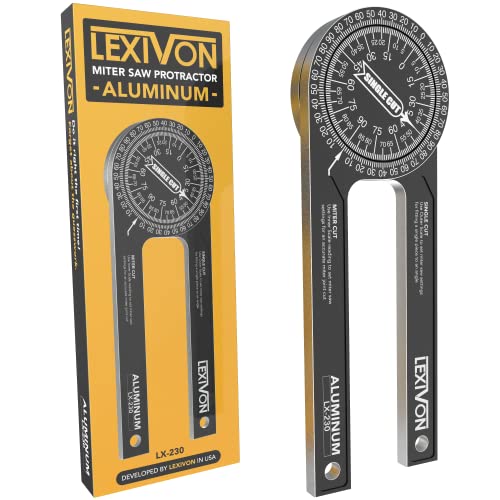
LEXIVON Aluminum Miter Saw Protractor | 7-Inch Rust Proof Angle Finder Featuring Precision Laser Engraved Scales (LX-230)
Best for: Checking and setting precision angles on any miter saw
This is a measuring aid rather than a cutting tool. It helps you verify that your saw’s detents and fences are truly at the angles printed on the scale, which matters a great deal for tight trim joints.
Key specs
- 7-inch angle finder
- Laser-engraved scales
- Rust-proof aluminum construction
Pros
- Helps find small errors in saw calibration
- Engraved markings resist wear better than printed ones
- Inexpensive way to improve joint fit
Cons
- Does not cut anything, so it is an accessory only
- Owners report it works best with a flat reference edge
Bottom line: A useful add-on for anyone whose trim joints open up, but not a substitute for a saw. If you want more background, see Ridgid 12in Miter Saw Alternatives: 7 Best Picks Compared (2026).
View on AmazonVEVOR Mini Miter Cut-off Chop Saw

VEVOR Mini Miter Cut-off Chop Saw, Two 2-5/16" Blade of Steel and Resin with 1/2inch Cutting Depth, 0-45° Benchtop Miter Saw for Copper, Aluminum, Wood, Zinc in Hobby Craft, 110V
Best for: Light metal and hobby work on a benchtop
This compact chop saw is built more for small stock, such as aluminum and copper pieces or craft wood, than for long trim boards. Its small table limits the length of material you can support.
Key specs
- Two 2-5/16 inch blades
- 0 to 45 degree miter range
- 1/2 inch cutting depth, per manufacturer
- 110V operation
Pros
- Small footprint fits on a workbench
- Cuts a range of materials beyond wood
- Simple operation for light jobs
Cons
- Limited cutting depth makes wide trim impractical
- Owners often note it needs a stable mounting surface
Bottom line: Suited to small metal and craft projects rather than whole-room baseboard, so choose it only if your trim work is minimal.
View on AmazonSKIL 10″ Dual Bevel Sliding Compound Miter Saw (MS6305-00)
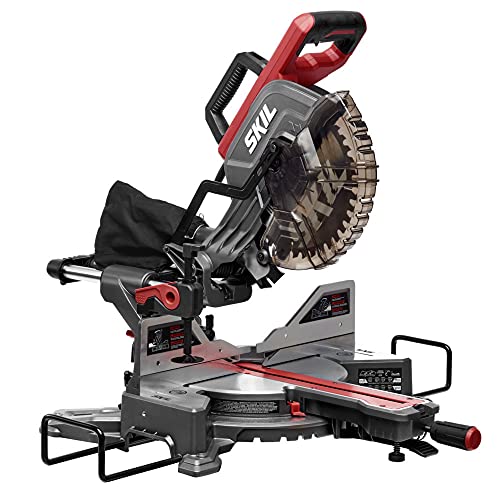
SKIL 10" Dual Bevel Sliding Compound Miter Saw-MS6305-00
Best for: Baseboard and crown in most rooms, especially where bevel cuts are needed
Dual bevel and sliding capacity make this a practical choice for crown molding, which is cut at compound angles, and for wider baseboard. A 10-inch blade is common for trim work and keeps the saw manageable.
Key specs
- 10-inch blade
- Dual bevel capability
- Sliding compound design
Pros
- Dual bevel handles crown molding without flipping stock
- Sliding head increases cross-cut capacity
- Accessible price tier for a sliding saw
Cons
- Owners sometimes report needing to fine-tune the detents
- Sliding rails require periodic cleaning to stay smooth
Bottom line: A solid budget pick for trim that includes crown or wide boards, provided you are willing to check the calibration.
View on AmazonHanpex 12 Inch Heavy Duty Mitre Box

Hanpex 12 Inch Heavy Duty Mitre Box Cuts both 45 degree and 90 degree Miter Angles for Accurate Cutting, Impact-Resistant ABS plastic Miter Box for DIYer, Woodworker, Woodcarver, Carpenter, Yellow
Best for: Occasional trim and hand cuts where no power tool is available
A mitre box guides a handsaw through fixed 45 and 90 degree angles. It takes more time and effort than a powered saw, but it needs no electricity and costs little to keep.
Key specs
- 12-inch capacity
- 45 and 90 degree cutting guides
- Impact-resistant ABS plastic body
Pros
- No power required, so it works anywhere
- Fixed angles reduce setup errors
- Lightweight and easy to store
Cons
- Requires a separate handsaw and steady technique
- Limited to 45 and 90 degree angles
Bottom line: Best for light, occasional trim work or for someone who prefers hand tools, not for large renovation jobs.
View on AmazonBuying Guide
Blade size and cut capacity
Blade diameter sets how wide a board the saw can cross-cut in one pass. A 10-inch blade handles most baseboard and standard casing, while a 12-inch blade gives more room for wide stock. Check the listed cut capacity at 90 and 45 degrees, not just the blade size.
Good picks for this: CRAFTSMAN Mitre Saw, SKIL 10″ Dual Bevel Sliding Compound Miter Saw
Sliding versus fixed head
A sliding head extends cross-cut capacity, which helps with wide boards. A fixed-head saw is usually simpler and easier to keep square. If you mainly cut narrow trim, a fixed head is often enough.
Good picks for this: SKIL 10″ Dual Bevel Sliding Compound Miter Saw, CRAFTSMAN Mitre Saw
Bevel capability
Crown molding is cut at compound angles, which requires both miter and bevel adjustment. If crown is part of your plans, look for a saw with a dual bevel or a reliable bevel stop.
Good picks for this: SKIL 10″ Dual Bevel Sliding Compound Miter Saw
Angle accuracy and calibration
Trim joints show every error. Check detents at 0, 22.5 and 45 degrees with a square or protractor, and recalibrate if the cuts drift. An accurate reference tool helps confirm your saw’s settings.
Good picks for this: LEXIVON Aluminum Miter Saw Protractor, CRAFTSMAN Mitre Saw
Portability and workspace
A benchtop or handheld option fits small spaces, while a larger saw needs a stand or wide bench. Measure your work area and the length of boards you will cut before buying.
Good picks for this: GARTOL 45-135° Adjustable Miter Shears, VEVOR Mini Miter Cut-off Chop Saw
Material type
Wood trim, PVC and metal each put different demands on a saw. Blade choice and feed rate matter more for metal. Confirm the saw is rated for the material you plan to cut.
Good picks for this: VEVOR Mini Miter Cut-off Chop Saw, GARTOL 45-135° Adjustable Miter Shears
Durability and care
Keep the blade sharp, clean sawdust from rails and detents, and store manual boxes dry. Owners often report that regular cleaning keeps sliding saws smooth and accurate longer.
Good picks for this: Hanpex 12 Inch Heavy Duty Mitre Box, SKIL 10″ Dual Bevel Sliding Compound Miter Saw
FAQ
What size miter saw is best for cutting trim?
A 10-inch saw covers most baseboard and standard casing. A 12-inch saw is useful for wider stock or crown. Match the blade to the widest board you expect to cut.
Do I need a sliding miter saw for baseboard?
Not always. A fixed-head saw handles narrow baseboard well. A sliding saw helps when boards are wider than the blade can cross-cut in one pass.
Can a miter saw cut crown molding?
Yes, but crown is usually cut at compound angles, so you need a saw with bevel capability. Some crown work is done with the molding lying flat against the fence, which is why many people look for a dual bevel model.
How do I check that my miter saw is accurate?
Make a test cut on scrap, flip the piece and join the two ends. A gap means the angle is off. A protractor or square can help you set the detents precisely.
Is a hand miter box good enough for trim?
For short, occasional pieces, a mitre box with a good handsaw can produce clean results. For long runs or large projects, a powered saw saves time and effort.
What safety steps should I follow when cutting trim?
Wear eye and hearing protection, keep hands clear of the blade path, and let the blade stop fully before lifting it. Clamp short pieces. If you are unsure about a safe setup, consult a qualified professional.
Conclusion
For most homeowners cutting interior trim, the CRAFTSMAN Mitre Saw is a practical starting point, and the SKIL 10″ Dual Bevel Sliding Compound Miter Saw suits crown and wider boards. Choose the GARTOL shears for tight spaces and light moldings, the VEVOR chop saw for small metal and hobby jobs, and the Hanpex mitre box for occasional hand cuts. The LEXIVON protractor is a helpful add-on for anyone who wants tighter joints, whichever saw you choose. For a deeper look at related setups, see Miter Saw for Baseboard: 5 Best Picks for Clean Trim Cuts (2026) and Miter Saw for Cutting Crown Molding: 5 Best Options for Clean Joints (2026).
Sources
- Workplace power tool and saw safety requirements and guidance (osha.gov)
- Consumer product safety information for power tools and cutting equipment (cpsc.gov)
- Measurement standards and guidance on angle and length accuracy (nist.gov)
Related reading
- 6 Best Miter Saws for Cutting Baseboard Picks for Clean Trim Work
- Top 7 Metal Cutting Miter Chop Saw Picks Compared for Metal Work
About Caleb Morgan
Caleb Morgan is part of our editorial team and reviews and edits our power tools guides, checking product details against manufacturer specifications and owner feedback.



