Some links on this page are affiliate links. If you buy through them, we may earn a commission at no extra cost to you. As an Amazon Associate I earn from qualifying purchases. Learn more ›
Best Cordless Tool Battery Chargers
Here is how the listed specs compare across ten cordless tool battery chargers, from Dewalt-compatible multi-port units to Kobalt and Ryobi-compatible options.
This post contains Amazon affiliate links. As an Amazon Associate I earn from qualifying purchases, at no extra cost to you.
Cordless tool battery chargers differ mainly in the battery platforms they support, their output voltage, the number of ports, and the charge time stated in each listing. This roundup covers ten chargers for common cordless platforms, with the picks ordered by their position in the list below.
These picks were chosen by comparing listing specifications and features, not by hands-on testing. This article does not reflect any use of the chargers. Check each listing for current price, availability and full details, and confirm that the battery platform matches your tools before you buy.
This is a third-party dual-port replacement charger for DeWalt 12V and 20V Max batteries, rated for 12V to 20V output at 3.5A with a USA plug. It suits DeWalt owners who need an affordable backup charger that can mount on a wall to keep a workbench clear.
Pros & Cons
Pros
Charges two batteries at once, which is useful for crews or anyone running multiple DeWalt packs
Wall-mountable design keeps the workspace tidy and off the bench surface
Compact size and simple plug-in setup make it easy to place almost anywhere
Competitive price for a backup or second charger compared with OEM options
Cons
This is a third-party replacement, not a genuine DeWalt charger, so some users may prefer OEM hardware and support
Product listing shows some inconsistent data, including differing brand names and a 4A current rating alongside a 3.5A output, so verify compatibility before purchase
Charging time claims of about 90 minutes for a 6.0Ah battery may vary depending on battery condition and charger load
Detailed Review
The DCB102 is a dual-port replacement charger built for owners of DeWalt 12V and 20V Max battery packs who want a second charging station. It is designed as a substitute for several DeWalt chargers, including the DCB112, DCB107, DCB118, DCB115 and CB104 models. It is best suited to home workshops, contractors and DIY users who need to keep several batteries topped up.
Its main strength is charging two packs at the same time, which reduces downtime when switching between tools on a job. The listing claims a 6.0Ah battery can reach a full charge in about 90 minutes, and two indicator lights on each stand show the status of each battery. The 100V to 240V input range also allows use with most household power supplies using a standard USA plug.
The charger has a compact body measuring roughly 6 by 3 by 2 inches, and the base includes holes for wall mounting. Mounting it on a wall or pegboard keeps the bench clear and makes the charger easier to find. Build quality appears reasonable for the price, though it is a generic-style housing rather than a premium OEM design.
The main drawback is that this is not an official DeWalt product, so compatibility depends on the seller's claims rather than DeWalt's engineering. Some listing details, such as the brand name and current rating, are inconsistent, which may cause confusion. Buyers who need guaranteed warranty coverage from DeWalt should consider an original charger instead.
Overall, the DCB102 offers practical value for DeWalt users who want an affordable, wall-mountable dual charger for everyday use. It is a sensible choice for budget-conscious owners and small workshops, while professionals who rely on genuine DeWalt parts may prefer to stick with the original equipment.
The DEWALT DCB1104 is a compact 4-amp charger for DEWALT 12V MAX, 20V MAX, and FLEXVOLT lithium-ion batteries, featuring a two-stage LED state of charge indicator and a body 15% smaller than the DCB115. It suits DEWALT tool owners who need a reliable, budget-friendly charger for job sites, garages, or a wall-mounted station.
Pros & Cons
Pros
Compatible with multiple DEWALT battery platforms, including FLEXVOLT
Compact and lightweight at 1.1 pounds for easy portability
Clear LED indicator makes it simple to know when batteries are ready
Cons
Wall mount screws are not included and must be purchased separately
Only one port, so it charges one battery at a time
Compatible only with DEWALT 12V MAX, 20V MAX, and FLEXVOLT batteries, not other brands or platforms
Detailed Review
The DEWALT DCB1104 is a single-port lithium-ion charger designed for owners of DEWALT 12V MAX, 20V MAX, and FLEXVOLT batteries. It is a practical choice for contractors, DIY enthusiasts, and homeowners who already own DEWALT cordless tools and want a dependable replacement or second charger.
Its 4-amp output gives it a noticeable speed advantage over slower chargers, with a typical charge time around 30 minutes for compatible batteries. The two-stage LED state of charge indicator provides a simple visual cue, so you always know when a battery is ready to return to work.
At 1.1 pounds and about 15% smaller than the DCB115, the DCB1104 is easy to pack into a tool bag or move between job sites. The built-in two-screw mounting option lets you secure it to a wall in a garage or workshop, though the screws must be purchased separately. The build reflects DEWALT's standard industrial finish in black, with UL certification for safety.
The main drawbacks are its single port, which means only one battery charges at a time, and the absence of mounting hardware in the box. It is also limited to DEWALT's 12V MAX, 20V MAX, and FLEXVOLT platforms, so it will not serve users with other tool brands.
Overall, the DEWALT DCB1104 is a well-reviewed, reliable charger that delivers exactly what most DEWALT owners need. For anyone invested in the DEWALT ecosystem, it is a sensible, affordable addition that performs consistently and fits easily into any workspace.
This is a 4-port replacement charger for DeWalt 12V and 20V MAX batteries, delivering 3 amps per port with all ports charging simultaneously. It suits tradespeople and DIY users who want a low-cost way to keep several DCB-series batteries ready at once.
Pros & Cons
Pros
Four ports charge simultaneously, which is useful for crews or multi-battery kits
Wide 100-240V AC input works with most power sources worldwide
Strong value compared with buying genuine DeWalt chargers
Compact, portable design with a convenient built-in USB charging option
Cons
This is a third-party replacement, not a genuine DeWalt product, so long-term durability may vary by user
Compatibility is listed for specific DCB models, so confirm your battery model before purchasing
Some customers may find the brand name and listing details less familiar than major tool brands
Detailed Review
The Lenoya DCB104 replacement is a four-port charging station designed for DeWalt 12V and 20V MAX lithium-ion batteries. It is aimed at contractors, home workshop owners, and anyone who runs several DeWalt packs and wants them charged quickly and without buying a genuine OEM charger.
Its standout feature is simultaneous charging, with all four ports delivering 3 amps each. Each port has an LED indicator that shows charge status, and the built-in chip is meant to prompt you to unplug once charging finishes. The two USB outputs are a practical addition for topping up phones or tablets on site.
The unit has a sturdy plastic housing in black and orange, measuring about 17.7 inches wide and 3.9 inches tall. Internal cooling fins help manage heat during charging, and the 100-240V input allows broad power compatibility. Its footprint is manageable for a shelf or job box, though it is wider than a single-bay charger.
Drawbacks include the fact that this is a third-party product rather than a DeWalt original, so buyers should verify battery model compatibility before ordering. Long-term reliability is also something to watch, since the listing offers a one-year warranty but independent durability data is limited. Some reviewers may prefer the assurance of an OEM charger for professional fleet use.
Overall, this charger offers strong value for users who need to charge multiple DeWalt 12V and 20V MAX batteries at once. If you confirm compatibility with your battery models and accept the trade-off of a non-OEM brand, it is a practical, budget-friendly option for home workshops and light to moderate job site use.
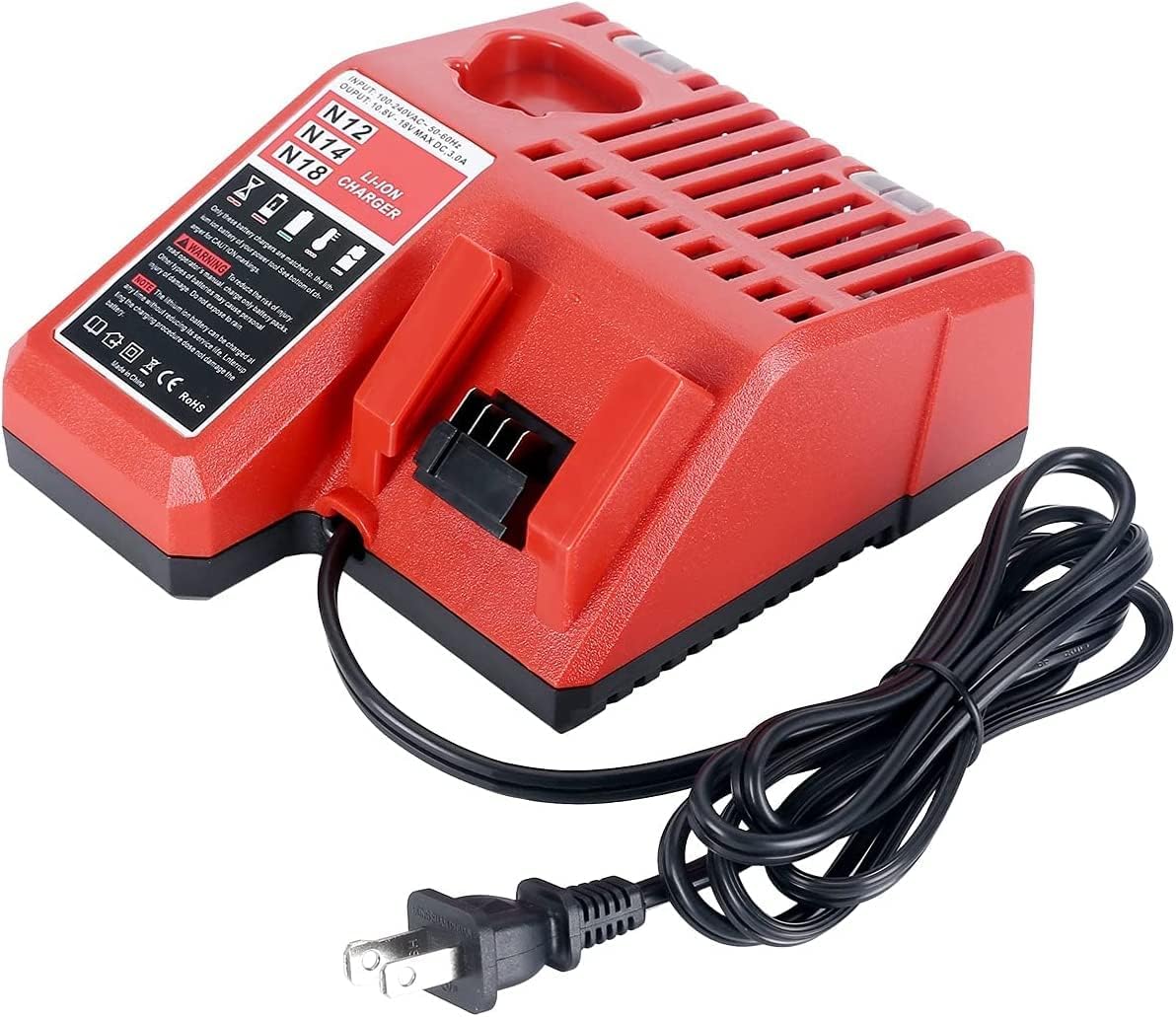
This Gonocop replacement charger supplies 10.8V to 18V at 3.0A for 12V and 18V lithium-ion packs, with indicator lights that track charging and maintenance status. It suits tradespeople and DIYers who need an affordable backup charger for Milwaukee-style 48-11 batteries, though buyers should confirm their pack model against the listed compatibility numbers.
Pros & Cons
Pros
Affordable replacement that avoids the cost of an original manufacturer charger
Charges 12V and 18V packs, reducing the need for multiple chargers
Clear indicator lights make charging status easy to read
Compact, lightweight design of about 12.8 ounces fits easily in a tool bag
Cons
As a third-party replacement, it is not made by the original tool manufacturer, so compatibility should be verified against your specific battery model
The advertised one-hour charge time depends on battery condition and capacity, so real-world times may be longer
Specifications list mixed voltage figures and model numbers, so buyers should check the listing carefully before ordering
Detailed Review
The Gonocop Replacement Rapid Charger is a third-party charger designed for 12V and 18V lithium-ion power tool batteries, particularly those in the 48-11 series. It is aimed at tradespeople and DIY users who need a low-cost replacement or a spare charger for their existing battery packs.
Its standout feature is the 3.0A output, which the listing says can bring batteries to a full charge in about an hour. Indicator lights display charging and maintenance status, and the built-in protection board guards against overcharge, overcurrent, and high voltage conditions.
The charger is compact at 6 by 8 by 2 inches and weighs about 12.8 ounces, so it is easy to store on a shelf or carry to a job site. The red housing is functional rather than refined, and the build feels adequate for workshop use, though it lacks the premium feel of an original manufacturer charger.
The main drawback is compatibility. Because the listing mixes charger and battery model numbers and mentions voltage ranges that vary across specifications, buyers should confirm that their specific pack appears in the compatibility list before purchasing. Charge times will also depend on battery age and capacity.
Overall, this is a practical, budget-friendly charger for owners of compatible 12V and 18V batteries who want a reliable spare. Verify your battery model first, and it offers good value for the price, backed by a one-year warranty.
The Aoasur DCB112 is a yellow replacement charger for DeWalt 12V and 20V MAX lithium-ion batteries, rated to charge a compatible pack in about 90 minutes. It suits DIY users and tradespeople who need a low-cost spare charger for a DeWalt battery fleet, though buyers should confirm their exact battery model is on the compatibility list.
Pros & Cons
Pros
Affordable replacement that avoids the cost of an original DeWalt charger
Fast charging cycle keeps job sites and projects moving
Clear LED status display makes it easy to see when a battery is ready
Strong customer rating across a large base of verified buyers
Cons
Third-party charger, so it is not made by DeWalt and may not match OEM build quality or warranty coverage
Compatibility varies by model, so buyers should verify their specific battery before purchasing
Product listing contains some inconsistent model numbers and brand names, which may cause confusion
Detailed Review
The Aoasur DCB112 is a replacement charger designed for DeWalt 12V and 20V MAX lithium-ion batteries. It is aimed at homeowners, DIY enthusiasts, and tradespeople who want a spare or backup charger without paying for an original DeWalt unit.
In day-to-day use, the standout feature is its charging speed, which the listing rates at roughly 90 minutes for a compatible battery. The built-in chip and cooling fin work together to monitor each pack and help protect against overcharging, overheating, and short circuits. The LED indicators give a quick visual read on charge status.
The charger uses a yellow plastic housing with a compact footprint that fits easily on a workbench or in a van. Build quality appears adequate for the price point, though it lacks the premium feel of genuine DeWalt hardware. The temperature warning, where red and yellow lights flash together, is a useful safety cue.
The main drawback is that this is a third-party product, and compatibility depends on the exact battery model, so buyers should check the list carefully before ordering. Listing details also contain some inconsistencies in model references, which may require a closer look.
Overall, the Aoasur DCB112 offers good value for users who need a reliable, fast replacement charger for DeWalt batteries. With a 30-day return window, the risk of trying it is low, making it a sensible choice for budget-conscious buyers.
The BLACK+DECKER LCS1620B is a compact slide pack charger that powers both 12V MAX and 20V MAX lithium-ion batteries, recharging a 1.5Ah pack in 40 minutes or less. It suits DIY owners and homeowners who already run BLACK+DECKER tools and want a low-cost, dependable charger without buying batteries.
Pros & Cons
Pros
Universal charger for both 12V and 20V BLACK+DECKER slide pack batteries
Fast charge time for standard 1.5Ah packs
Very affordable compared with buying a dedicated charger for each battery platform
Cons
Batteries are sold separately, so a battery must be purchased before the charger is useful
Compatible only with BLACK+DECKER slide pack batteries, not other brands or battery styles
Single port charger, so only one battery can be charged at a time
Detailed Review
The BLACK+DECKER LCS1620B is a single-port lithium-ion charger designed for owners of BLACK+DECKER 12V MAX and 20V MAX slide pack tools. It is aimed at homeowners, DIY users, and anyone who wants to keep a cordless kit running without paying for a separate charger for each battery voltage.
In everyday use, the standout feature is its versatility. It accepts both 12V MAX and 20V MAX slide pack batteries and recharges a 1.5Ah pack in 40 minutes or less. The green indicator light clearly signals when charging is underway and when the battery is full, so there is little guesswork involved.
The charger is compact and light at about 3.84 ounces and measures roughly 4.8 by 8.7 inches, so it takes up little space on a shelf or workbench. The black plastic housing feels practical rather than premium, and the UL listing adds reassurance about electrical safety.
The main drawback is that batteries are sold separately, so you will need to buy at least one pack before the charger is useful. It also has only one port, which means you cannot charge multiple batteries at once, and it is limited to BLACK+DECKER slide pack batteries.
Overall, this is a strong value for BLACK+DECKER owners who want one charger that covers multiple battery platforms. For its price and fast charge time, it is a practical and dependable choice, especially for homeowners and light-duty DIY users.
The KIMO 20V 4.0Ah charger is a lightweight 120V wall charger with a cooling system and LED status lights, designed to charge KIMO 4.0Ah batteries for cordless leaf blowers and reciprocating saws. It suits DIY users and homeowners who want an affordable, portable backup charger for KIMO batteries, though buyers should confirm battery and tool compatibility first.
Pros & Cons
Pros
Cooling system and constant current charging help protect the battery during charging cycles.
Quick charging time for a 4.0Ah battery, based on the manufacturer's claim.
Clear LED status lights make it simple to know when a battery is ready.
Compact and lightweight, which makes it convenient to carry and store.
Affordable replacement or backup charger for KIMO 4.0Ah batteries.
Cons
Sold as a charger only, so batteries and tools are not included and you must already own a compatible KIMO 4.0Ah battery.
Compatibility details are unclear, with listed device types that do not fully match the title, so verify your tool before buying.
The model name includes 'Slow' while the listing promotes fast charging, which may cause confusion about actual charge speed.
Detailed Review
The KIMO 20V 4.0Ah Battery Charger is a compact 120V wall charger built for KIMO 4.0Ah lithium-ion batteries used with cordless leaf blowers and reciprocating saws. It is aimed at homeowners, DIY users, and light-duty tradespeople who want a simple, affordable way to keep spare batteries ready.
The standout feature is the cooling system, which uses constant current charging to reduce heat while the battery charges. The manufacturer says this helps guard against overheating and overload, and the LED indicator clearly shows whether the battery is charging or fully charged.
The charger feels lightweight and compact, with dimensions of roughly 7.1 by 4.7 by 3.9 inches, so it is easy to tuck into a garage shelf or carry to a job site. It uses a standard two-prong American plug and carries UL certification, which adds reassurance about electrical safety.
The main drawbacks are the lack of included batteries and some uncertainty around compatibility, since the listing mentions devices that do not clearly match the title. The model name also includes the word 'Slow,' which seems at odds with the fast-charging claims, so buyers should check the actual charge time for their battery.
Overall, this is a practical, budget-friendly charger for owners of KIMO 4.0Ah batteries who want a portable backup option. Confirm compatibility with your tools before purchasing, and it should serve well as a dependable everyday charger.
The Abeden P117 is a third-party replacement charger for Ryobi 18V ONE+ lithium-ion, NiCad, and NiMh batteries, rated at 2A for lithium and 1.5A for NiCad/NiMh with a built-in 5V USB port. It suits Ryobi owners who need a budget backup charger, but it is not an official Ryobi product and does not charge 12V or 14.4V lithium packs.
Pros & Cons
Pros
Strong value as a replacement charger, often costing far less than an official Ryobi unit.
Broad compatibility across many Ryobi 18V ONE+ tools and older HP and NiCad/NiMh packs.
Built-in USB port adds convenience on job sites and outdoors.
Compact, lightweight body is easy to carry and store in a tool bag.
Cons
Not an official Ryobi product, so build quality and long-term reliability may differ from the original charger.
Does not charge 12V or 14.4V lithium batteries, which limits use with some older Ryobi packs.
Charge time claims are inconsistent in the listing, with 2 hours in the specifications and 2 to 4 hours in the description, so expect variation depending on battery size and condition.
Detailed Review
The Abeden P117 is a replacement charger designed for Ryobi 18V ONE+ batteries, and it also supports NiCad and NiMh packs from the HP line and older 12V and 14.4V tools. It is aimed at homeowners and tradespeople who need a dependable backup charger without paying for an official Ryobi unit.
Its main strength is versatility. The charger switches between 2A for lithium-ion and 1.5A for NiCad or NiMh, and it moves into maintenance mode once a battery is full, which helps protect cells during extended storage on the charger. The built-in USB port (5V/4A) is a useful extra for topping up a phone at the worksite.
In terms of build, the compact housing is light and easy to toss in a bag, and the active cooling duct helps keep temperatures under control during longer charge cycles. Protective circuitry covers overcharge, overheating, and short circuits, which adds reassurance when the charger is left unattended. Some models include wall-mount holes, though this varies by unit.
The drawbacks are worth weighing. As a third-party replacement, it will not carry the same brand assurance as an official Ryobi charger, and it cannot charge 12V or 14.4V lithium packs. The listing also gives inconsistent charge times, so actual performance will depend on battery capacity and condition.
Overall, the Abeden P117 is a practical and affordable option for Ryobi 18V owners who want a flexible replacement charger with useful safety features and a USB port. If you need a charger for lithium-ion and older NiCad or NiMh packs and you are comfortable with a non-OEM product, it is a sensible buy.
The Kobalt KRC 2445-03 is a single-port 24-volt lithium-ion charger designed to recharge Kobalt 24V batteries in roughly 30 minutes. It suits owners of Kobalt 24V cordless tools who want a compact, affordable replacement or second charger.
Pros & Cons
Pros
Quick charge times of around 30 to 60 minutes minimize downtime between tasks
Lightweight and compact, so it is easy to transport and store
Certified to UL, CE, and FCC standards
Affordable replacement or backup charger for Kobalt 24V owners
Cons
Compatible only with Kobalt 24V batteries and tools, so it is not a fit for other brands or voltage platforms
Single port means only one battery can be charged at a time
Charge times vary, with some listings citing 30 minutes and others 30 to 60 minutes, so expectations should be set accordingly
Detailed Review
The Kobalt KRC 2445-03 is a single-port charger built for Kobalt's 24-volt lithium-ion battery platform. It is aimed at homeowners and tradespeople who already own Kobalt 24V cordless tools and need a dependable, affordable way to keep their batteries charged.
Its standout feature is speed. Kobalt rates the charger for roughly 30 to 60 minutes per battery, which means a depleted pack can be back in service during a short break. The 24-volt input and output match the Kobalt battery system directly, so setup requires nothing more than plugging it in.
At about 1.1 pounds, the charger is light enough to toss in a truck or tool bag without thinking twice. It is available in black or blue, letting you match your existing Kobalt tools. Certifications from UL, CE, and FCC indicate it has met recognized electrical safety and compliance standards.
The main drawback is compatibility: this charger only works with Kobalt 24V batteries, so it offers no value to owners of other brands. With only one port, you will need to charge batteries one at a time, which can be a limitation on larger projects. Charge times also vary depending on the battery and conditions.
Overall, the KRC 2445-03 is a practical, well-rated charger for anyone invested in the Kobalt 24V ecosystem. It delivers fast, straightforward charging in a compact package, making it a sensible choice for a primary or backup charger.
This Nden 21V charger is a generic replacement power cord with a 5.5 x 2.5mm round jack for 20V/21V mini chainsaws, drills, wrenches, and screwdrivers. Its 100-240V worldwide input and built-in overload and short-circuit protection make it a practical spare for owners who need a budget-friendly replacement, though it is not an original manufacturer part.
Pros & Cons
Pros
Covers a broad range of compact 20V/21V tools, which helps consolidate a charging station.
Wide input voltage range makes it usable in most countries.
Multiple built-in safeguards add protection for battery cells during charging.
Simple plug-and-play operation with clear LED indicators requires no setup.
Cons
This is a generic replacement, not an original manufacturer part, so buyers should confirm the tool's port is a round barrel connector and requires 21V input.
The device and battery are not included, and the 3.9 ft cord may feel short for some workspaces.
Detailed Review
The Nden 21V charger is a replacement power cord designed for owners of 20V and 21V cordless tools that use a round barrel connector. It is aimed at people who own compact handheld chainsaws, pruning shears, hand drills, electric wrenches, or screwdrivers and need a spare charger. It works best as a backup or secondary option rather than a primary charger.
The standout feature is its wide compatibility, since a single 21V output can serve several small tools in the same family. The 100-240V input means it can be used in most regions without a separate converter. An intelligent chip regulates current, and overload, short-circuit, and temperature protection help reduce the risk of overcharging the battery.
Build quality appears practical rather than premium, with a standard round jack plug, a 3.9 ft cord, and a single LED indicator that shows red while charging and green when full or on standby. The lightweight design and compact dimensions make it easy to store in a toolbox. Setup requires no tools or configuration, which keeps it simple for everyday use.
The main drawback is that this is a generic part rather than an original manufacturer charger, so users should verify the tool's connector and voltage before purchasing. The 2A output and moderate customer rating suggest it is best suited to occasional charging. The cord length may also require an extension in larger workspaces, and the device and battery must be purchased separately.
Overall, this charger is a sensible, practical replacement for owners of compatible 20V/21V tools who want an inexpensive backup. Buyers who confirm their tool's 5.5 x 2.5mm port and 21V requirement should find it a dependable option. Those who need an original manufacturer charger or fast charging for heavy daily use should look elsewhere.
Listed charge times vary widely. BLACK+DECKER LCS1620B charger states that it recharges a 1.5Ah slide pack in 40 minutes or less. The Gonocop charger lists a 60-minute charge time for its supported batteries. The Ryobi-compatible Abeden charger lists a 2-hour charge time with a 2A rating. The Kobalt charger lists 30 to 60 minutes for its 24V batteries. Charge time depends on the battery’s capacity and state, so compare times only between listings that describe the same battery.
The amperage on a listing describes the charger’s output current. It is not a measure of battery capacity. Battery capacity is usually shown in amp-hours on the battery itself. For more on that difference, see Tool Batteries Explained: Voltage, Amp-Hours and Platforms.
Ports and Charging Several Batteries
Port count determines how many batteries can charge at once. Lenoya 4-port Dewalt charger lists four ports, with 3A per port, and it also includes dual USB outputs for phones and tablets. DCB102 replacement dual charger lists two ports. Most of the other listings describe a single port, which means one battery at a time. The Lenoya listing names several Dewalt battery models, such as DCB120 and DCB204, as compatible.
Indicator Lights and Heat Protection
Indicator lights are the main way to see charge status at a glance. The Ruzixt DCB112 replacement charger describes a red and yellow light combination that turns on when battery temperature is too high. The Abeden Ryobi charger lists steady green for full, flashing green for charging, and flashing red for a battery fault. The Nden 21V cord lists red for charging and green for full or standby. If a battery still will not charge after you check the lights and connections, see Cordless Tool Battery Not Charging? What to Check, and follow the manufacturer’s manual for your tool and battery.
Mounting, Plugs and Size
Physical features affect where a charger can go. The DCB102 replacement listing mentions holes at the base for wall mounting. The DEWALT DCB1104 lists a two-screw wall mount, with screws sold separately. The KIMO 20V charger describes a standard 2-prong American plug and a lightweight body. The Gonocop charger lists a weight of 12.8 ounces. Check the listed dimensions against your storage space before ordering.
Final Thoughts
For a compact, single-battery setup, KIMO 20V 4.0Ah charger is a listing to compare, since it describes a lightweight body and a 30-minute charge time for a 4.0Ah 20V battery. For owners of 24V Kobalt tools, Kobalt KRC 2445-03 charger lists a 24V input and output, black or blue color options, and UL, CE and FCC marks in its specifications.
For a setup that needs more than one battery charged at a time, the Lenoya four-port listing and the two-port DCB102 replacement are the listings to compare. If you need a generic round-jack cord for a 20V or 21V tool, Nden 21V power cord charger is listed as a generic power supply and not a manufacturer original part, with the battery and device not included.
Frequently Asked Questions
Can one charger work with more than one battery platform?
Some listings name more than one platform. The DEWALT DCB1104, for example, lists 12V MAX, 20V MAX and FLEXVOLT batteries. Check the compatible devices line of each listing against the battery you own.
Are replacement chargers the same as manufacturer chargers?
Several listings in this roundup describe themselves as replacements. The Nden listing states that it is a generic power supply and not a manufacturer original part. Check the manufacturer’s manual for your tool before using any replacement charger.
What does the amperage rating on a charger mean?
The amperage rating describes the charger’s output current. It does not describe how much energy a battery holds. Battery capacity is shown separately, usually in amp-hours.
What should I do if a battery will not charge?
Start with the indicator lights, the power connection and the battery contacts. The guide on Cordless Tool Battery Not Charging? What to Check covers common steps. For any remaining problem, follow the manufacturer’s manual for the tool and battery.
A cordless drill for home use should match the projects you tackle. Look at voltage, motor type, clutch, chuck size, battery capacity, and whether you need a hammer function.
Standard chargers suit occasional work, rapid chargers save time, and multi-port units handle several batteries. Learn indicator lights and safe charging habits here.
DeWalt vs Milwaukee vs Makita compared on tool range, battery platforms, build quality and jobsite fit, so you can pick the right cordless brand for your work.
Learn how to use a Makita impact drill driver for drilling and driving screws, with setup steps, mode settings, bit choices and common mistakes to avoid.
Compare the best milwaukee tools impact driver options by voltage, kit contents and best-fit jobs. Find the right Milwaukee impact driver for your work.
Milwaukee tool vs DeWalt compared on battery platform, tool range, durability, warranty and jobsite fit, so you can pick the right brand for your work.