Some links on this page are affiliate links. If you buy through them, we may earn a commission at no extra cost to you. As an Amazon Associate I earn from qualifying purchases. Learn more ›
Best Stud Finders for Hanging TVs and Shelves
Five stud finders compared by listed scan depth, modes, display and power, from a no-battery magnetic finder to a 13-sensor deep scanner.
This post contains Amazon affiliate links. As an Amazon Associate I earn from qualifying purchases, at no extra cost to you.
Hanging a TV or heavy shelf means finding a solid stud behind the drywall. A stud finder that gives accurate readings saves time and prevents wall damage. The right model depends on wall thickness, the materials you need to detect, and how much detail you want from the display.
We compared the listed specifications and features of five stud finders to help you narrow down your choice. Each pick was selected based on its published capabilities—scan modes, detection depth, display type, and power source. We have not tested any of these units. Check each product listing for current price, full details, and user feedback.
Our Picks at a Glance
We chose these five by comparing the specs and features listed by each manufacturer: scan modes, maximum detection depth, display type, and power requirements. None of the picks have been tested by us. Visit each product listing for the latest price and complete information.
This upgraded stud finder combines wood, metal, and live wire detection with a backlit LCD display and audio alerts to help you locate studs, pipes, and electrical wires safely. Ideal for DIYers, homeowners, and professionals who need reliable wall detection for hanging heavy objects and preventing costly mistakes.
Pros & Cons
Pros
Detects three different materials (wood, metal, live wires) eliminating the need for multiple tools
Bright backlit LCD display with visual and audio feedback makes it easy to use in any lighting condition
Multiple scan modes provide flexibility for detecting various object sizes and depths
Highly sensitive micro-sensor chip delivers fast, accurate detection results
Affordable price point makes it accessible for both professionals and casual DIYers
Cons
Some users may experience a learning curve with multiple scan modes before mastering the tool
Battery status display requires monitoring to avoid mid-project power loss
Sensitivity may require slight recalibration on different wall types for optimal accuracy
Detailed Review
The YourHomeImprovementExpert Stud Finder is a multi-function wall detection tool designed for homeowners, DIY enthusiasts, and professionals who need reliable stud, pipe, and live wire detection. Whether you're hanging a heavy shelf, mounting a TV, or installing wall cabinets, this device helps you find the safest drilling points while avoiding hidden electrical hazards.
The standout feature is its triple detection capability. The intelligent micro-sensor chip can identify wood studs, metal pipes, and live AC wires behind walls, floors, and ceilings. The three scan modes (stud, deep, and metal) give you flexibility to detect different materials and depths, making this a versatile solution for various home improvement projects. Detection speed is impressive, saving time compared to traditional methods.
The bright backlit LCD display shows the center and edge of detected objects plus battery status, while audio beeps guide you to precise locations. This dual feedback system works well in low-light conditions and removes guesswork from wall scanning. The comprehensive display interface makes the tool accessible to users of all skill levels without a steep learning curve.
Build quality appears solid for the price point, though the device relies on battery power that requires periodic monitoring. The sensitivity is high enough for most residential walls, though performance may vary slightly depending on wall material composition. For the investment, this tool effectively prevents costly mistakes like drilling into live wires or installing fixtures on weak points.
This stud finder delivers genuine value for anyone tackling wall-mounted projects. The combination of accurate detection, user-friendly display, and affordable pricing makes it a practical addition to any home improvement toolkit. Highly recommended for both occasional and frequent DIY work.
Specifications
Detection Capabilities: Wood studs, metal studs, metal pipes, live AC wires
Scan Modes: Stud scan (center detection), deep scan (width/depth detection), metal scan (metal detection)
Display: Backlit LCD screen with center, edge, and location indicators plus battery status
Alerts: Visual display and audio beep feedback system
Sensor Technology: Intelligent micro-sensor chip with high sensitivity
Detection Depth: Multiple depths through walls, floors, and ceilings
Price Point: Budget-friendly option for multi-function detection
Ideal For: Hanging shelves, TV mounts, cabinets, picture frames, bathroom fixtures, and garage organization
Buyer Guide
Who Should Buy This: Homeowners planning wall-mounted projects, DIY enthusiasts who want reliable stud detection, professionals needing portable multi-function scanning, and anyone concerned about drilling into live wires safely.
When to Use: Before hanging heavy objects, installing wall cabinets or shelving units, mounting TVs or picture frames, or any project requiring knowledge of wall composition behind the surface.
Key Advantages Over Single-Function Tools: This device eliminates the need to purchase separate stud finders, wire detectors, and metal locators. The multiple scan modes adapt to different detection needs in one affordable package.
Tips for Best Results: Calibrate the device on an empty wall section before scanning your target area. Use the appropriate scan mode for your specific need (stud mode for wood, metal mode for pipes, etc.). Monitor battery levels regularly to avoid power loss during projects. Take time to learn how the audio and visual alerts work on your specific wall type.
Value Consideration: At this price point, you get professional-grade detection capability with user-friendly features. The investment pays for itself by preventing even one costly mistake like drilling into electrical wiring or installing fixtures on weak wall sections.
The eOUTIL ST100B is an affordable, user-friendly stud finder that detects wood and metal studs up to 1 inch deep with visual LED indicators and audio alerts. It's ideal for DIYers and homeowners who need reliable stud detection for TV mounting, cabinet installation, and other wall projects without the complexity of advanced models.
Pros & Cons
Pros
Extremely affordable entry-level stud finder that delivers consistent results
Intuitive operation with quick calibration and clear visual plus audio feedback
Versatile detection works across diverse wall materials and surfaces
Lightweight and portable design makes it convenient for any home project
Cons
Limited to 1-inch detection depth, so it cannot find studs behind thicker walls or multiple layers
Requires 9V battery which is not included in the package
No advanced features or digital display that some professional users may prefer
Detailed Review
The eOUTIL ST100B stud finder is a no-frills wall scanner designed for homeowners and DIYers who need reliable stud detection without paying premium prices. Whether you're mounting a TV, installing shelving, hanging cabinets, or securing garage racks, this compact tool helps you locate studs safely and accurately to avoid damaging plumbing, electrical wiring, or other hidden utilities.
The standout feature is its dual detection system combining 4-level LED indicator lights with audio beeping. As you move the scanner across the wall, the lights gradually brighten and the beeping intensifies as you approach a stud, then alerts you when you reach the center. Calibration takes just 0.5 seconds with a simple button hold, and you can calibrate on the wall surface, in the air, or directly on a stud for maximum flexibility.
Build quality is solid for the price point. The plastic housing is durable and lightweight at only 3.2 ounces, making extended use comfortable. The sensor works effectively across various wall types including drywall, wallpaper, lath, acoustic ceilings, and painted surfaces, giving it genuine versatility for different home situations.
The main limitation is its 1-inch detection depth, which works fine for standard drywall but won't penetrate thicker walls or multiple layers. Additionally, the device requires a 9V battery not included in the package. These minor constraints rarely impact typical home use cases and are reasonable tradeoffs at this price.
Overall, the eOUTIL ST100B delivers excellent value for budget-conscious homeowners. With strong customer ratings and straightforward operation, it's a dependable choice for basic stud-finding tasks that eliminates guesswork and helps ensure safe, secure wall installations.
Specifications
Detection Depth: 1 inch (25.4 mm) for wood and metal
Power Source: 9V battery (not included)
Operating Frequency: 10 KHz
Display Type: 4-level LED indicator lights with audio alarm
Dimensions: 2.56 inches L x 1.57 inches W x 1.57 inches H
Weight: 3.2 ounces
Material: Plastic housing
Protection Rating: IP54 (dust and water resistant)
Calibration Time: 0.5 seconds
Model Number: ST100B
Buyer Guide
Who Should Buy This: Homeowners, renters, and DIY enthusiasts tackling occasional wall projects like TV mounting, shelf installation, or picture hanging. It's perfect for first-time stud finder users who want simplicity and affordability.
Who Might Want Something Else: Professional contractors working on thick walls or complex construction may benefit from higher-end models with greater detection depth. Those needing digital displays or advanced features should consider premium alternatives.
Setup Tips: Purchase a 9V battery before using. Always calibrate on the wall surface where you'll be working for most accurate results. Move the scanner slowly across the wall and note where the lights brighten most intensely to pinpoint stud centers.
Best Uses: TV wall mounting, installing floating shelves, hanging heavy mirrors, securing cabinet brackets, mounting garage organization systems, and any project requiring secure wall anchoring.
The StudBuddy is a simple, battery-free magnetic stud finder that locates studs by detecting screw heads in drywall. Ideal for DIYers and homeowners who want a reliable, maintenance-free tool that works instantly without calibration.
Pros & Cons
Pros
No batteries means it's always ready to work anytime, anywhere
Powerful neodymium magnets reliably detect metal fasteners in studs
Durable USA-made construction with proven track record from thousands of satisfied users
Simple, foolproof design that anyone can use without instructions
Lightweight and portable with included carrying case for convenience
Cons
Limited to drywall and wood studs, not suitable for lath and plaster walls
Requires manual scanning across wall surface, slower than electronic scanners for large areas
May not work effectively on walls with non-metal fasteners or unusual construction methods
Detailed Review
The StudBuddy is a magnetic stud finder designed for homeowners, renters, and DIY enthusiasts who need a quick, reliable way to locate studs in drywall before hanging shelves, mirrors, or television mounts. This tool uses powerful neodymium magnets to detect the metal screws and nails that secure drywall to wooden or metal studs, offering a refreshingly simple alternative to electronic stud scanners.
What makes the StudBuddy stand out is its complete lack of complexity. There are no batteries to replace, no calibration required, and no buttons to press. Simply run the tool across your wall, and when it detects a fastener head, the magnetic pull causes it to stick to the wall, pointing you to the exact stud location. This straightforward approach works consistently on all standard drywall construction, making it ideal for anyone who values reliability over fancy features.
The build quality reflects its USA manufacturing heritage. The tool features durable plastic housing with encapsulated magnets that maintain their strength over time. At just 1.6 ounces, it's incredibly portable and comes with a convenient carrying case. The compact design makes it easy to store in a toolbox or junk drawer, always ready when you need it without any maintenance concerns.
The main limitation is its application scope. The StudBuddy is specifically designed for drywall and wood studs, not lath and plaster walls or unusual construction types. Additionally, it requires manual scanning, which takes longer than electronic scanners for covering large wall areas. However, for typical household projects, this trade-off is negligible given the tool's reliability and affordability.
The StudBuddy delivers exceptional value for anyone seeking a no-nonsense stud finder. Its proven design, durable construction, and maintenance-free operation make it a smart choice for both occasional and frequent users who want a tool that simply works every single time.
How It Works
The StudBuddy operates on a simple but effective principle. Standard drywall is fastened to wooden or metal studs using screws or nails. These metal fasteners create small magnetic points that the StudBuddy's super-strong neodymium magnets can detect.
To use the tool, slowly move it horizontally across your wall surface. When the magnets encounter a fastener head, the magnetic attraction becomes strong enough to make the tool stick firmly to the wall. This adhesion points you directly to the stud location. Once you've found one fastener, you can measure vertically to locate additional fasteners on the same stud, as they're typically spaced 16 inches apart.
This method works reliably across all standard drywall construction types without any setup or configuration needed. The magnets are permanently encapsulated, so their strength remains consistent indefinitely.
Specifications
Brand: The StudBuddy
Model Number: 001
Material: Plastic with encapsulated neodymium magnets
Color: Orange
Weight: 1.6 ounces
Included Components: Stud finder tool and carrying case
Power Source: None required, magnet-based operation
Best For: Drywall and wood stud detection
Not Recommended For: Lath and plaster walls
Warranty & Support: Made in the USA with quality construction
YourHomeImprovementExpert Stud Finder: Best for Versatile Scanning
This model uses an intelligent micro-sensor chip and offers multiple scan modes: stud scan, deep scan, and metal scan. It detects wood, metal, and live AC wires behind walls, floors, and ceilings. The backlit LCD display shows center, edge, and location of detected studs along with battery status. Audio alerts and a beep sound guide you to the exact location. The listing does not specify maximum detection depth or dimensions.
Specs that matter: Scan modes: stud, deep, metal; detects live AC wires; backlit LCD display with audio alerts; power source not listed; weight and dimensions not listed.
Best for: Users who want a multi-mode electronic finder with live wire detection and a clear display.
eOUTIL ST100B Stud Finder: Best for Simple Operation
The eOUTIL ST100B uses a 4-level indicator light and audio alarm to signal when it approaches or locates a stud center. Calibration completes in 0.5 seconds with a beep, and the unit can calibrate on the wall, in the air, or on a stud. It detects wood and metal up to 1 inch (25.4 mm) deep. It works on surfaces such as lath, wallpaper, wood flooring, acoustic ceiling, and painted walls. Power source is a 9V 6F22 battery (not included). Dimensions listed as 2.56 x 1.57 x 1.57 inches; weight 3.2 ounces; plastic; IP54 protection rating.
Specs that matter: Detection depth: 1 inch for wood and metal; display: LED and beeping; power: 9V battery (not included); dimensions: 2.56 x 1.57 x 1.57 in; weight: 3.2 oz; material: plastic; IP54.
Best for: DIYers who want a straightforward electronic finder with simple calibration.
TheStudBuddy Magnetic Stud Finder: Best for No-Battery Use
The StudBuddy uses super-strong neodymium magnets to detect screw or nail heads in drywall. It requires no batteries, no calibration, and has no moving parts. It is intended for drywall and wood construction; the listing states it is not for lath and plaster walls. When the magnet detects a fastener, the unit “sticks” to the wall, pointing to the stud location. Made in the USA. Weight 1.6 ounces; material: plastic with encapsulated magnets.
Specs that matter: Detection method: magnetic (screw/nail heads); no batteries; no calibration; weight: 1.6 oz; material: plastic with encapsulated magnets; not for lath and plaster.
Best for: Users who want a simple, always-ready tool that never needs batteries and works on standard drywall.
Mecurate 5-in-1 Stud Finder: Best for Multi-Mode Detection
The Mecurate 5-in-1 offers four scan modes: Standard (3/4 in), Deep (1-1/2 in), Metal (2-3/8 in), and AC (2 in). It uses advanced sensors and a smart chip, and requires calibration against the wall before each use for best accuracy. The high-definition LCD screen displays real-time detection data with graphics. Built-in AC detection emits a warning sound when live wires are present. The package includes the stud finder, battery, carrying pouch, and user manual. The listing notes best performance on single-layer drywall; not recommended for concrete, brick, tile, or other non-drywall surfaces.
Specs that matter: Scan modes: Standard (3/4 in), Deep (1-1/2 in), Metal (2-3/8 in), AC (2 in); display: LCD with graphics; audio alerts; includes battery; weight and dimensions not listed.
Best for: Users who need multiple detection depths and live wire safety alerts for varied wall materials.
Franklin Sensors ProSensor MAX: Best for Deep Scanning
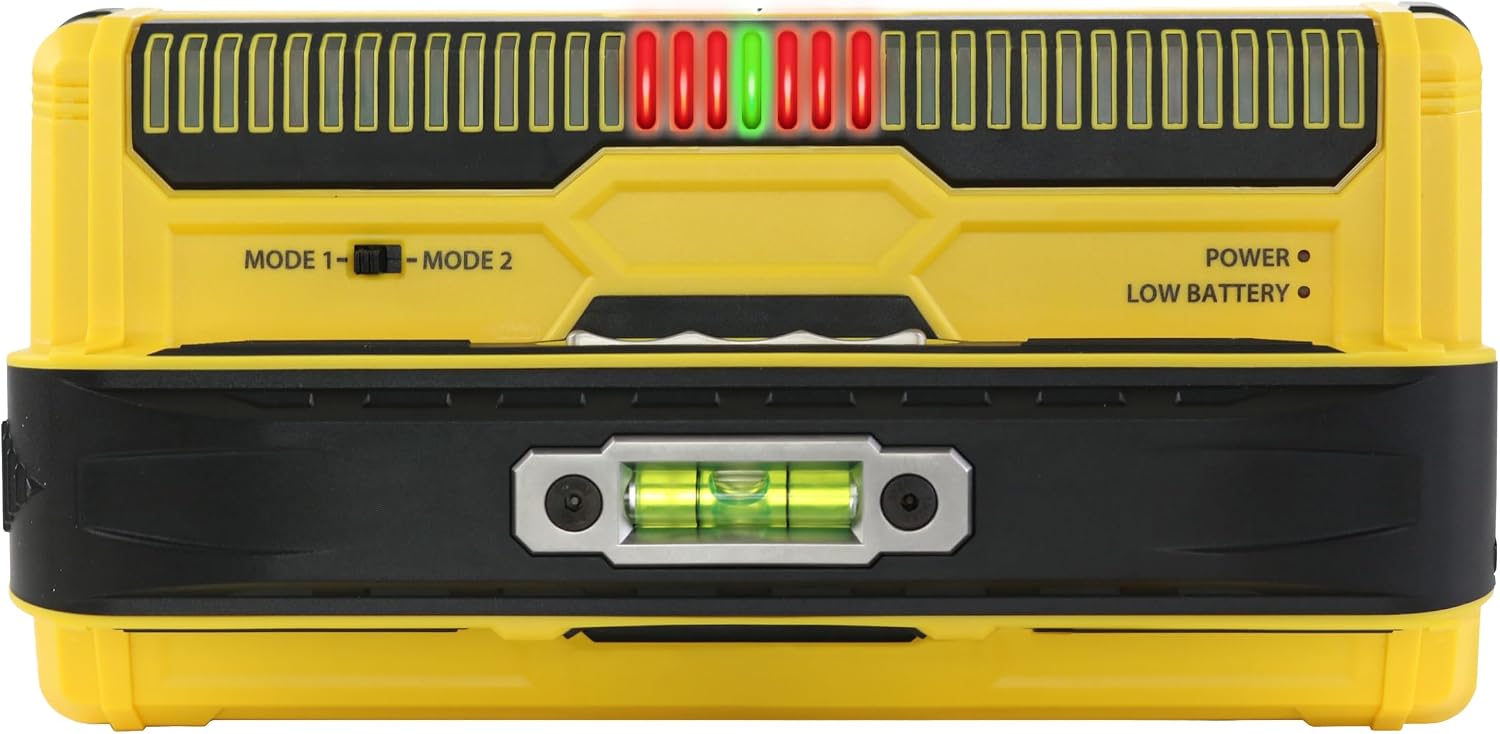
The ProSensor MAX uses 13 larger sensors and has a maximum detection depth of 2.5 inches, allowing it to scan through two or more layers of drywall, plaster, OSB, plywood, MDF, and large tile. No calibration is required; press and hold the button to begin scanning. The precision LED display shows the full width of studs, with a green LED indicating stud centers. Two detection modes: mode 1 for normal drywall, mode 2 for deep scanning through thick or tough walls. Dimensions: 9 x 4.5 x 3.1 inches; weight 1.1 pounds; plastic; battery powered (3V); Limited Lifetime Warranty.
Specs that matter: Detection depth: 2.5 in; sensors: 13; display: LED with green center indicator; modes: normal and deep; power: battery (3V); dimensions: 9 x 4.5 x 3.1 in; weight: 1.1 lb; warranty: Limited Lifetime.
Best for: Hanging heavy items on thick or multiple-layer walls where deep, accurate scanning is critical.
How to Choose
Detection Depth
For standard single-layer drywall (typically 1/2 to 5/8 inch), most electronic finders work well. If you have thicker walls, tile, or multiple layers, look for a model with a listed deep scan mode. The Franklin Sensors ProSensor MAX offers 2.5-inch depth, while the Mecurate has a 1.5-inch deep mode. The eOUTIL lists 1-inch depth. The YourHomeImprovementExpert does not specify depth. Magnetic finders like TheStudBuddy rely on detecting fasteners and have no listed depth limit.
Scan Modes and Features
Basic electronic finders often have a single stud-scan mode. More advanced units add deep scan, metal scan, and live AC wire detection. If you want a warning about live wiring, choose a model with AC detection (YourHomeImprovementExpert and Mecurate); a metal scan mode can help locate metal pipes. No detector is perfect, so drill carefully and shut off power near outlets and switches. For versatility, multi-mode units let you switch between standard and deep scanning.
Display and Alerts
Electronic finders use LED lights, LCD screens, or beeping sounds to indicate stud location. An LCD screen with graphics (Mecurate, YourHomeImprovementExpert) can show center and edge more clearly. The Franklin Sensors uses a row of LEDs that light up across the full width of the stud. The eOUTIL uses a 4-level light indicator. Magnetic finders give a tactile “stick” when a fastener is found.
Power Source
Most electronic stud finders run on batteries (9V or smaller). TheStudBuddy requires no batteries. Check the listing for battery type and whether one is included. The eOUTIL does not include a battery; the Mecurate includes one. The Franklin Sensors lists 3V battery power.
Wall Type Compatibility
Electronic finders work best on drywall. The Mecurate listing specifically says it is not recommended for concrete, brick, or tile. TheStudBuddy is intended for drywall and wood; it is not for lath and plaster. The eOUTIL states it works on lath, wallpaper, wood flooring, acoustic ceiling, and painted walls. The Franklin Sensors lists compatibility with drywall, plaster, OSB, plywood, MDF, and large tile.
Product
Detection Type
Max Depth
Scan Modes
Power Source
Display
YourHomeImprovementExpert
Electronic (wood, metal, AC)
Not listed
Stud, deep, metal
Not listed
Backlit LCD
eOUTIL ST100B
Electronic (wood, metal)
1 in
Single (auto)
9V battery (not incl.)
LED + beep
TheStudBuddy
Magnetic (screw/nail heads)
N/A
None
None
None (magnetic stick)
Mecurate 5-in-1
Electronic (wood, metal, AC)
1.5 in (deep mode)
Standard, deep, metal, AC
Battery (included)
LCD with graphics
Franklin Sensors ProSensor MAX
Electronic (wood, metal)
2.5 in
Normal, deep
3V battery
LED (full width)
FAQ
Do I need a deep scan stud finder for hanging a TV?
If your wall has only one layer of drywall over standard studs, a basic electronic finder or a magnetic finder usually works. For thicker walls, tile, or multiple layers, a model with a deep scan mode (1.5 inches or more) improves accuracy.
Can I use a magnetic stud finder on any wall?
Magnetic finders work on drywall that is fastened with steel screws or nails. They are not effective on lath and plaster walls (as noted by TheStudBuddy listing) or on walls where fasteners are deeply buried or non-metallic.
Why does my stud finder give false readings?
False readings can occur if the finder is not calibrated properly, if the wall surface is uneven, or if there are metal pipes or wires nearby. For tips on troubleshooting, see our guide on stud finder not working.
How do I use a stud finder correctly?
Most electronic finders require you to place them flat against the wall, press a button to calibrate, then slide slowly. Magnetic finders are simply moved across the wall until they stick. For step-by-step instructions, read how to use a stud finder.
Choosing the best stud finder for hanging TVs and shelves comes down to your wall type, the depth you need to scan, and whether you prefer electronic features or a simple magnetic tool. Compare the specs in the table above and check each listing for current pricing and availability.
A cordless drill for home use should match the projects you tackle. Look at voltage, motor type, clutch, chuck size, battery capacity, and whether you need a hammer function.
Master stud finder basics: magnetic vs electronic, calibration, edge vs center finding, and how to locate studs without a tool. Includes safety tips for drilling near wiring.
DeWalt vs Milwaukee vs Makita compared on tool range, battery platforms, build quality and jobsite fit, so you can pick the right cordless brand for your work.
Learn how to use a Makita impact drill driver for drilling and driving screws, with setup steps, mode settings, bit choices and common mistakes to avoid.
Compare the best milwaukee tools impact driver options by voltage, kit contents and best-fit jobs. Find the right Milwaukee impact driver for your work.
Milwaukee tool vs DeWalt compared on battery platform, tool range, durability, warranty and jobsite fit, so you can pick the right brand for your work.