
 By Caleb Morgan
Updated November 2026
Choosing a miter saw for trim comes down to a few practical factors: how accurately it holds angles, whether the fence and table support long baseboard, how easily it bevels for crown molding, and how portable it is for jobsite work. The picks below are based on product listings, brand reputation and common owner feedback patterns. We have not tested these saws ourselves, so check specs against your own project before buying. You may also like 6 Best Miter Saws for Cutting Baseboard Picks for Clean Trim Work.
Our top picks at a glance
- 1
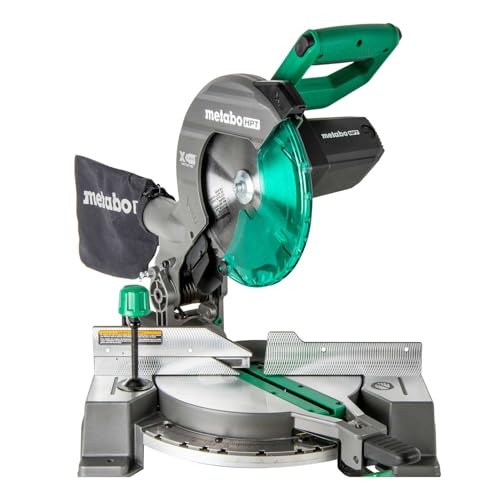 TOP CHOICEBest overallMetabo HPT 10-Inch Compound Miter Saw, 15-Amp, Single Bevel, C10FCG2View on Amazon
- 2
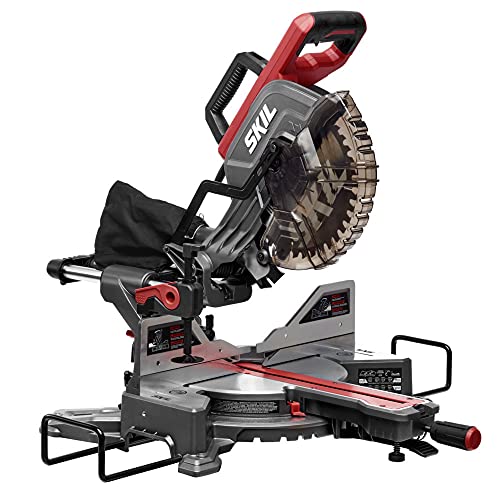 TOP CHOICEBest for crown moldingSKIL 10" Dual Bevel Sliding Compound Miter Saw-MS6305-00View on Amazon
- 3
 TOP CHOICEBest for tight budgetsHoteche 7-1/4-Inch Miter Saw 7.5A Compound Single Bevel Chop Saw with Laser and BladeView on Amazon
- 4
 Best for long boardsMarvtool 10-inch Compound Miter Saw, 5000RPM, 15 Amp, Single Bevel 0-45°View on Amazon
- 5
 Best for a complete kitCRAFTSMAN Mitre Saw, 12-Inch Saw & Clamping Box (CMHT20600)View on Amazon
- 6
 Best for compact jobsSKIL 10 Amp 7-1/4" Single Bevel Miter Saw with Compact Rail System & LView on Amazon
- 7
 Best handheld alternativeLeafLux Miter Shears for Wood Trim, Adjustable 45°-135° Multi-Angle HaView on Amazon
Our Top Picks
Quick Comparison
| Product | Best for | Key feature |
|---|---|---|
| Metabo HPT 10-Inch Compound Miter Saw | Overall trim work | 24T blade, positive stops |
| SKIL 10″ Dual Bevel Sliding Compound Miter Saw | Crown molding | Dual bevel, sliding rails |
| Hoteche 7-1/4-Inch Miter Saw | Tight budgets | Laser guide included |
| Marvtool 10-inch Compound Miter Saw | Long boards | Extension table, 36T blade |
| CRAFTSMAN Mitre Saw, 12-Inch Saw & Clamping Box | Complete kit | Clamping box included |
| SKIL 10 Amp 7-1/4″ Single Bevel Miter Saw | Compact jobs | Compact rail system |
| LeafLux Miter Shears for Wood Trim | Handheld cuts | Adjustable 45°–135° angles |
Metabo HPT 10-Inch Compound Miter Saw, 15-Amp, Single Bevel, C10FCG2
Metabo HPT 10-Inch Compound Miter Saw, 15-Amp, Single Bevel, C10FCG2 | 24T TCT Blade Included, Precision Angle Cuts, Positive Stops, Large Work Table, Lightweight Portable Design
Best for: Overall trim work
A solid all-round choice for homeowners and trim carpenters who want repeatable angle accuracy without extra features they will not use. A related read: Kobalt Miter Saw 7-1/4 Picks: 6 Best Options for Clean Cuts (2026).
Pros
- Positive stops make common miter angles quick to hit
- Large work table supports long baseboard pieces
Cons
- Single bevel means crown molding needs a flipped setup
SKIL 10″ Dual Bevel Sliding Compound Miter Saw-MS6305-00
SKIL 10" Dual Bevel Sliding Compound Miter Saw-MS6305-00
Best for: Crown molding
Suits users who cut a lot of crown and need bevel settings on both sides without repositioning the stock.
Pros
- Dual bevel handles compound cuts on either side
- Sliding rails add crosscut capacity for wide trim
Cons
- Larger footprint than compact saws
Hoteche 7-1/4-Inch Miter Saw 7.5A Compound Single Bevel Chop Saw with Laser and Blade
Hoteche 7-1/4-Inch Miter Saw 7.5A Compound Single Bevel Chop Saw with Laser and Blade for Wood and Metal Working
Best for: Tight budgets
A budget-minded option for occasional trim projects where a laser line helps with marking. Miter Saw Chicago Electric: A Buyer's and Setup Guide for Clean Cuts goes further into this.
Pros
- Built-in laser aids quick alignment
- Light enough for casual use
Cons
- Smaller 7-1/4-inch blade limits cut depth on thick stock
Marvtool 10-inch Compound Miter Saw, 5000RPM, 15 Amp, Single Bevel 0-45°
Marvtool 10-inch Compound Miter Saw, 5000RPM, 15 Amp, Single Bevel 0-45° with Extension Table, 36T Blade, Power Saw for Metal, Plastic, Wood, Laminates
Best for: Long boards
Fits buyers who regularly cut long runs of baseboard or casing and want extra table support. You may also like Cut Aluminum on Miter Saw: A Step-by-Step Guide for Clean Results.
Pros
- Extension table supports long workpieces
- 36T blade is versatile across wood and laminate
Cons
- Single bevel setup for crown work is more involved
CRAFTSMAN Mitre Saw, 12-Inch Saw & Clamping Box (CMHT20600)
CRAFTSMAN Mitre Saw, 12-Inch Saw & Clamping Box (CMHT20600)
Best for: Complete kit
Works for DIYers who want the saw and a clamping box in one package for holding trim steady during cuts.
Pros
- Clamping box helps hold workpieces at set angles
- 12-inch blade capacity covers wide trim
Cons
- Bulkier to store than compact models
Buying Guide
Cut Accuracy and Angle Stops
For trim work, the saw needs to hold repeatable miter and bevel angles. Look for positive stops at common angles like 45 and 22.5 degrees, and a fence that sits square to the blade. Checking the saw with a square before your first cut will save you from gaps in corners.
Capacity for Long Trim and Crown Molding
Baseboard and crown molding are often wider and longer than the stock boards you cut for framing. A larger table and a fence tall enough to support the molding flat against it make cuts easier and more consistent. Confirm the maximum cutting width at both 0 and 45 degrees, since crown molding is usually cut at an angle.
Bevel Type: Single or Dual
A single bevel saw tilts in one direction, which is fine for most interior trim. A dual bevel saw tilts both ways, so you do not have to flip the workpiece when cutting compound angles. If you do a lot of crown molding installation, dual bevel can speed up the work.
Portability and Jobsite Use
If you carry the saw from room to room or job to job, weight and a compact footprint matter. Some models are lighter and easier to move, while others are heavier but more stable on a bench. Consider whether you will mount the saw on a stand or cut on a table in one spot.
Blade Quality and Included Accessories
The blade that comes with a saw affects how clean your cuts look, especially on painted or finished trim. A higher tooth count generally gives smoother edges on wood. Check whether a blade is included, and plan to upgrade to a fine-tooth blade if the edges show tear-out.
FAQ
Is a 10-inch or 7-1/4-inch miter saw better for trim?
A 10-inch saw usually offers a wider cutting capacity, which helps with wider baseboard and crown molding. A 7-1/4-inch saw is lighter and more compact, which suits smaller jobs and tight spaces. For most trim work, a 10-inch model gives you more flexibility.
Do I need a dual bevel saw for crown molding?
Not necessarily. Crown molding can be cut with a single bevel saw by setting the bevel and miter angles as the molding is positioned upside down or against the fence. A dual bevel saw simply makes the process faster and reduces setup errors.
Can a miter saw cut metal trim?
Some miter saws are sold with blades suitable for thin metal, but this depends on the specific model and blade. Always check the manufacturer guidance for materials other than wood. Using the correct blade and cutting slowly helps protect both the saw and the workpiece.
What is a good tooth count for trim blades?
Blades with a higher tooth count, often in the range of 40 to 80 teeth, tend to leave cleaner edges on trim. Lower tooth counts cut faster but can leave more tear-out. Choose a fine-tooth blade if your trim will be visible and finished.
Is a handheld miter shear a good alternative to a saw?
A handheld miter shear can be useful for quick, light trim cuts and for working in tight spots where a saw will not fit. It is generally less precise for long, heavy boards than a benchtop or sliding saw. Many people use a handheld tool for small jobs and a saw for larger projects. Worth reading next: Clamps for Miter Saw: 5 Best Picks for Secure Cuts (2026).
Do I need a stand for my miter saw?
A stand or workbench helps support long boards so they stay level during cuts. Without support, long trim can drop or shift, which affects accuracy. If your saw does not include a stand, plan for a sturdy support system before you start cutting.
Conclusion
If you want the widest capacity and the most stable setup for long baseboard and crown molding, a larger 10-inch saw with strong stops and a big table is the better fit. If you need something lighter for tight spaces and quick jobs, a compact 7-1/4-inch saw or a handheld miter shear may suit you better.
For frequent crown molding work, a dual bevel model saves setup time. For occasional trim projects on a budget, a single bevel saw with a good blade covers most needs.
Related reading
- Miter Saw for Quarter Round: 3 Best Options for Clean Trim Cuts
- Miter Saw for Baseboard: 5 Best Picks for Clean Trim Cuts (2026)
- 5 Best 10 Inch Miter Saws for Trim and Framing (2026)
About Caleb Morgan
Caleb Morgan is part of our editorial team and reviews and edits our power tools guides, checking product details against manufacturer specifications and owner feedback.




