Choosing the right saw blade for your circular saw, miter saw, or table saw can make the difference between rough, splintered cuts and smooth, accurate results. This guide covers the key factors: blade diameter and arbor size, tooth count for ripping versus crosscutting, combination blades, thin kerf versus full kerf, tooth grind types, specialty blades for materials like plywood, laminate, metal, and masonry, plus essential safety and maintenance tips. Whether you are outfitting a new saw or replacing a worn blade, understanding these basics will help you get cleaner cuts and longer blade life.
Matching Blade Diameter and Arbor to Your Saw
Every saw is designed to accept a specific blade diameter and arbor size. Using the wrong diameter can cause the blade to contact the saw’s guard or base plate improperly, leading to unsafe operation. Common blade diameters for circular saws are 6‑1/2 inches, 7‑1/4 inches, and 10 inches; miter saws often use 10-inch or 12-inch blades; table saws typically use 10-inch blades, though smaller benchtop models may use 8-1/4-inch or 10-inch. Always check your saw’s manual for the maximum and minimum blade diameter it can accept.
The arbor is the hole in the center of the blade that mounts onto the saw’s spindle. Most circular and miter saws use a 5/8-inch arbor, while many table saws use a 5/8-inch arbor as well. Some larger miter saws may have a 1-inch arbor. If the arbor hole is too large for your saw, you can use a reducing bushing (sometimes called an arbor ring) to adapt it. Never force a blade onto a spindle that does not fit; doing so can damage the blade and create a dangerous imbalance. Check your saw’s specifications and the blade’s packaging to confirm compatibility.
Tooth Count for Different Cuts
The number of teeth on a saw blade directly affects the cut quality and speed. Fewer teeth remove material faster but leave a rougher finish; more teeth produce a smoother cut but cut more slowly. Here is a general guide:
- Ripping (cutting along the grain): Use a blade with 24 to 30 teeth for a 10-inch blade. The large gullets clear sawdust quickly, allowing fast, efficient cuts in solid wood.
- Crosscutting (cutting across the grain): Use a blade with 60 to 80 teeth for a 10-inch blade. The higher tooth count shears the wood fibers cleanly, reducing tear-out and producing a smooth edge.
- General-purpose cutting: A 40-tooth blade is a common compromise for both ripping and crosscutting in softwoods and hardwoods, though it will not excel at either.
For fine finish work on plywood or hardwood, blades with 80 or more teeth are available. These are often called “finish” or “trim” blades and are best used with a miter saw or table saw for precise, splinter-free cuts.
Combination Blades for General Use
A combination blade typically has a tooth pattern that alternates between a flat-top tooth (for ripping) and an alternate top bevel tooth (for crosscutting). These blades usually have 40 to 50 teeth and are designed to handle both ripping and crosscutting reasonably well without changing blades. They are a good choice for a single-blade workshop or for jobs that involve a mix of cuts. However, if you do a lot of ripping or a lot of finish crosscutting, a dedicated rip or crosscut blade will give better performance.
Thin Kerf vs Full Kerf
Kerf refers to the width of the cut made by the blade. Thin kerf blades have a narrower cutting width than standard (full kerf) blades. The main advantage of a thin kerf blade is that it removes less material, so it requires less power from the saw. This can be helpful with underpowered saws or when cutting dense hardwoods. Thin kerf blades also tend to produce less waste and can be easier on the saw’s motor.
Full kerf blades are thicker and more rigid. They are less likely to deflect during heavy cuts, which can result in straighter cuts, especially on a table saw. Full kerf blades also tend to have more mass, which can help maintain momentum through the cut. However, they require more power to push through the material. If you have a high‑horsepower table saw, a full kerf blade is often preferred for precision and stability.
Keep in mind that thin kerf blades may require a stabilizer or a zero‑clearance insert on a table saw to prevent the blade from wandering. Always check your saw’s manual for recommended kerf sizes.
Tooth Grind Types Explained
The shape and angle of each tooth’s cutting edge—the grind—affects how the blade cuts different materials. The most common grinds are:
- Flat Top Grind (FTG): The tooth has a flat top, like a chisel. This grind is efficient for ripping solid wood because it lifts and removes material aggressively. FTG blades produce a rougher cut and are not ideal for crosscutting or plywood.
- Alternate Top Bevel (ATB): Each tooth is beveled on alternating sides. This grind shears the wood fibers, producing a cleaner cut with less tear‑out. ATB blades are excellent for crosscutting, miter cuts, and cutting plywood or veneered panels.
- Triple Chip Grind (TCG): The teeth alternate between a flat tooth and a beveled tooth. TCG blades are designed for abrasive materials like laminates, particleboard, and non‑ferrous metals. They resist chipping and stay sharp longer in these demanding applications.
- Combination Grind: Some blades mix FTG and ATB teeth in a pattern to handle both ripping and crosscutting. These are often found on combination blades.
When selecting a blade, the grind type is usually listed on the packaging or in the product description. Match it to the primary material you will cut.
Specialty Blades for Plywood, Laminate, Metal, and Masonry
Standard woodworking blades are not suitable for all materials. Using the wrong blade can cause burning, chipping, or dangerous kickback. Consider these specialty blades:
- Plywood and panel blades: These have a high tooth count (often 60 to 80 teeth) with an ATB grind and a negative hook angle to reduce tear‑out on thin veneers. They are designed for clean cuts in plywood, MDF, and melamine.
- Laminate and plastic laminate blades: Triple chip grind blades with carbide tips are recommended for cutting laminate flooring, countertop materials, and solid surface sheets. The TCG grind prevents chipping and produces a smooth edge.
- Metal cutting blades: Use only metal-cutting blades that your saw manual allows; many wood saws are not designed for cutting steel. Dedicated metal-cutting saws use carbide-tipped metal blades, and abrasive wheels belong only on tools built for them. Metal cutting throws hot chips and sparks, so wear eye and face protection.
- Masonry blades: Diamond‑segmented blades are used in circular saws for cutting brick, concrete, stone, and tile. These blades require water cooling in many applications to prevent overheating. Never run a wet-cut-only blade dry; check the blade label for wet or dry use.
Always read the manufacturer’s instructions for the correct blade type and operating speed when cutting materials other than wood.
Blade Speed Rating and Safety
Every saw blade has a maximum revolutions per minute (RPM) rating printed on the blade or its packaging. You must ensure that the blade’s maximum RPM rating is equal to or greater than the no‑load speed of your saw. Using a blade rated for a lower RPM than your saw can cause the blade to disintegrate, sending fragments at high speed. This is one of the most critical safety checks when installing a new blade.
Before changing a blade, always unplug the saw (or remove the battery if cordless). Never rely on the switch alone to prevent accidental startup. Use the correct arbor wrench that came with your saw, and tighten the arbor nut securely. After installation, spin the blade by hand to ensure it does not contact the saw’s guard or table insert. Reinstall all guards and anti‑kickback devices before using the saw.
Cleaning and Maintaining Your Saw Blades
Resin, pitch, and sap build up on blade teeth over time, especially when cutting softwoods like pine. This buildup reduces cutting efficiency, causes burning, and can lead to overheating. Clean your blades regularly to restore performance. You can use a commercial blade cleaner or a solution of warm water and a degreasing dish soap. Spray the cleaner on the blade and let it soak for a few minutes, then scrub with a stiff brush. Rinse and dry the blade thoroughly before reinstalling.
For heavy buildup, you can soak the blade in a dedicated pitch‑removing solution. Avoid using abrasive pads or steel wool that could damage the carbide tips. After cleaning, inspect the teeth for cracks or missing carbide. A blade with a missing tooth should be replaced immediately—it can cause imbalance and unsafe vibration.
Sharpening vs Replacing Blades
When a blade becomes dull, you have two options: sharpen it or replace it. Sharpening can restore a blade to like‑new performance if the carbide tips are still intact and have enough material left. Many local sharpening services can sharpen circular saw blades for a modest fee. Some DIYers use a diamond file or a dedicated blade sharpener, but this requires skill to maintain the correct tooth geometry. Improper sharpening can ruin the blade and lead to poor cuts or safety issues.
Replacement is often the simpler choice, especially for lower‑cost blades. Premium blades with high‑quality carbide can be sharpened several times before the tips wear too thin. A general rule of thumb: if the blade is noticeably burning the wood, leaving a rough finish, or requiring more force to cut, it is time to sharpen or replace it. For occasional use, replacing a blade may be more cost‑effective than paying for sharpening.
When buying a replacement, consider the cost versus the number of sharpening cycles. A higher‑end blade that can be sharpened multiple times may offer better long‑term value than a cheap blade that must be replaced frequently.
Top Picks to Compare
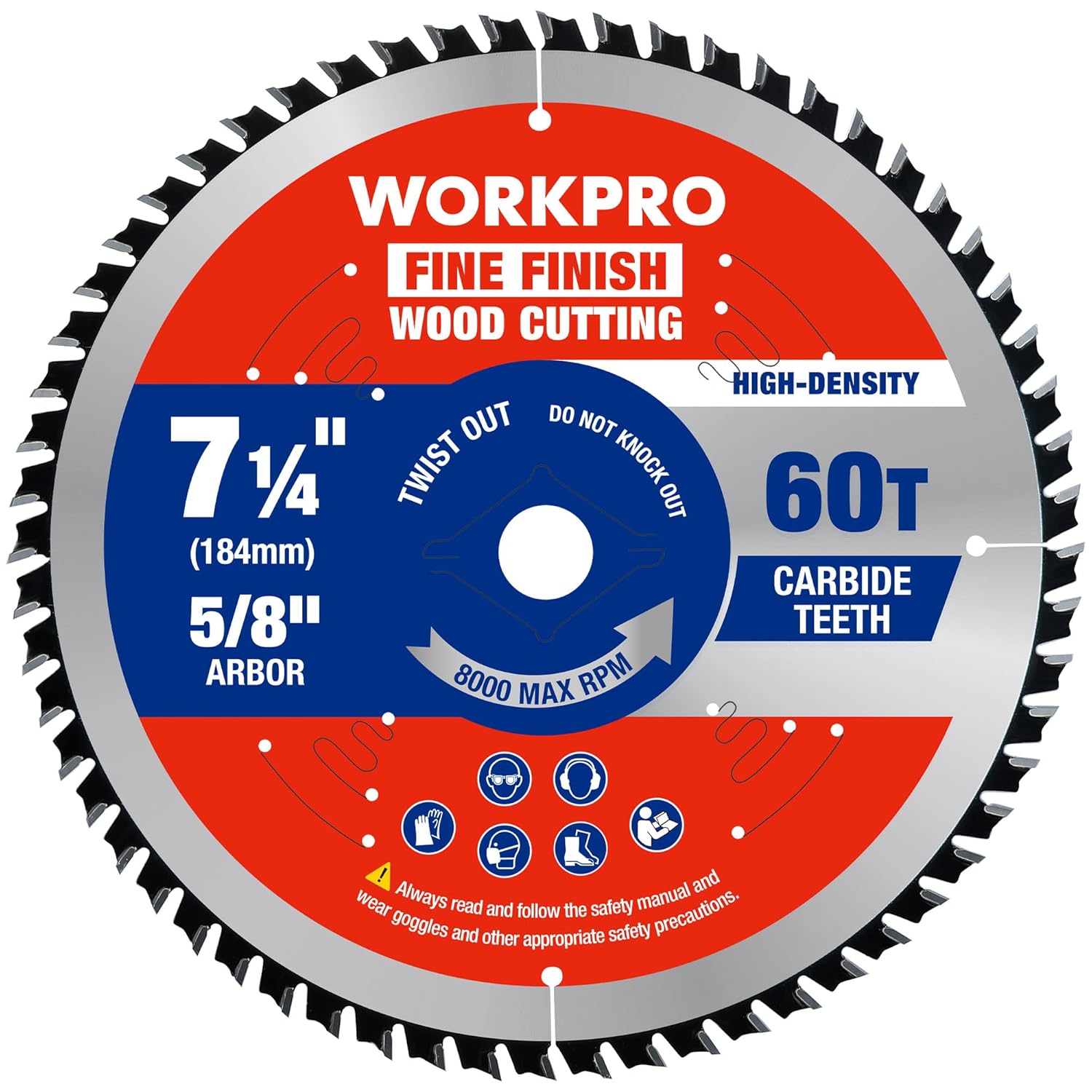
If you would rather start from a short list, these are popular options on Amazon for this search. Check each listing’s details, size and current price before you buy.



FAQ
What happens if I use a blade with the wrong arbor size?
Using a blade with an arbor hole that is too large can cause the blade to wobble, leading to inaccurate cuts and dangerous vibration. If the arbor hole is too small, you cannot mount the blade at all. Always use the correct arbor size or a proper reducing bushing. Never force a blade onto a spindle.
Can I use a thin kerf blade on a miter saw?
Yes, thin kerf blades are commonly used on miter saws, especially for cutting hardwoods or when the saw motor is less powerful. However, thin kerf blades may flex more during bevel cuts, so choose a high‑quality blade with a stiff plate. Check the blade’s maximum RPM rating against your miter saw’s speed.
How often should I clean my saw blades?
Clean your blades whenever you notice resin buildup or a decline in cut quality. For heavy use, cleaning after every few hours of cutting softwoods can help. Regular cleaning extends the time between sharpenings by preventing pitch from hardening on the teeth.
Is it safe to sharpen a blade myself?
Sharpening a carbide‑tipped blade requires a diamond abrasive and a steady hand to maintain the correct tooth angles. If you have experience and the right tools, you can sharpen blades at home. For most DIYers, professional sharpening or replacement is safer and more reliable. Improper sharpening can leave the blade unbalanced or with incorrect geometry, leading to poor cuts and increased kickback risk.
Selecting the right saw blade for your circular, miter, or table saw comes down to matching the diameter and arbor, choosing the tooth count and grind for your material, and respecting safety limits like RPM ratings. With proper care—cleaning pitch, inspecting teeth, and sharpening or replacing when dull—you will get cleaner cuts and longer blade life. For more on choosing and using saw blades, see our saw blade selection guide and the broader tool accessories guide for related information on other cutting tools.