Whether you carry tools to a job site, up a ladder, or just keep them organized in the garage, the right storage system saves time and protects your investment. Tool bags, tool boxes, and modular storage systems each serve different needs. This guide covers the main types, key features, and how to pick the best option for your work style and tools.
Types of Tool Storage
Tool storage falls into several broad categories. Understanding the differences helps you match the container to the task. The main types include open tote bags, zip bags and backpacks, hard tool boxes, modular stacking systems, and small parts organizers. Many people combine two or more types for a complete setup.
Open Tote Bags
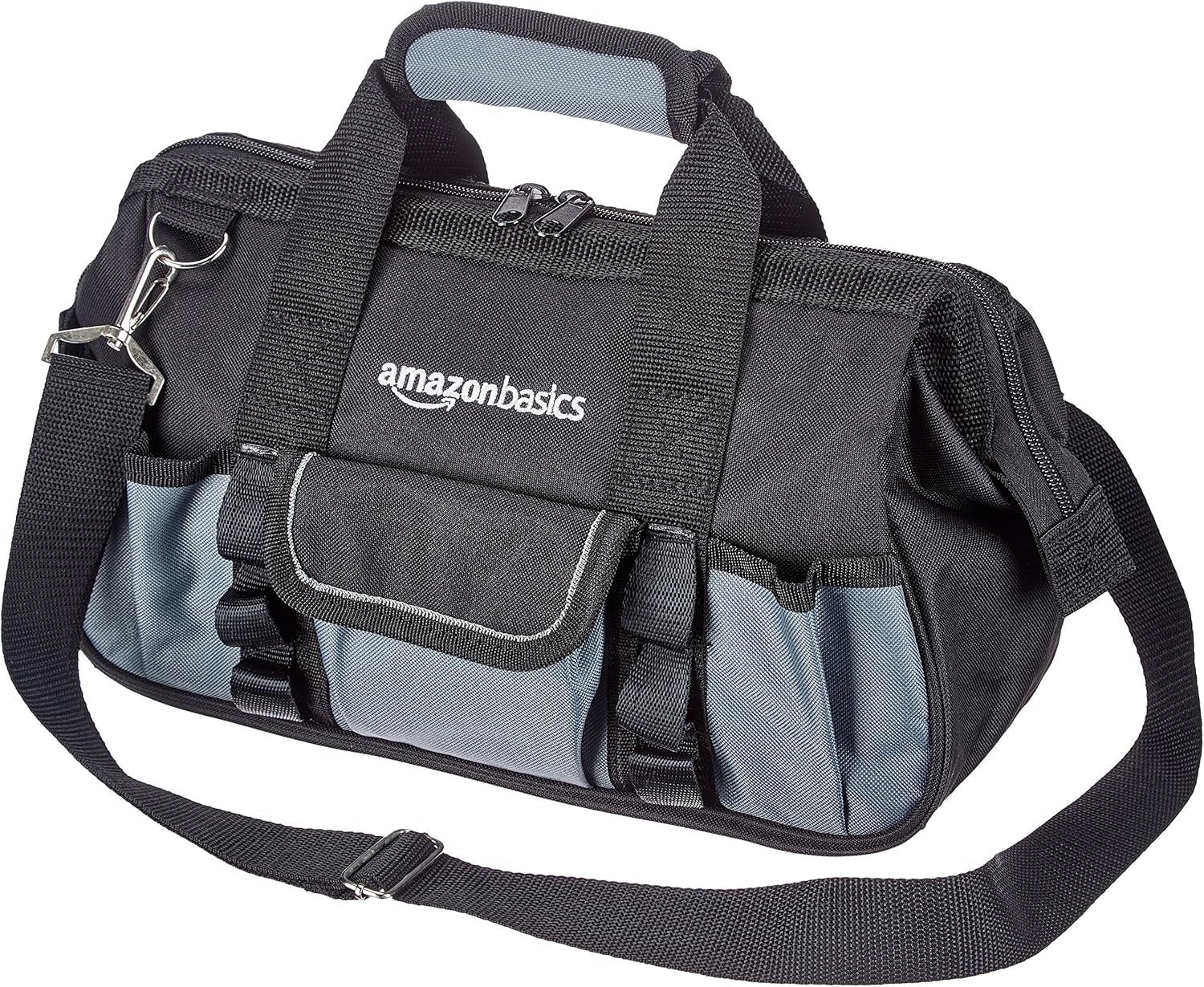
Open tote bags are the classic tool carrier. They have a wide open top, often reinforced with a rigid frame or thick canvas, and a single large compartment. Some have internal dividers or small pockets along the sides. The open design gives you fast access to tools without unzipping or unlatching. You can see everything at a glance.
These bags work well for home use and light service calls where you need a handful of common tools. They are easy to load and unload. The downside is that tools are exposed to dust and moisture, and smaller items can shift and get lost at the bottom. Look for a tote with a padded handle and a shoulder strap for heavier loads. Some models have a rigid plastic base that keeps the bag upright even when empty.
Zip Bags and Backpacks
Zip bags close fully with a zipper, protecting tools from dust, dirt, and light rain. They come in many sizes, from small pouches to large duffel-style bags. Many zip bags have multiple pockets, both inside and outside, for organizing small parts, bits, and drivers.
Backpacks are a popular subtype of zip bag. They distribute weight across both shoulders, leaving your hands free. This makes them ideal for service calls where you climb stairs, carry other equipment, or need to move quickly. Backpacks often have a padded laptop or tablet sleeve, plus dedicated pockets for drills, impact drivers, and hand tools. Look for reinforced stitching at stress points, padded shoulder straps, and a waist belt for heavy loads.
Zip bags and backpacks offer good protection from weather and dust. They keep tools organized and prevent them from rattling together. The main trade-off is that you must unzip to access tools, which can slow you down on fast-paced jobs.
Hard Tool Boxes
Hard tool boxes are rigid containers made from plastic, metal, or composite materials. They provide the highest level of protection against impacts, crushing, and weather. Most have a latch or lock mechanism, a handle, and sometimes a removable tote tray inside. The classic metal box is durable but heavy. Modern plastic boxes are lighter, often have a water-resistant seal, and can withstand drops.
Hard boxes are best for storing and transporting heavy or delicate tools, such as levels, saws, and precision instruments. They stack well in a truck or van. The downside is that they are bulky and can be awkward to carry up ladders. Some have wheels and a telescoping handle, turning them into a rolling cart. If you work on rooftops or in tight spaces, a hard box may be too rigid and heavy.
Modular Stacking Systems
Modular stacking systems consist of interlocking boxes, crates, and organizers that latch together. You can build a custom stack that fits your tools and job. The modules typically include a large tool box, a small parts organizer, a deep bin for power tools, and sometimes a rolling cart base. Latches on the sides and top allow you to connect modules securely and carry the whole stack by a single handle.
These systems are popular with professionals who need to move a complete workshop from van to job site. They offer excellent organization because each module can be dedicated to a specific category, such as fasteners, drill bits, or hand tools. Many are weather-resistant with rubber gaskets. The modular design lets you add or remove boxes as needed. The main drawback is cost and weight when fully loaded. Some systems have a dedicated wheeled base that lets you roll the entire stack like a dolly.
Small Parts Organizers
Small parts organizers are clear or translucent boxes with adjustable dividers. They are designed for screws, nails, anchors, bits, and other small hardware. Most have a latch that keeps the lid closed and a handle for carrying. Some are designed to fit inside larger tool boxes or modular systems.
These organizers are essential for anyone who works with fasteners. They keep small items sorted and visible, saving time on the job. Look for dividers that lock in place, a gasket for weather resistance, and a transparent lid so you can see contents without opening. Some models have removable cups or bins that you can take to the work area.
Foam Inserts for Drawers
Foam inserts are custom-cut or pre-cut foam sheets that fit inside tool box drawers or hard cases. They hold each tool in its own cutout, preventing movement and damage. Foam inserts are popular for precision tools, such as calipers, micrometers, and electrical testers, as well as for socket sets and wrenches.
You can buy pre-cut foam for common tool sets or cut your own using a knife or hot wire. A well-organized foam layout lets you see at a glance if a tool is missing. This is especially useful for jobs where you need to account for every tool at the end of the day. Foam inserts do not work well for frequently changing tool sets, because recutting foam takes time.
Choosing by Job
The best storage system depends on where and how you work.
Service Calls and Home Use
For service calls, a backpack or a zip bag with multiple pockets is often the best choice. You need to carry a variety of tools up stairs, through doorways, and into tight spaces. A backpack keeps your hands free for carrying parts or opening doors. Look for a bag with a padded shoulder strap and a sturdy handle for lifting.
For home use, an open tote bag or a small hard box is usually sufficient. You likely work in a garage or basement and do not need to carry tools far. A tote bag gives quick access for small repairs. If you have many tools, consider a rolling hard box or a modular system that you can wheel from the shelf to the workbench.
Carrying Up Ladders
When you work on a ladder, weight and balance are critical. A backpack distributes weight evenly and leaves both hands free for climbing. Some backpacks have a loop or strap to hook onto the ladder for quick access. Avoid large hard boxes or totes that force you to carry them in one hand while climbing. If you must use a hard box, choose a small one with a shoulder strap and keep it light.
Safety warning: Never carry tools in your hands while climbing a ladder. Use a tool belt, a bucket hoist, or have someone hand tools up to you. Always follow the ladder manufacturer’s instructions for maximum weight capacity.
Weatherproofing
If you work outdoors or in damp conditions, weather resistance is important. Look for storage with rubber gaskets or seals around the lid. Hard boxes and modular systems often have an IP rating or a claim of water resistance. Zip bags with a coated fabric and sealed zippers offer good protection from rain and dust. Open tote bags offer no weather protection. For long-term storage in a humid garage, consider a hard box with a desiccant pack inside to prevent rust.
Even weather-resistant containers can fail if submerged. Do not rely on them to keep tools dry if they fall into water. Check the manufacturer’s instructions for the level of protection.
Wheels
Wheels are a game-changer for heavy loads. Rolling tool boxes and modular systems with a wheeled base let you move dozens of pounds with ease. Look for wheels that are large enough to roll over gravel, grass, or thresholds. Small plastic wheels can jam or break. Some systems have a telescoping handle that locks at different heights. If you work on rough terrain, consider a cart or dolly instead of built-in wheels.
Wheels add weight and bulk. For jobs that require climbing stairs or carrying the box by hand, a wheeled model may be more trouble than help. In those cases, a backpack or a lightweight zip bag is better.
Features That Actually Matter
Beyond the basic type, several features make a storage system more useful.
- Handle and strap quality. Padded handles and adjustable shoulder straps reduce fatigue. Look for riveted or reinforced attachment points.
- Latch and closure type. Metal latches are more durable than plastic. Zippers should be heavy-duty with large pulls. Some hard boxes have a lock hasp for security.
- Internal organization. Removable dividers, pockets, and trays help you separate tools. Modular systems with interchangeable bins are very flexible.
- Material and construction. Thick fabric, double stitching, and reinforced corners indicate durability. For hard boxes, polypropylene or ABS plastic resists impacts better than thinner materials.
- Stackability and compatibility. If you plan to expand, choose a system where boxes latch together or share a common footprint. Some systems are designed to fit on a rolling cart.
- Foam inserts. Pre-cut or customizable foam protects fragile tools and helps you keep inventory.
Sizing and Fit
Before buying, measure your largest tools. A storage system that cannot fit your circular saw or drill kit is useless. Check the interior dimensions, especially height and depth. For modular systems, ensure the main box can hold your power tools and that the small parts organizer has enough compartments for your fasteners.
Consider how much weight you can comfortably carry. A fully loaded hard box or backpack can become very heavy. A common rule of thumb is to keep the total weight under what you can lift safely without straining. If you need to move a large collection, a wheeled system or a combination of a rolling cart and smaller bags is better.
For workshop storage, you may want a combination of a tool box on wheels and a pegboard or wall storage system for frequently used tools. See our guide on pegboards, slatwall and rail systems for tool storage for wall-mounted options.
Common Buying Mistakes
- Buying too small. Many people underestimate how many tools they own. A bag that is just big enough today will be too small after a few new purchases. Leave room to grow.
- Ignoring weight. A large hard box may look impressive, but once filled with tools it can be too heavy to carry. Always test the empty weight and consider how you will move it.
- Overlooking weather protection. If you store tools in a damp garage or work outdoors, a non-sealed bag can lead to rust. Invest in weather-resistant storage.
- Choosing style over function. A bag with many small pockets looks organized, but if the pockets are too narrow for your tools, they are useless. Check pocket dimensions.
- Not checking compatibility. Modular systems from different manufacturers usually do not latch together. Stick with one system if you plan to stack.
- Forgetting about access. A deep box with no dividers forces you to dig through a pile of tools. Removable trays or tote bins make a big difference.
Care, Cleaning and Upkeep
Tool storage lasts longer with basic care. For fabric bags, brush off dirt and wipe with a damp cloth. Avoid machine washing unless the manufacturer says it is safe. For hard plastic boxes, wash with mild soap and water. Do not use harsh solvents that can crack the plastic.
Check zippers and latches regularly. A stuck zipper can be lubricated with a silicone spray. Replace broken latches if possible. For foam inserts, remove the foam and shake out debris. If foam gets wet, let it dry completely before closing the case to prevent mold.
Store empty or lightly loaded boxes in a dry place. Extreme heat can warp plastic boxes, and extreme cold can make them brittle. If you live in a climate with wide temperature swings, keep storage out of direct sunlight.
For a complete workshop organization strategy, see our article on workbenches and workshop setup. And for more on tool bags and organizers, visit the tool bags and organizers section.
FAQ
What is the best tool storage for a beginner DIYer?
An open tote bag or a small hard box is a good starting point. They are affordable, easy to use, and work well for a basic set of hand tools. As your collection grows, you can add a small parts organizer and a backpack for service calls.
Can I use a modular stacking system for home use?
Yes, but modular systems are often overkill for home use unless you have a large tool collection. They are most valuable if you need to transport tools between a van and a job site. For a home workshop, a rolling hard box or a combination of a tool box and pegboard is usually more practical.
How do I keep tools from rusting in a tool bag?
Choose a weather-resistant bag or box with a seal. Store tools clean and dry before putting them away. You can add silica gel desiccant packs inside the bag to absorb moisture. For long-term storage, apply a light coat of oil to metal tools.
Are foam inserts worth the cost?
Foam inserts are worth it if you need to protect precision tools or if you want a clear visual inventory. They are less useful for everyday tool sets that change frequently. Pre-cut foam for common socket sets and wrench sets saves time, but you can also cut your own from generic foam sheets.
Choosing the right tool storage comes down to how you work, what you carry, and where you store it. Open totes offer speed, zip bags and backpacks offer portability, hard boxes offer protection, and modular systems offer flexibility. Combine types as your needs grow, and always prioritize safety when carrying tools up ladders or moving heavy loads. With the right system, your tools stay organized, protected, and ready for the next job.