
 By Caleb Morgan
Updated November 2026
Choosing a 10-inch sliding compound miter saw comes down to cut capacity, bevel options, dust handling and how often you will move the saw. This list compares seven models on those points, drawing on manufacturer specifications, product listings and patterns in owner feedback rather than hands-on testing.
Our top picks at a glance
- 1
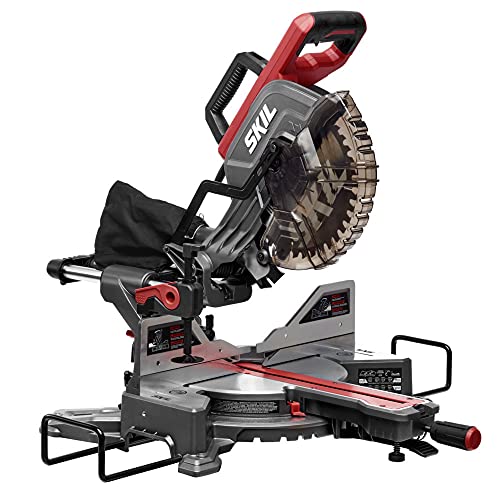 TOP CHOICEBest overallSKIL 10" Dual Bevel Sliding Compound Miter Saw-MS6305-00View on Amazon
- 2
 TOP CHOICEBest for wide stockMakita LS1019L 10" Dual-Bevel Sliding Compound Miter Saw with LaserView on Amazon
- 3
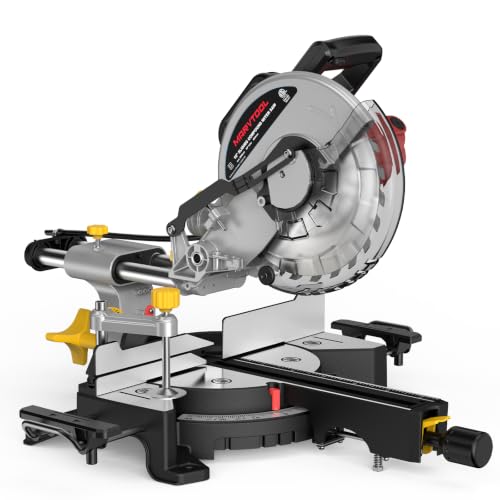 TOP CHOICEBest for metal and mixed materialsMarvtool 10-inch Sliding Compound Miter Saw, 5000RPM, 15 Amp, Single BView on Amazon
- 4
 Best for multi-material cuttingDOVAMAN 10-Inch Sliding Miter Saw, Multi-Material, 2-Speed, 15AView on Amazon
- 5
 Best for jobsite durabilityDEWALT Miter Saw, Single Bevel, Compound, 10-Inch, 15-Amp (DWS713)View on Amazon
- 6
 Best budget pickWEN 15-Amp 10-Inch Single-Bevel Sliding Compound Miter Saw with LaserView on Amazon
- 7
 Best for simple single-bevel workMarvtool 10-inch Compound Miter Saw, 5000RPM, 15 Amp, Single Bevel 0-4View on Amazon
Our Top Picks
Quick Comparison
| Product | Best for | Key feature |
|---|---|---|
| SKIL 10″ Dual Bevel Sliding Compound Miter Saw-MS6305-00 | Overall use | Dual bevel range |
| Marvtool 10-inch Sliding Compound Miter Saw (B0F9KMPTZF) | Metal and mixed materials | 36T blade, extension table |
| DOVAMAN 10-Inch Sliding Miter Saw | Multi-material cutting | Three TCT blades included |
| Makita LS1019L 10″ Dual-Bevel Sliding Compound Miter Saw | Wide stock | Dual bevel with laser |
| DEWALT Miter Saw, Single Bevel, Compound, 10-Inch (DWS713) | Jobsite durability | Single bevel, 15-amp motor |
| WEN 15-Amp 10-Inch Single-Bevel Sliding Compound Miter Saw | Budget buyers | Built-in laser guide |
| Marvtool 10-inch Compound Miter Saw (B0F9KL8F96) | Simple single-bevel work | Extension table |
SKIL 10″ Dual Bevel Sliding Compound Miter Saw-MS6305-00
SKIL 10" Dual Bevel Sliding Compound Miter Saw-MS6305-00
Best for: Overall use across framing, trim and general carpentry.
Suits a builder or serious DIYer who wants bevel cuts on both sides of the blade without swapping saws.
Pros:
- Dual bevel range covers left and right cuts
- Sliding rails extend crosscut capacity
Cons:
- Owners often mention the fence needs periodic squaring
Marvtool 10-inch Sliding Compound Miter Saw, 5000RPM, 15 Amp, Single Bevel 0-45° with Extension Table, 36T Blade, Power Saw for Metal, Plastic, Wood, Laminates
Marvtool 10-inch Sliding Compound Miter Saw, 5000RPM, 15 Amp, Single Bevel 0-45° with Extension Table, 36T Blade, Power Saw for Metal, Plastic, Wood, Laminates
Best for: Metal and mixed-material cutting.
Fits someone who regularly cuts aluminum trim or laminates and wants a 36-tooth blade and extension table out of the box.
Pros:
- 36-tooth blade suits non-wood materials
- Extension table supports longer stock
Cons:
- Single bevel limits angled cuts to one side
DOVAMAN 10-Inch Sliding Miter Saw, Multi-Material, 2-Speed, 15A
DOVAMAN 10-Inch Sliding Miter Saw, Multi-Material, 2-Speed, 15A | Includes 3 TCT Blades, Laser Guide, 0-45° Bevel Cut, Max Cut 3.5 x 13.4 in and 9 Positive Stops.
Best for: Multi-material cutting with a range of blade choices.
Works for a hobbyist who switches between wood, plastic and light metal and wants extra blades on hand.
Pros:
- Three TCT blades included
- Two-speed operation and laser guide
Cons:
- Owners sometimes report the laser needs frequent alignment
Makita LS1019L 10″ Dual-Bevel Sliding Compound Miter Saw with Laser
Makita LS1019L 10" Dual-Bevel Sliding Compound Miter Saw with Laser
Best for: Cutting wide stock like shelving and fascia boards.
A good match for a finish carpenter who wants dual bevels and a laser guide for accurate marks.
Pros:
- Dual bevel with laser guide
- Sliding design handles wide boards
Cons:
- Heavier than single-bevel models, which matters on a jobsite
DEWALT Miter Saw, Single Bevel, Compound, 10-Inch, 15-Amp (DWS713)
DEWALT Miter Saw, Single Bevel, Compound, 10-Inch, 15-Amp (DWS713)
Best for: Jobsite durability and everyday framing.
Aimed at a contractor who wants a familiar, rugged 15-amp saw for repeated daily cuts.
Pros:
- 15-amp motor handles dense lumber
- Well-known brand with wide parts support
Cons:
- Single bevel means flipping stock for opposite-side angles
Buying Guide
Cut Capacity and Stock Size
Check the maximum cut width and height listed for each saw, especially for wide boards, trim, and crown molding. A sliding arm gives you more crosscut width than a fixed-arm saw, which matters when you work with wider lumber.
Also consider the nominal depth at 90 and 45 degrees, since that determines how thick a piece you can cut in one pass.
Bevel Options: Single or Dual
A single-bevel saw tilts in one direction, which is simpler and often lighter. A dual-bevel saw tilts both ways, so you can make bevel cuts without flipping the workpiece, which saves time on repetitive trim work.
If you do a lot of compound cuts on framing or molding, dual bevel is usually the more convenient choice.
Material Versatility and Blades
Some saws are marketed for wood, plastic, laminate, and light metal. Check whether the included blade suits your main material, since a fine-tooth blade is better for laminate and trim while a general-purpose blade works for framing lumber.
Look at what blades come in the box and whether replacement blades are easy to find.
Laser Guides, Stops, and Accuracy Aids
A laser guide can help you line up cuts quickly, though it should never replace checking your measurements. Positive detent stops at common angles, such as 15, 22.5, and 45 degrees, make repeat cuts faster and more consistent.
Portability and Job Site Use
If you carry the saw between jobs, weigh the unit and check whether it has a carry handle or dedicated case. A stable base, dust bag or port, and a fold-down or removable stand can make a real difference on a job site versus a garage workshop.
FAQ
Is a 10-inch sliding compound miter saw good for framing and trim work?
Yes, a 10-inch sliding model handles most framing lumber and trim work well. The sliding arm gives you extra width for crosscuts on wider boards and molding. It is a versatile choice for both general carpentry and finish work.
What is the difference between a sliding and a non-sliding miter saw?
A non-sliding saw has a fixed arm, so its crosscut capacity is limited to the blade diameter. A sliding saw rails the blade forward and back, allowing wider cuts in a single pass. Sliding models usually cost more and are a bit heavier.
Can these saws cut metal or plastic?
Some models are marketed for multiple materials, including light metal, plastic, and laminate, but this depends on the blade and speed. Always confirm that the saw and blade you choose are rated for the specific material and follow the manufacturer’s safety guidance.
Do I need a dust collection system?
Dust collection is helpful, especially indoors or in a garage where fine particles build up quickly. Most saws include a dust bag or port, and connecting a shop vacuum can improve cleanliness and visibility. Wearing eye and hearing protection is also recommended during use.
Should I choose dual bevel or single bevel?
Choose dual bevel if you frequently make compound cuts in both directions, such as on crown molding or angled framing. A single-bevel saw works well if you mostly make straight or one-direction bevel cuts and want a simpler, often lighter tool.
Conclusion
If you want the most flexibility for mixed trim and framing work, a dual-bevel sliding model with a laser guide and strong cut capacity is the better fit. Buyers who need wide-stock capacity or regular bevel work will likely prefer the dual-bevel options in this list.
For occasional home projects, a simpler single-bevel model with a budget-friendly price point and basic features can cover most needs. Match the saw to your materials, cut sizes, and how often you will carry it to the job.
Related reading
- Top 3 DeWalt Compound Miter Saw 12 Inch Picks Compared for Home and Job Sites
- Ryobi Compound Miter Saw 10-Inch: 3 Best Picks Compared (2026)
- Miter Saw Buying Guide: Size, Sliding and Compound Explained
- Milwaukee Sliding Compound Miter Saw: Setup, Cuts and Common Pitfalls (2026)
- Craftsman Compound Miter Saw 10 Inch: 3 Best Picks Compared (2026)
- 7 Best Sliding Compound Miter Saws of 2026
About Caleb Morgan
Caleb Morgan is part of our editorial team and reviews and edits our power tools guides, checking product details against manufacturer specifications and owner feedback.





