
 By Caleb Morgan
Updated November 2026
A sliding compound miter saw is the tool to reach for when you need long, accurate crosscuts and angled miters in one pass. The sliding arm extends the blade’s cutting capacity well beyond what a basic miter saw can handle, which matters for wide boards, decking and crown molding. This list focuses on the criteria that actually separate these saws in daily use: cutting capacity, bevel range, motor and blade quality, positive stops and how stable the table feels at the cut line. Use it to narrow the field, then check the Buying Guide below for the details that decide the final choice.
Our top picks at a glance
- 1
 TOP CHOICEBest overallSKIL 10" Dual Bevel Sliding Compound Miter Saw-MS6305-00View on Amazon
- 2
 TOP CHOICEBest for trim and small shopsMetabo HPT 10-Inch Compound Miter Saw, C10FCG2View on Amazon
- 3
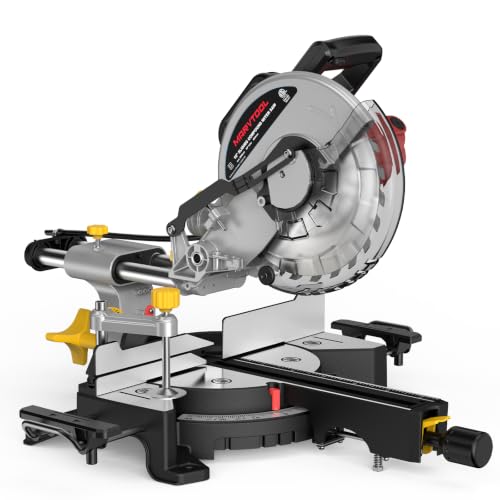 TOP CHOICEBest budget pickMarvtool 10-inch Sliding Compound Miter SawView on Amazon
- 4
 Best for mixed materialsDOVAMAN 10-Inch Sliding Miter Saw, Multi-MaterialView on Amazon
- 5
 Best for wide stockDOVAMAN 12-Inch Dual-Bevel Sliding Compound Miter SawView on Amazon
- 6
 Best for decking and framingProstormer 12-Inch 15A 5000 RPM Sliding Compound Miter SawView on Amazon
- 7
 Best for dual-bevel versatilityVEVOR Sliding Compound Miter Saw 12" Double BevelView on Amazon
Our Top Picks
Quick Comparison
| Product | Best for | Key feature |
|---|---|---|
| SKIL 10″ Dual Bevel Sliding Compound Miter Saw-MS6305-00 | Overall balance of capacity and bevel options | Dual bevel with sliding arm |
| Metabo HPT 10-Inch Compound Miter Saw, C10FCG2 | Trim work and small shops | Single bevel with positive stops and large work table |
| Marvtool 10-inch Sliding Compound Miter Saw | Budget-minded buyers | Extension table and 36-tooth blade |
| DOVAMAN 10-Inch Sliding Miter Saw, Multi-Material | Mixed materials including metal and plastic | Two-speed motor with three TCT blades |
| DOVAMAN 12-Inch Dual-Bevel Sliding Compound Miter Saw | Wide boards and dual-bevel cuts | 12-inch blade with laser guide |
| Prostormer 12-Inch 15A 5000 RPM Sliding Compound Miter Saw | Decking, framing and trim | 100-tooth blade and LED light |
| VEVOR Sliding Compound Miter Saw 12″ Double Bevel | Composite decking and laminates | Double bevel with LED alignment |
SKIL 10″ Dual Bevel Sliding Compound Miter Saw-MS6305-00
SKIL 10" Dual Bevel Sliding Compound Miter Saw-MS6305-00
Best for: Overall balance of capacity and bevel options
This is a sensible starting point for a homeowner or hobbyist who wants one saw that handles trim, shelving stock and the occasional wide board. The dual bevel setup means you can make compound cuts on both sides of the blade without flipping the workpiece.
Key specs:
- 10-inch blade size
- Dual bevel head
- Sliding rail for extended crosscut capacity
Pros:
- Dual bevel reduces repositioning on compound cuts
- Sliding arm adds capacity over a fixed-head saw
- Straightforward setup for a first sliding saw
Cons:
- 10-inch blade limits depth on thick stock compared with 12-inch saws
- Owners often recommend upgrading the blade for finer finish work
Bottom line: A good choice for someone who wants a versatile first sliding miter saw without stepping up to a larger blade.
View on AmazonMetabo HPT 10-Inch Compound Miter Saw, C10FCG2
Metabo HPT 10-Inch Compound Miter Saw, 15-Amp, Single Bevel, C10FCG2 | 24T TCT Blade Included, Precision Angle Cuts, Positive Stops, Large Work Table, Lightweight Portable Design
Best for: Trim work and small shops
This model suits trim carpenters and small workspaces where precision matters more than maximum capacity. The single bevel design keeps the head simple and the cut line easy to read.
Key specs:
- 10-inch blade with 24-tooth TCT blade included
- 15-amp motor
- Single bevel, positive stops
- Large work table
Pros:
- Positive stops help repeat common miter angles
- Large table supports longer trim pieces
- Lightweight and easy to move between jobs
Cons:
- Single bevel means flipping the workpiece for opposing compound cuts
- Limited crosscut capacity compared with sliding models
Bottom line: The right pick for trim-focused work where a compact footprint and repeatable angles matter most.
View on AmazonMarvtool 10-inch Sliding Compound Miter Saw
Marvtool 10-inch Sliding Compound Miter Saw, 5000RPM, 15 Amp, Single Bevel 0-45° with Extension Table, 36T Blade, Power Saw for Metal, Plastic, Wood, Laminates
Best for: Budget-minded buyers
This saw is aimed at buyers who want sliding capacity and an extension table without a premium price tier. It is a reasonable match for occasional DIY projects and light framing.
Key specs:
- 10-inch blade, 36-tooth blade included
- 15-amp motor
- Single bevel, 0–45° range
- Extension table included
Pros:
- Extension table adds support for longer stock
- Sliding arm extends crosscut capacity
- Good value for occasional use
Cons:
- Owners often report the included blade is best replaced for finish work
- Single bevel limits compound-cut flexibility
Bottom line: A practical budget pick for light use, as long as you plan for better blades over time.
View on AmazonDOVAMAN 10-Inch Sliding Miter Saw, Multi-Material
DOVAMAN 10-Inch Sliding Miter Saw, Multi-Material, 2-Speed, 15A | Includes 3 TCT Blades, Laser Guide, 0-45° Bevel Cut, Max Cut 3.5 x 13.4 in and 9 Positive Stops.
Best for: Mixed materials including metal and plastic
This saw is built for users who switch between wood, laminates and thin non-ferrous materials. The two-speed motor gives more control when cutting harder or thinner stock.
Key specs:
- 10-inch sliding miter saw, 15 amps
- Two-speed motor
- Includes three TCT blades and a laser guide
- 0–45° bevel, nine positive stops
Pros:
- Two speeds suit different materials
- Three blades in the box cover more jobs
- Laser guide helps align cut marks
Cons:
- Laser guides generally need periodic alignment checks
- Maximum cut capacity is smaller than the 12-inch models on this list
Bottom line: Best for users who cut a range of materials and want blade variety out of the box.
View on AmazonDOVAMAN 12-Inch Dual-Bevel Sliding Compound Miter Saw
DOVAMAN 12-Inch Dual-Bevel Sliding Compound Miter Saw, 15-Amp | 3800 RPM motor with laser guide, 4.2 x 13 in max cut, 0-45° bevel & miter cut and 9 positive stops.
Best for: Wide boards and dual-bevel cuts
This is a fit for users who regularly cut wider stock and want compound cuts on both sides of the blade. The 12-inch blade gives more depth than 10-inch saws.
Key specs:
- 12-inch blade
- 15-amp motor, 3800 RPM
- Dual-bevel 0–45° miter and bevel cuts
- Max cut 4.2 x 13 in, nine positive stops, laser guide
Pros:
- Larger capacity for wide boards
- Dual bevel for compound cuts without flipping stock
- Positive stops speed up repeat angles
Cons:
- Heavier than 10-inch saws, which matters for portability
- Owners often recommend squaring the fence before first use
Bottom line: A strong fit for anyone who needs 12-inch capacity and dual bevels at a moderate size.
View on AmazonProstormer 12-Inch 15A 5000 RPM Sliding Compound Miter Saw
Prostormer 12-Inch 15A 5000 RPM Sliding Compound Miter Saw | 100-Tooth Blade, 0-45° Miter/Bevel Cuts, LED Light, Safety Guard, Extendable Support/Clamp, for Woodworking/Decking/Trim
Best for: Decking and framing
This saw targets jobs where long, clean crosscuts through dimensional lumber matter. The high-tooth-count blade and extendable support help with longer boards.
Key specs:
- 12-inch blade, 100-tooth blade included
- 15-amp motor, 5000 RPM
- 0–45° miter and bevel cuts
- LED light, safety guard, extendable support and clamp
Pros:
- Extendable support and clamp help with long boards
- LED light improves visibility on the cut line
- High-tooth blade suits finer finish cuts
Cons:
- A fine-tooth blade cuts slower through thick framing lumber
- Owners often report the clamp needs careful positioning on uneven stock
Bottom line: A good match for decking and framing crews who want long-board support and a bright cut line.
View on AmazonVEVOR Sliding Compound Miter Saw 12″ Double Bevel
VEVOR Sliding Compound Miter Saw 12" Blade Double Bevel Sliding Miter Saw | For Wood, Composite Decking, and Laminates, 15 Amp Motor, 60-Tooth, Corded, with LED Precision Alignment, Angle Adjustable
Best for: Composite decking and laminates
This model fits users cutting composite decking, laminates and wood with a single saw. The double bevel and LED alignment help with angled cuts on harder materials.
Key specs:
- 12-inch blade, 60-tooth blade
- 15-amp corded motor
- Double bevel head
- LED precision alignment
Pros:
- Double bevel handles compound cuts on both sides
- LED alignment aids accurate marking
- Blade suits composite and laminate stock
Cons:
- Corded operation limits use away from outlets
- Owners often note the sliding action benefits from periodic cleaning and lubrication
Bottom line: Suited to composite decking and laminate work where a double bevel saves setup time.
View on AmazonBuying Guide
Blade size and cutting capacity
Blade diameter sets the maximum depth of cut, and the sliding rail sets how wide a board can be crosscut. A 10-inch blade is common for trim and light framing, while a 12-inch blade gives more depth and width. Check the maximum cut listed for both square and mitered positions, since miter capacity is usually smaller.
Good picks for this: DOVAMAN 12-Inch Dual-Bevel Sliding Compound Miter Saw, Prostormer 12-Inch 15A 5000 RPM Sliding Compound Miter Saw
Bevel configuration
A single-bevel saw tilts in one direction, while a dual-bevel saw tilts both ways. Dual bevels save time on compound cuts, such as crown molding, because you do not need to flip the workpiece. Single-bevel saws are often simpler and more compact.
Good picks for this: VEVOR Sliding Compound Miter Saw 12″ Double Bevel, SKIL 10″ Dual Bevel Sliding Compound Miter Saw-MS6305-00
Motor and speed
Most sliding miter saws in this class use 15-amp motors. Two-speed designs let you slow the blade for harder or non-ferrous materials, which helps with clean cuts and reduces the risk of burning or chipping. Check the stated RPM, but treat it as a general indicator rather than a complete measure of cut quality.
Good picks for this: DOVAMAN 10-Inch Sliding Miter Saw, Multi-Material, Prostormer 12-Inch 15A 5000 RPM Sliding Compound Miter Saw
Positive stops and angle accuracy
Positive stops are detents at common angles such as 0°, 22.5° and 45°. They make repeat cuts faster and more consistent. Confirm the saw’s square and miter settings with a reliable square before relying on it for finish work, since out-of-the-box alignment varies.
Good picks for this: Metabo HPT 10-Inch Compound Miter Saw, C10FCG2, DOVAMAN 12-Inch Dual-Bevel Sliding Compound Miter Saw
Table size and work support
A large table and extension wings support long stock and reduce tip-over. For trim and molding, extra support keeps the piece flat against the fence. Extendable supports and clamps help when cutting boards longer than the table.
Good picks for this: Prostormer 12-Inch 15A 5000 RPM Sliding Compound Miter Saw, Marvtool 10-inch Sliding Compound Miter Saw
Blade quality and tooth count
Tooth count affects finish and speed. Higher tooth counts give smoother cuts in trim and decking, while lower counts cut faster through framing lumber. Blades supplied with saws are often serviceable but not ideal for every job, so plan on replacing them for finish work. For guidance on selecting blades, see Saw Blades: Tooth Count, Kerf and Grind for Circular, Miter and Table Saws.
Good picks for this: Prostormer 12-Inch 15A 5000 RPM Sliding Compound Miter Saw, DOVAMAN 10-Inch Sliding Miter Saw, Multi-Material
Portability and stand setup
Weight and footprint matter if you move the saw between jobs. Ten-inch saws are generally lighter, while 12-inch models are heavier but add capacity. A sturdy stand or work table improves accuracy and safety. For setup ideas, see Miter Saw Stands, Cutting Guides and Sawhorses and 3 Best Miter Saw Work Tables for Job Sites and Shops: Picks Compared (2026).
Good picks for this: Metabo HPT 10-Inch Compound Miter Saw, C10FCG2, SKIL 10″ Dual Bevel Sliding Compound Miter Saw-MS6305-00
FAQ
What is the difference between a sliding and a non-sliding miter saw?
A non-sliding miter saw has a fixed head, so its crosscut capacity is limited by the blade diameter. A sliding saw runs the head along rails, which extends the cut width. That makes sliding saws better for wide boards and decking.
Should I choose a 10-inch or 12-inch sliding miter saw?
Choose 10-inch for trim, light framing and a smaller workspace. Choose 12-inch if you regularly cut wider stock, decking or thick material, since the larger blade adds depth and width.
Is a dual-bevel saw worth it?
A dual bevel is useful if you cut a lot of compound miters, such as crown molding, because it avoids flipping the workpiece. If your work is mostly straight miters or square crosscuts, a single bevel is usually enough.
What blade should I use for trim versus framing?
Use a higher tooth count for trim and finish work, which gives cleaner edges. Use a lower tooth count for framing lumber, where speed matters more than surface finish. Manufacturers typically list recommended tooth counts for each material.
How do I check that my miter saw is square?
Use a reliable square against the blade and fence, then make a test cut on scrap and check the joint. Adjust the fence and detents as the manual describes. Recheck periodically, since alignment can shift with use.
Can a sliding compound miter saw cut metal?
Most listings here are designed for wood, composite and laminates. Some models mention non-ferrous materials, but cutting metal requires a suitable blade and speed setting. Check the manufacturer’s stated materials before cutting anything other than wood or composite.
Do I need a stand or table for a sliding miter saw?
A stand or table improves stability and support for long stock, which helps accuracy and reduces tip-over risk. For more on setup, see Miter Saw Buying Guide: Size, Sliding and Compound Explained.
Conclusion
For overall balance, the SKIL dual-bevel model is a practical starting point. Trim-focused users will appreciate the Metabo HPT for its positive stops and large table, while the Marvtool suits budget-minded buyers. For mixed materials, the 10-inch DOVAMAN multi-material saw offers blade variety, and the 12-inch DOVAMAN dual-bevel model suits wider stock. The Prostormer fits decking and framing crews, and the VEVOR double-bevel model suits composite and laminate work. Match the blade size, bevel type and table support to the materials you cut most often.
Sources
- Consumer product safety guidance on power tool use and guarding (cpsc.gov)
- Workplace safety standards for power saws and guarding on job sites (osha.gov)
- Measurement and calibration resources relevant to checking square and angle accuracy (nist.gov)
About Caleb Morgan
Caleb Morgan is part of our editorial team and reviews and edits our power tools guides, checking product details against manufacturer specifications and owner feedback.

