
 By Caleb Morgan
Updated November 2026
A miter saw for baseboard work needs to hold accurate 45-degree miter and 90-degree square cuts on long, often wide trim boards. This list weighs each option by cut capacity, angle adjustment, dust control, portability and how well it suits trim-length boards, based on manufacturer specifications and patterns in owner feedback.
Our top picks at a glance
- 1
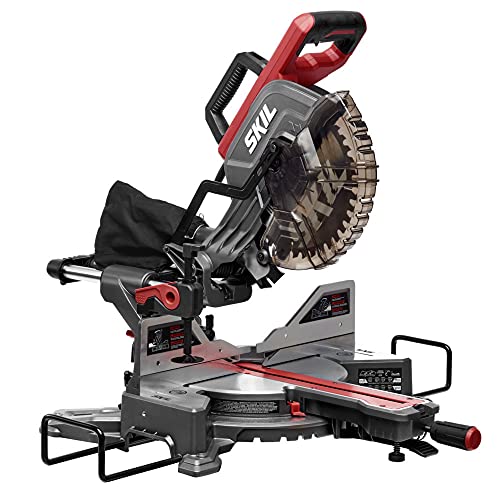 TOP CHOICEBest overallSKIL 10" Dual Bevel Sliding Compound Miter Saw-MS6305-00View on Amazon
- 2
 TOP CHOICEBest for wide trimCRAFTSMAN Mitre Saw, 12-Inch Saw & Clamping Box (CMHT20600)View on Amazon
- 3
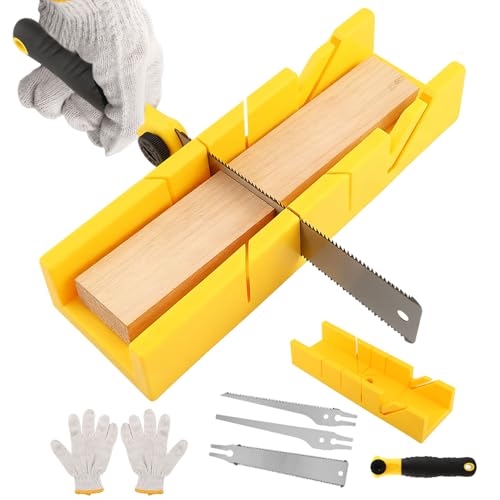 TOP CHOICEBest for small jobs and cornersMiter Box and Saw Set, 4-Piece Japanese Hand Saw with 3 Replaceable BlView on Amazon
- 4
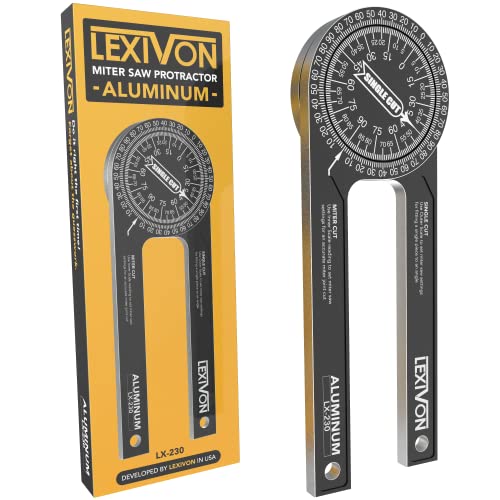 Best for checking anglesLEXIVON Aluminum Miter Saw Protractor | 7-Inch (LX-230)View on Amazon
- 5
 Best budget power optionMarvtool 10-inch Compound Miter Saw, 5000RPM, 15 AmpView on Amazon
Our Top Picks
Quick Comparison
| Product | Best for | Key feature |
|---|---|---|
| SKIL 10″ Dual Bevel Sliding Compound Miter Saw-MS6305-00 | Overall trim work | Dual bevel, sliding head |
| CRAFTSMAN Mitre Saw, 12-Inch Saw & Clamping Box (CMHT20600) | Wide trim boards | 12-inch blade, clamping box |
| Miter Box and Saw Set, 4-Piece Japanese Hand Saw | Small jobs and corners | Manual miter box, no power |
| LEXIVON Aluminum Miter Saw Protractor (LX-230) | Checking angles | Laser-engraved scales |
| Marvtool 10-inch Compound Miter Saw | Budget power cutting | 36T blade, extension table |
SKIL 10″ Dual Bevel Sliding Compound Miter Saw-MS6305-00
SKIL 10" Dual Bevel Sliding Compound Miter Saw-MS6305-00 A related read: 7 Best Table Saws with Miter Options for Accurate Cuts in 2026.
Best for: Overall trim work
A good fit for remodelers and DIYers who cut baseboard in both left and right bevels and need a sliding head for wider stock.
Pros
- Dual bevel setting reduces flipping boards for opposite-angle cuts.
- Sliding head handles wider boards than a fixed-head saw of similar blade size.
Cons
- Heavier than basic fixed-head saws, so it is less convenient to move around a job site.
CRAFTSMAN Mitre Saw, 12-Inch Saw & Clamping Box (CMHT20600)
CRAFTSMAN Mitre Saw, 12-Inch Saw & Clamping Box (CMHT20600)
Best for: Wide trim boards
Suited to users who regularly cut wide crown or base stock and want a larger blade for deeper capacity.
Pros
- The 12-inch blade gives more cutting depth for wide boards.
- The included clamping box helps hold trim steady during angled cuts.
Cons
- Larger footprint makes it harder to store in small shops.
Miter Box and Saw Set, 4-Piece Japanese Hand Saw with 3 Replaceable Blades & Work Gloves
Miter Box and Saw Set, 4-Piece Japanese Hand Saw with 3 Replaceable Blades & Work Gloves for Precise 45/90/135° Cuts in Wood, Baseboard, PVC, Soft Metals
Best for: Small jobs and corners
Works for homeowners making occasional trim repairs, or anyone who needs a quiet, no-power option for a few short cuts.
Pros
- Fixed 45, 90 and 135-degree guides keep angles repeatable.
- Replaceable blades are listed for wood, PVC and soft metals.
Cons
- Hand cutting takes longer than power cutting on full rooms of trim.
LEXIVON Aluminum Miter Saw Protractor | 7-Inch (LX-230)
LEXIVON Aluminum Miter Saw Protractor | 7-Inch Rust Proof Angle Finder Featuring Precision Laser Engraved Scales (LX-230)
Best for: Checking angles
Helpful for anyone verifying saw bevel and miter settings before cutting finished trim, rather than a cutting tool itself.
Pros
- Laser-engraved scales are easier to read than printed markings.
- Rust-proof aluminum body suits shop use.
Cons
- It measures angles only and does not replace a saw.
Marvtool 10-inch Compound Miter Saw, 5000RPM, 15 Amp
Marvtool 10-inch Compound Miter Saw, 5000RPM, 15 Amp, Single Bevel 0-45° with Extension Table, 36T Blade, Power Saw for Metal, Plastic, Wood, Laminates
Best for: Budget power cutting
A budget-minded choice for DIYers who want a powered saw for occasional trim jobs and can accept a simpler feature set.
Pros
- Extension table supports longer baseboard pieces.
- Single bevel range of 0 to 45 degrees covers common trim angles.
Cons
- Single bevel means flipping boards for opposite-direction cuts.
Buying Guide
Blade Diameter and Cut Capacity
A 10-inch blade handles most baseboard, while a 12-inch blade gives more depth for wide crown and base stock. Check the stated maximum cut width at 45 degrees, not only at 90. Worth reading next: 6 Best Hand Miter Saw Box Sets for Clean Trim and Woodworking (2026).
Sliding Versus Fixed Head
A sliding head extends cut width for boards that would not fit under a fixed blade. Fixed-head saws are lighter and easier to store.
Good picks for this: SKIL 10″ Dual Bevel Sliding Compound Miter Saw, CRAFTSMAN Mitre Saw
Bevel Direction
Dual bevel saws cut in both directions without flipping the workpiece, which helps with inside and outside corners. Single bevel saws are fine when you mostly cut one direction.
FAQ
Do I need a sliding miter saw for baseboard trim?
A sliding saw is helpful if you regularly cut wide boards, such as tall baseboard or crown molding, because the blade can travel across the full width of the board. A non-sliding saw can still handle most standard baseboard, but it may struggle with the widest pieces. Consider how tall your trim is before choosing. We also found 6 Best Miter Saws for Cutting Baseboard Picks for Clean Trim Work useful on this point.
What blade size works best for cutting baseboard?
Most baseboard work is done with a 10-inch or 12-inch blade, which offers enough cut depth to pass through typical trim boards in a single pass. Larger blades give more capacity for wide stock. A fine-tooth blade, often 60 teeth or more, will leave cleaner edges on painted or finished trim.
Is a compound miter saw better than a single bevel saw for trim?
A compound saw tilts the blade and pivots the head at the same time, which is useful for cutting inside and outside corners on crown molding. For flat baseboard, a single bevel saw is often enough and can be simpler to set up. Choose based on whether you expect to cut compound angles. A related read: Miter Saw for Baseboard Trim: 6 Best Picks Compared (2026).
Can a hand miter box be used instead of a power miter saw?
A hand miter box with a fine-tooth saw can produce accurate cuts on small jobs or short pieces, and it is quiet and inexpensive. For long runs of baseboard or many corners, a power saw is usually faster and more consistent. Many DIYers keep a hand set on hand for touch-up cuts and fitting.
How do I get tight corner joints when cutting baseboard?
Cut your miters carefully and test-fit each joint before nailing trim in place, since small angle errors add up quickly. Check your saw’s angle calibration with a protractor or angle finder before starting. A small amount of caulk and filler can hide minor gaps at the joint. 5 Best Miter Saws for Baseboard Corners Tools Compared (2026) goes further into this.
Should I worry about dust when cutting trim indoors?
Yes, miter saws throw a lot of sawdust, and that can settle throughout a room. Look for a saw with a dust port or connect a shop vacuum to reduce mess. Wear eye and hearing protection, and use a dust mask when cutting MDF or painted trim.
Conclusion
If you cut wide baseboard and want the most flexibility, a sliding dual bevel saw is the strongest choice for most trim projects. If you mainly work with narrower trim and want a simpler, more budget-friendly setup, a single bevel or smaller saw will serve you well, and a hand miter box works for occasional small jobs.
Match the saw to your typical board width, the number of corners you expect to cut, and how much space and portability you need. Once you have the right tool, calibrate it carefully and test your cuts on scrap to get clean, tight trim joints.
Related reading
- Woodworking Miter Saw Table Plans: A Step-by-Step Build Guide
- Using Miter Saw to Cut Metal: A Step-by-Step Guide for Clean Results
- Table vs Miter Saw: Which One Makes Your Cuts Faster and Cleaner?
- Steel Blade for Miter Saw: How to Choose and Use One Safely (2026)
- Single or Double Bevel Miter Saw (2026): Which Is Better for Your Shop?
About Caleb Morgan
Caleb Morgan is part of our editorial team and reviews and edits our power tools guides, checking product details against manufacturer specifications and owner feedback.



