
 By Caleb Morgan
Updated November 2026
Cutting clean inside and outside corners on baseboard is one of the most frustrating parts of trim work, because the wall angle is rarely a perfect 90 degrees. A miter saw for baseboard corners only helps if you can find the true angle first, and that is where a set of reference tools earns its place. This list focuses on angle transfer jigs, angle finders and one miter saw with a clamping box, judged on how accurately each one reads wall angles, how easy it is to transfer them to the saw, how well it handles inside and outside corners, and how much setup it demands. The picks below are based on specifications, brand reputation and common owner feedback patterns.
Our top picks at a glance
- 1
 TOP CHOICEBest overallBora MiteriX Angle Aluminum Wood Duplicator 530401View on Amazon
- 2
 TOP CHOICEBest for quick angle checksMilescraft 8402 Angle FinderView on Amazon
- 3
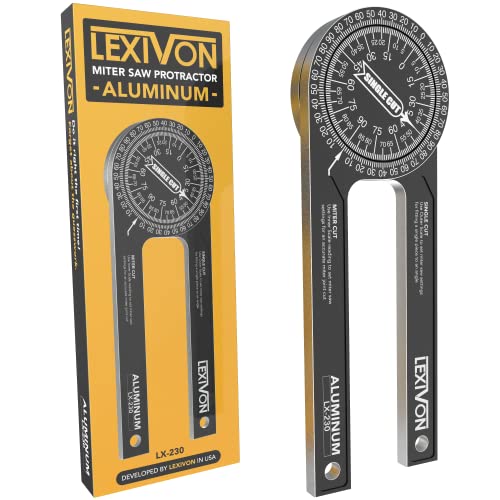 TOP CHOICEBest for precise bevel readingsLEXIVON Aluminum Miter Saw Protractor LX-230View on Amazon
- 4
 Best budget pickWEN ME360P Aluminum Miter Saw Bevel GaugeView on Amazon
- 5
 Best for a complete cutting setupCRAFTSMAN Mitre Saw, 12-Inch Saw & Clamping Box CMHT20600View on Amazon
Our Top Picks
Quick Comparison
| Product | Best for | Key feature |
|---|---|---|
| Bora MiteriX Angle Aluminum Wood Duplicator 530401 | Transferring wall angles to the saw | Aluminum arms for inside and outside corners |
| Milescraft 8402 Angle Finder | Quick corner checks on the job | Physical reference jig for crown and trim |
| LEXIVON Aluminum Miter Saw Protractor LX-230 | Reading precise miter and bevel angles | Laser-engraved scales, rust-proof aluminum |
| WEN ME360P Aluminum Miter Saw Bevel Gauge | Simple, low-cost angle reference | Compact aluminum body for woodworking |
| CRAFTSMAN Mitre Saw, 12-Inch Saw & Clamping Box CMHT20600 | Cutting trim with a built-in clamping guide | 12-inch saw paired with a clamping box |
Bora MiteriX Angle Aluminum Wood Duplicator 530401
Bora MiteriX Angle Aluminum Wood Duplicator 530401 | Aluminum arms, 0-180° internal and external corners, miter saw transfer, crown molding and baseboard trim
Best for: Transferring wall corner angles to a miter saw accurately
This is a good fit for trim carpenters and serious DIYers who cut a lot of inside and outside corners and want a repeatable method rather than repeated trial cuts. The aluminum arms are designed to be held against the wall corner and then transferred to the saw table. For a deeper look, 7 Best Table Saws with Miter Options for Accurate Cuts in 2026 covers this in detail.
Key specs
- Aluminum arms for transferring corner angles
- Works for internal and external corners from 0 to 180 degrees
- Designed for miter saw transfer on crown molding and baseboard trim
Pros
- Captures the actual wall angle rather than a guessed 45 degrees
- Handles both inside and outside corners
- Durable aluminum construction that owners often describe as holding up well
Cons
- Requires a few practice transfers before the method feels routine
- Takes up more space in a tool bag than a compact angle finder
Bottom line: The best choice if you want the most dependable way to match walls with a miter saw cut, especially on longer runs of trim.
View on AmazonMilescraft 8402 Angle Finder
Milescraft 8402 Angle Finder – Transfer Angles from Walls & Corners to Miter Saw. Physical Reference Jig for Crown Molding and Trim Work. Inside or Outside Corners.
Best for: Quick angle checks on inside and outside corners
This suits homeowners and carpenters who need to check a corner fast and carry a small reference tool. It is built as a physical jig that transfers angles from walls to a miter saw for crown molding and trim work.
Key specs
- Physical reference jig for transferring angles from walls
- Designed for inside and outside corners
- Intended for crown molding and trim applications
Pros
- Fast to use once you understand the transfer method
- Compact enough to keep in a tool pouch
- Covers both inside and outside corner readings
Cons
- Readings depend on careful alignment against the wall and saw table
- May feel less precise than a full-length aluminum arm design on long runs
Bottom line: A practical pick for quick corner checks when you want a small tool rather than a larger duplicator.
View on AmazonLEXIVON Aluminum Miter Saw Protractor LX-230
LEXIVON Aluminum Miter Saw Protractor | 7-Inch Rust Proof Angle Finder Featuring Precision Laser Engraved Scales (LX-230)
Best for: Reading precise miter and bevel angles from a saw or wall
This protractor is aimed at users who want clearly marked angle scales and a rust-resistant body for shop use. It works well as a reference when you already know the target angle and need to dial the saw accurately.
Key specs
- 7-inch aluminum protractor body
- Laser-engraved scales for readable angle markings
- Rust-proof aluminum construction
Pros
- Engraved scales hold up better than printed markings over time
- Rust-resistant body suits garages and job sites
- Useful for both miter and bevel reference
Cons
- Reads angles rather than transferring wall geometry directly
- Less suited to finding an unknown corner angle than a duplicator style tool
Bottom line: A strong choice for anyone who wants accurate angle readings and durable markings for everyday saw setup.
View on AmazonWEN ME360P Aluminum Miter Saw Bevel Gauge
WEN ME360P Aluminum Miter Saw Bevel Gauge and Corner Angle Finder for Woodworking
Best for: A simple, low-cost angle reference for woodworking
This is a practical option for hobbyists and occasional trim installers who want a basic bevel gauge without a larger jig. It fits well into a workshop rack and covers general woodworking angle checks.
Key specs
- Aluminum miter saw bevel gauge
- Designed for corner angle finding and woodworking use
- Compact body for storage on a shelf or in a drawer
Pros
- Simple to understand and use without a learning curve
- Budget-friendly choice for light use
- Compact size for small shops
Cons
- Fewer features than larger duplicator or protractor designs
- Owners often recommend double-checking readings on long or critical trim runs
Bottom line: Best for light trim work and hobby projects where a basic, affordable gauge is enough.
View on AmazonCRAFTSMAN Mitre Saw, 12-Inch Saw & Clamping Box CMHT20600
CRAFTSMAN Mitre Saw, 12-Inch Saw & Clamping Box (CMHT20600)
Best for: Cutting trim with a built-in clamping guide on a 12-inch saw
This combines a 12-inch mitre saw with a clamping box, which makes it a useful pick for DIYers who want a complete cutting setup rather than only a reference tool. It suits those who will cut a full room of trim and prefer a dedicated station.
Key specs
- 12-inch saw blade capacity
- Included clamping box for holding workpieces
- Designed for mitre cuts on trim and molding
Pros
- Complete setup in one package for trim cutting
- Clamping box helps hold stock steady during cuts
- Larger blade capacity handles wider baseboard
Cons
- Takes up more shop space than the angle reference tools on this list
- Does not replace a wall angle finder for measuring unknown corners
Bottom line: The right pick if you need a saw and clamping support for a full trim job, and you already have or plan to use a separate corner reference.
View on AmazonBuying Guide
Inside and Outside Corner Capability
Inside corners and outside corners use different angle logic, and not every tool handles both well. Look for a reference that explicitly covers both, because a tool that only reads one type forces you to switch methods mid-job. Most trim installers set the saw to half the corner angle, so a 90-degree wall corner usually means cutting at 45 degrees on each piece.
Good picks for this: Bora MiteriX Angle Aluminum Wood Duplicator 530401, Milescraft 8402 Angle Finder
Angle Accuracy and Readability
Clear, well-engraved scales make it easier to read the exact angle you need. Printed markings can wear off in a shop, while engraved markings tend to last longer. Check whether the scale is laid out for the degree increments you use most often, such as 0.5-degree steps on finer work.
Good picks for this: LEXIVON Aluminum Miter Saw Protractor LX-230, WEN ME360P Aluminum Miter Saw Bevel Gauge
Size and Fit on Your Saw Table
Measure your miter saw table and fence before buying. Some reference tools are long enough to span a full wall corner, while compact gauges fit tight workspaces. Long arms give better transfer reach, but they also need clear table space to sit flat.
Good picks for this: Milescraft 8402 Angle Finder, CRAFTSMAN Mitre Saw, 12-Inch Saw & Clamping Box CMHT20600
Material and Durability
Aluminum is common for angle references because it resists warping and rust better than many plastics. Owners frequently mention that sawdust and shop moisture can dull unprotected surfaces, so wipe tools clean after use and store them dry.
Good picks for this: Bora MiteriX Angle Aluminum Wood Duplicator 530401, LEXIVON Aluminum Miter Saw Protractor LX-230
Use Case: Single Corners vs. Full Rooms
If you are patching one corner, a compact gauge is faster to pull out. If you are trimming an entire room with many corners, a more robust duplicator or a full cutting setup saves time because you can repeat the same transfer routine across the walls.
Good picks for this: Bora MiteriX Angle Aluminum Wood Duplicator 530401, CRAFTSMAN Mitre Saw, 12-Inch Saw & Clamping Box CMHT20600
Ease of Setup and Learning Curve
Some transfer methods take a few practice cuts to feel natural. Plan to cut scrap pieces first and confirm the angle before cutting finish trim. A tool that is simple to understand reduces wasted boards, especially if you are new to coping or mitering trim.
Good picks for this: WEN ME360P Aluminum Miter Saw Bevel Gauge, Milescraft 8402 Angle Finder
Storage and Portability
Think about where the tool will live between jobs. A compact gauge can stay in a drawer, while a larger saw and clamping box needs a dedicated spot in the garage or shop. Choose based on how often you move between job sites.
Good picks for this: WEN ME360P Aluminum Miter Saw Bevel Gauge, LEXIVON Aluminum Miter Saw Protractor LX-230
FAQ
What angle should I set my miter saw to for a baseboard corner?
For a standard 90-degree inside or outside corner, each piece is usually cut at 45 degrees. The two cut edges meet to form the corner. If the wall is not square, use an angle finder to measure the actual corner and divide that angle by two.
Do I need a special tool to cut baseboard corners?
You do not strictly need one, since you can cut test pieces and adjust. However, an angle reference saves material and time, especially when walls are out of square. Tools like duplicators and protractors make the process repeatable.
Can one angle finder handle both inside and outside corners?
Many angle finders are designed for both, but the transfer method differs slightly. Check the product description to confirm it covers both corner types, and practice the transfer on scrap before cutting finish trim.
Why do my baseboard corners still show gaps after using an angle finder?
Common causes include a blade that is not square to the table, a fence that is not perfectly 90 degrees, or a reading taken from a wall that is not plumb. Verify your saw calibration first, then recheck the transfer. Coping an inside corner often gives a tighter joint than mitering alone.
Is a miter saw with a clamping box better than a standalone angle tool?
It depends on your workflow. A saw with a clamping box helps you cut stock safely and consistently. A standalone reference is better for measuring unknown corners. Many trim carpenters use both together.
How often should I check my angle reference for accuracy?
Check it against a known square or a second reference whenever you start a new project, and after any drop or impact. Aluminum tools resist wear, but a bent arm or a worn edge can throw off readings.
What blade should I use on a miter saw for trim?
A fine-tooth blade designed for finish work gives cleaner edges on painted or stained trim. Higher tooth counts reduce tearout on softwood and MDF trim. Always keep the blade sharp and clean for the best results.
Conclusion
For most people cutting baseboard corners on a miter saw, the first step is capturing the real wall angle accurately, and that is where a dedicated reference tool pays off. The Bora MiteriX Angle Aluminum Wood Duplicator 530401 is the strongest all-round choice for transferring corners reliably. The Milescraft 8402 Angle Finder suits quick checks, while the LEXIVON protractor is best when you need precise, durable angle readings. The WEN ME360P is a practical budget option for light work, and the CRAFTSMAN 12-inch saw with clamping box fits anyone who wants a complete cutting station for a full trim project. Match the tool to whether you are checking one corner or trimming an entire room.
For more background on related setups, see Miter Saw for Baseboard: 5 Best Picks for Clean Trim Cuts (2026) and Top 5 Miter Saws for Trim Picks Compared for Clean Cuts, which cover saw choice in more depth. If you are also working on molding, 5 Best Crown Moulding Miter Saw Options for Clean Corners (2026) is a useful companion read.
Sources
- Workplace safety guidance for power saws and blade guarding (osha.gov)
- Consumer safety information on power tool use and kickback prevention (cpsc.gov)
- Standards and measurement guidance relevant to precision angle readings (nist.gov)
Related reading
- Miter Saw for Picture Frames: 4 Best Picks for Clean Corners (2026)
- 6 Best Miter Saws for Cutting Baseboard Picks for Clean Trim Work
- Woodworking Miter Saw Table Plans: A Step-by-Step Build Guide
About Caleb Morgan
Caleb Morgan is part of our editorial team and reviews and edits our power tools guides, checking product details against manufacturer specifications and owner feedback.



