
 By Caleb Morgan
Updated November 2026
A miter saw for cutting baseboard needs to hold accurate 45-degree miters on long, wide boards and repeat those angles without drift. The picks below are chosen by comparing product specifications, brand reputation and common owner feedback about cut quality, bevel and miter range, and ease of setup. Nothing here comes from personal testing.
Our top picks at a glance
- 1
 TOP CHOICEBest overallEvolution Power Tools R185SMS+ Sliding Miter SawView on Amazon
- 2
 TOP CHOICEBest for a budget setupCRAFTSMAN Mitre Saw, 12-Inch Saw & Clamping BoxView on Amazon
- 3
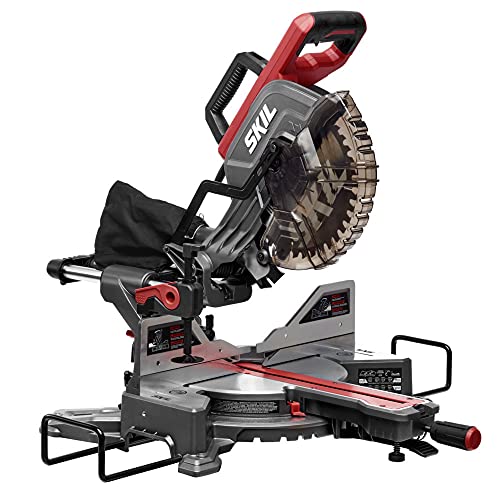 TOP CHOICEBest for dual-bevel trim workSKIL 10" Dual Bevel Sliding Compound Miter SawView on Amazon
- 4
 Best for checking inside and outside cornersBora MiteriX Angle Aluminum Wood Duplicator 530401View on Amazon
- 5
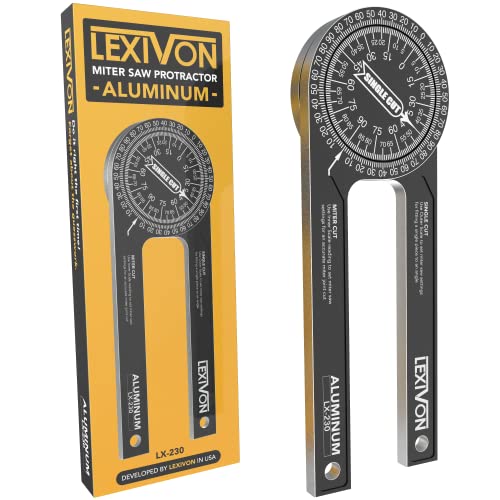 Best for setting precise anglesLEXIVON Aluminum Miter Saw ProtractorView on Amazon
- 6
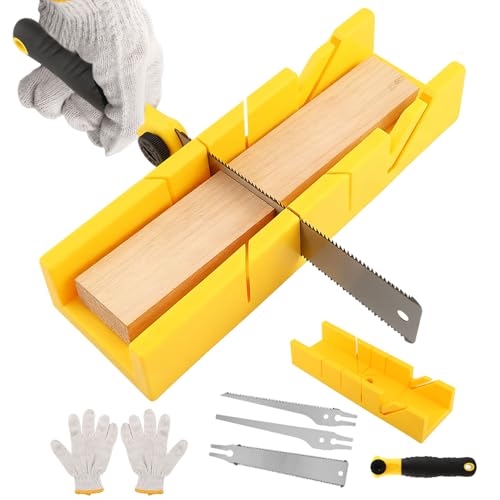 Best for hand-cut touch-ups4-in-1 Miter Box and Saw SetView on Amazon
Our Top Picks
Quick Comparison
| Product | Best for | Key feature |
|---|---|---|
| Evolution Power Tools R185SMS+ Sliding Miter Saw | Best overall | Sliding capacity and 50-degree miter |
| CRAFTSMAN Mitre Saw, 12-Inch Saw & Clamping Box | Budget setup | Built-in clamping box |
| SKIL 10″ Dual Bevel Sliding Compound Miter Saw | Dual-bevel trim work | Dual bevel with slide |
| Bora MiteriX Angle Aluminum Wood Duplicator 530401 | Corner checking | Internal and external corner angles |
| LEXIVON Aluminum Miter Saw Protractor | Precise angle setting | Laser-engraved scales |
| 4-in-1 Miter Box and Saw Set | Hand-cut touch-ups | Three interchangeable blades |
Evolution Power Tools R185SMS+ Sliding Miter Saw
Evolution Power Tools R185SMS+ Sliding Miter Saw with Multi-Material Cutting, 45 Degree Bevel, 50 Degree Miter, 210 mm Slide, Blade Included Cuts Wood Plastic Metal & More, 7-1/4"
Best for: Best overall
This suits users who cut wide baseboard and want a sliding head to handle boards beyond the fixed-fence width of a non-sliding saw. Worth reading next: Miter Saw for Cutting Trim: 6 Best Picks Compared for Clean Cuts (2026).
Pros
- Listed 50-degree miter and 45-degree bevel range
- 210 mm slide capacity
Cons
- Owners often mention it takes some setup time to dial in
CRAFTSMAN Mitre Saw, 12-Inch Saw & Clamping Box
CRAFTSMAN Mitre Saw, 12-Inch Saw & Clamping Box (CMHT20600)
Best for: Best for a budget setup
A good fit for homeowners doing occasional trim who want a saw plus clamping box in one package. We also found 6 Best Hand Miter Saw Box Sets for Clean Trim and Woodworking (2026) useful on this point.
Pros
- Clamping box helps hold stock steady
- Simple, familiar layout for beginners
Cons
- Fixed head limits width on wide baseboard
SKIL 10″ Dual Bevel Sliding Compound Miter Saw
SKIL 10" Dual Bevel Sliding Compound Miter Saw-MS6305-00
Best for: Best for dual-bevel trim work
Useful for crown and base work where bevel cuts in both directions save flipping the stock.
Pros
- Dual bevel avoids repositioning the board
- Sliding head for wider stock
Cons
- Heavier than basic miter saws
Bora MiteriX Angle Aluminum Wood Duplicator 530401
Bora MiteriX Angle Aluminum Wood Duplicator 530401 | Aluminum arms, 0-180° internal and external corners, miter saw transfer, crown molding and baseboard trim
Best for: Best for checking inside and outside corners
Aimed at trim carpenters who want to transfer corner angles from the wall to the saw before cutting. 5 Best Miter Saws for Baseboard Corners Tools Compared (2026) goes further into this.
Pros
- Covers 0–180 degree internal and external corners
- Aluminum arms hold position well
Cons
- A measuring aid, not a saw, so it adds a step
LEXIVON Aluminum Miter Saw Protractor
LEXIVON Aluminum Miter Saw Protractor | 7-Inch Rust Proof Angle Finder Featuring Precision Laser Engraved Scales (LX-230)
Best for: Best for setting precise angles
A practical add-on for anyone who wants to verify miter settings against a reference scale.
Pros
- Laser-engraved scales are easier to read
- Rust-proof aluminum body
Cons
- Works only as a setting aid, not a cutting tool
4-in-1 Miter Box and Saw Set
4-in-1 Miter Box and Saw Set – 12-Inch Mitre Box w/3 Interchangeable Blades | Japanese Pull Saw for Wood,Precise 45°/90°/135° Angle Cutting Tool
Best for: Best for hand-cut touch-ups
Handy for trimming a piece on site when the power saw is not set up or is too large for the job.
Pros
- Covers 45, 90 and 135 degree cuts
- Three interchangeable blades
Cons
- Slower and less precise than a powered miter saw on long boards
Buying Guide
Blade Size and Cut Capacity
Most 10- and 12-inch saws can handle standard baseboard, but wider profiles need a head or slide that clears the full board height. Check the listed vertical capacity against your tallest trim.
FAQ
Do I need a sliding miter saw to cut baseboard?
Not always. A sliding model is helpful when you need to cut wide boards, because the blade can travel across the full width of the material. Many people cutting standard baseboard use a non-sliding saw without trouble, as long as the blade capacity and miter range suit the trim.
What blade size works best for baseboard?
A 10-inch or 12-inch blade gives comfortable capacity for most baseboard profiles, including taller boards. Smaller blades can work for narrow trim but may struggle with wider stock or crown molding. Check the cut capacity listed for each saw against the height and depth of your trim.
Why do my baseboard miters leave small gaps at the corners?
Gaps usually come from a miter angle that is slightly off, a blade that has drifted from its calibrated setting, or boards that were not held firmly against the fence. Recheck the saw’s miter detent and make a test cut on scrap before cutting finish pieces. A protractor or angle finder can help confirm the angle.
Is a miter box a good alternative to a power saw?
A miter box with a hand saw can produce clean cuts on small jobs and is useful for touch-ups or spots where a power saw will not fit. For full rooms of trim, a powered miter saw is usually faster and more consistent. Many people keep both on hand for different tasks.
How do I transfer an existing angle to a new cut?
An angle duplicator or transfer tool lets you copy the exact angle of an existing corner onto a new piece. This is especially helpful for odd or out-of-square walls where standard 45-degree settings may not match. Lock the tool to the corner, then use it to set your saw before cutting.
Should I use a blade made for trim work?
A fine-tooth blade with a high tooth count is generally better for baseboard because it leaves a smoother edge with less tearout. Using a clean, sharp blade matters as much as the saw itself. Replace dull blades promptly to keep cuts crisp on visible trim.
Conclusion
If you want the most capable option for long, wide boards and a range of materials, the Evolution sliding model is the strongest fit. Buyers looking for a budget-friendly way to get started with clean trim cuts will likely find the CRAFTSMAN package a practical choice.
For occasional trim jobs, a hand-operated miter box and the angle tools in this list can cover most needs without a large investment. Match your choice to how often you cut trim and how wide your boards are, and the right saw for your project will be clear.
Related reading
- Ryobi Sliding Miter Saw: Setup, Cutting Tips and Buying Guide (2026)
- Miter Saw for Cutting Molding: A Step-by-Step Guide for Clean Joints
- Miter Saw for Baseboard: 5 Best Picks for Clean Trim Cuts (2026)
- Miter Saw Stands, Cutting Guides and Sawhorses
- Milwaukee Sliding Miter Saw: Setup, Cutting Tips and Common Mistakes
About Caleb Morgan
Caleb Morgan is part of our editorial team and reviews and edits our power tools guides, checking product details against manufacturer specifications and owner feedback.



