By Caleb Morgan
Updated November 2026
Someone searching for a mini circular saw Ryobi makes is usually trying to get clean cuts out of small stock: trim boards, thin plywood, shelving, craft panels, or a quick notch in a project that won’t justify hauling out a full-size saw. This list is built around that need. The picks below were selected by comparing manufacturer specifications, the battery platform each tool runs on, the job types owners commonly report using them for, and recurring feedback about blade access, weight and cut quality.
Our top picks at a glance
- 1
 TOP CHOICEBest overallRYOBI ONE+ 18V Cordless 3-3/8 in. Multi-Material Plunge SawView on Amazon
- 2
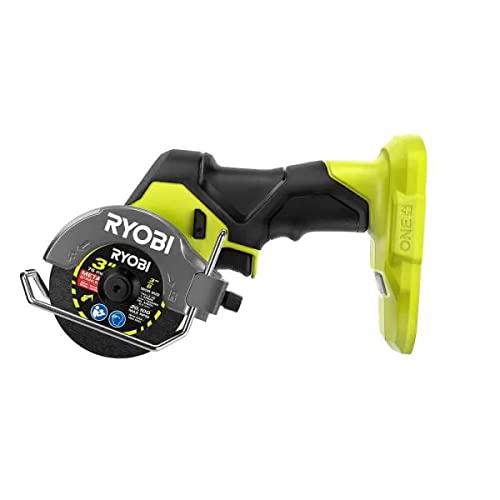 Best for trim and small stockRYOBI ONE+ HP 18V Brushless Cordless Compact Cut-Off ToolView on Amazon
- 3
 Best for framing-size cutsRyobi One P505 18V Lithium Ion Cordless 5 1/2" Circular SawView on Amazon
- 4
 Best budget pick for light DIYRYOBI RCT4-120G 4V Cordless Cutting ToolView on Amazon
Our Top Picks
Quick Comparison
| Product | Best for | Key feature |
|---|---|---|
| RYOBI ONE+ 18V Cordless 3-3/8 in. Multi-Material Plunge Saw | Plunge cuts in sheet material and trim | Plunge-style cutting depth control |
| RYOBI ONE+ HP 18V Brushless Cordless Compact Cut-Off Tool | Trim, small stock and tight spaces | Brushless motor and compact body |
| Ryobi One P505 18V Lithium Ion Cordless 5 1/2″ Circular Saw | Framing-size and general dimensional cuts | 5-1/2 inch blade capacity |
| RYOBI RCT4-120G 4V Cordless Cutting Tool | Carpet, upholstery and light plastic | Lightweight 4V platform with included battery |
RYOBI ONE+ 18V Cordless 3-3/8 in. Multi-Material Plunge Saw
RYOBI ONE+ 18V Cordless 3-3/8 in. Multi-Material Plunge Saw (Tool Only)
Best for: Plunge cuts in sheet material and trim work where you need a controlled entry point.
This suits hobbyists and DIYers who regularly cut panels, laminate or trim mid-board and want the plunge action rather than a fixed-base saw. It is the most versatile option here if you already own ONE+ 18V batteries.
Key specs
- 3-3/8 inch blade size
- Plunge-style cutting action
- Runs on the RYOBI ONE+ 18V battery platform (tool only)
Pros
- Plunge action makes starting cuts away from an edge practical
- Shares batteries with a large ONE+ tool line
- Compact enough for one-handed guidance on small pieces
Cons
- Small blade limits maximum cutting depth in thick stock
- Requires a separately purchased battery and charger
Bottom line: The right pick for someone already invested in ONE+ 18V batteries who wants plunge cuts in sheet goods and trim.
View on AmazonRYOBI ONE+ HP 18V Brushless Cordless Compact Cut-Off Tool
RYOBI ONE+ HP 18V Brushless Cordless Compact Cut-Off Tool 3" Multi-Material Cutting, (Tool Only) PSBCS02B
Best for: Trim, small stock and tight spaces.
Best suited to anyone cutting molding, small brackets or thin stock in situations where a full-size circular saw is awkward to position. Owners often describe it as the tool they reach for on finish carpentry.
Key specs
- 3 inch cutting wheel capacity
- Brushless motor (per the HP line designation)
- Runs on the RYOBI ONE+ 18V platform (tool only)
Pros
- Brushless HP motor aims for longer run time per charge
- Compact body fits into tight corners
- Good control for short, repeated cuts
Cons
- Cut-off style wheel is less suited to long rip cuts
- Small capacity restricts thickness of material
Bottom line: A strong choice for trim and small-stock work if your main projects are finish-level rather than structural.
View on AmazonRyobi One P505 18V Lithium Ion Cordless 5 1/2″ Circular Saw
Ryobi One P505 18V Lithium Ion Cordless 5 1/2" 4,700 RPM Circular Saw (Battery Not Included, Power Tool Only), Green
Best for: Framing-size and general dimensional cuts.
This is the closest match to a traditional circular saw in a compact body. It suits DIYers who need straight rip and crosscuts in dimensional lumber and sheet goods, and who want a Ryobi tool rather than a dedicated mini saw.
Key specs
- 5-1/2 inch blade size
- 18V lithium-ion platform (battery not included)
- Rated at 4,700 RPM per the listing
Pros
- Larger blade handles thicker stock than mini models
- Straightforward blade swap for standard 5-1/2 inch blades
- Good match for common framing and deck-board thicknesses
Cons
- Heavier and bulkier than the mini options above
- Battery must be purchased separately
Bottom line: Choose this if “mini” still needs to cut real framing lumber rather than trim.
View on AmazonRYOBI RCT4-120G 4V Cordless Cutting Tool
RYOBI RCT4-120G 4V Cordless Cutting Tool (1 x 2.0Ah), Hyper Green | RCT4-120G, Hyper Green, 2.0Ah battery included, carpet, upholstery, plastic cutting, compact design
Best for: Carpet, upholstery and light plastic.
A light, low-voltage tool aimed at occasional cuts in soft or thin materials. It fits a household toolkit where the main job is trimming rather than structural cutting.
Key specs
- 4V platform
- Includes one 2.0Ah battery
- Designed for carpet, upholstery and plastic cutting
Pros
- Very light and easy to hold for extended trimming
- Battery included in the listing
- Low cost of entry for occasional use
Cons
- Not suited to wood or framing material
- Limited power compared with 18V tools
Bottom line: A budget pick for light household trimming, not a substitute for a true saw.
View on AmazonBuying Guide
Blade size and cut depth
Check the blade diameter first. Smaller blades (around 3 to 3-3/8 inches) limit cut depth to roughly an inch in wood, which is fine for trim and sheet goods but not for 2x lumber. Larger 5-1/2 inch blades reach deeper. Match the blade to the thickest material you plan to cut.
Good picks for this: RYOBI ONE+ 18V Cordless 3-3/8 in. Multi-Material Plunge Saw; Ryobi One P505 18V Lithium Ion Cordless 5 1/2″ Circular Saw For another angle, check out 6 Best DeWalt Mini Circular Saw Options for Small Jobs (2026).
Battery platform
If you already own RYOBI ONE+ 18V batteries, choosing an 18V tool avoids buying a second battery system. Several tools in this list are sold without a battery, so budget for one if you do not own compatible packs. The 4V option includes its battery but uses a different platform.
Good picks for this: RYOBI ONE+ HP 18V Brushless Cordless Compact Cut-Off Tool; RYOBI RCT4-120G 4V Cordless Cutting Tool If you want more background, see 4 Best Ryobi 18.0 V Circular Saw Models for DIY Cutting (2026).
Motor type
Brushless motors generally run cooler and tend to deliver longer run time per charge than brushed motors. The HP designation on one model points to a brushless design. Brushed motors remain perfectly capable for occasional home use.
Good picks for this: RYOBI ONE+ HP 18V Brushless Cordless Compact Cut-Off Tool
Cutting style: plunge, cut-off or circular
Plunge saws let you start a cut in the middle of a panel. Cut-off tools excel at short, precise cuts in trim. Standard circular saws handle long rips and crosscuts best. Decide which motion you repeat most often.
Good picks for this: RYOBI ONE+ 18V Cordless 3-3/8 in. Multi-Material Plunge Saw; Ryobi One P505 18V Lithium Ion Cordless 5 1/2″ Circular Saw
Weight and ergonomics
For overhead or one-handed work, weight matters more than maximum power. A lighter tool reduces fatigue during repeated cuts. Compare grip shape and where the battery sits relative to the handle.
Good picks for this: RYOBI RCT4-120G 4V Cordless Cutting Tool; RYOBI ONE+ HP 18V Brushless Cordless Compact Cut-Off Tool
Material compatibility
Blades and tooth geometry vary. Wood-cutting blades produce poor results in metal, and general-purpose blades can chip laminates. Read the listing for supported materials and buy a blade matched to your primary material.
Good picks for this: RYOBI RCT4-120G 4V Cordless Cutting Tool; RYOBI ONE+ 18V Cordless 3-3/8 in. Multi-Material Plunge Saw
Safety and blade guards
Always confirm the lower guard retracts smoothly and that the tool stops quickly when released. Unplug or remove the battery before changing blades. For detailed setup and safe-cutting practices, see our guide on Using a Circular Saw: A Step-by-Step Guide for Safe, Straight Cuts.
Good picks for this: Ryobi One P505 18V Lithium Ion Cordless 5 1/2″ Circular Saw; RYOBI ONE+ 18V Cordless 3-3/8 in. Multi-Material Plunge Saw
FAQ
Is a mini circular saw Ryobi model strong enough for framing lumber?
Smaller models are generally designed for trim, sheet goods and light materials. For 2x framing, a larger blade such as the 5-1/2 inch Ryobi One P505 is a better match. Check the blade diameter against the thickness you need to cut.
Do I need to buy a battery separately?
Several listings here are tool-only. Confirm the battery and charger inclusion on each listing before you buy, and check whether you already own compatible RYOBI ONE+ 18V packs.
What blade should I use with a mini saw?
Choose a blade rated for your primary material and sized to the tool’s diameter. For a general overview of blade types, see 7 Best Ryobi Circular Saw Blades for Framing, Ripping and Finish Cuts.
How do I change the blade safely?
Remove the battery, lock the spindle if the tool has a lock, and follow the manufacturer’s instructions. Changing Blade on Ryobi Circular Saw: A Step-by-Step Guide walks through the process.
Is a plunge saw the same as a mini circular saw?
Not exactly. A plunge saw lets you start cuts mid-panel, while a mini circular saw is a smaller-blade saw that may or may not plunge. Compare the two in Track Saw vs Circular Saw: Which Is Right for You?.
Can I use a mini saw on metal?
Only if the tool is rated for it and you use a metal-cutting blade. Wood blades are not suitable for metal and can be dangerous.
Where can I find safety guidance for power tools?
Consult the references listed below and the tool’s owner’s manual before operating any saw.
Conclusion
For plunge cuts and general trim with an existing ONE+ battery, the RYOBI ONE+ 18V Plunge Saw is the most flexible pick. The HP Cut-Off Tool suits finish carpentry and tight spaces. The Ryobi One P505 is the closest to a full circular saw if your “mini” jobs still include framing-size lumber. The RCT4-120G 4V tool is a light, budget-minded choice for carpet, upholstery and plastic rather than wood. Match the blade diameter and battery platform to your projects, and confirm what is included before you buy.
Sources
- Consumer safety information on power tool use and injury prevention (cpsc.gov)
- Workplace guidance on portable circular saw guarding and safe operation (osha.gov)
- Standards context for electrical and battery-powered equipment (nist.gov)
Related reading
About Caleb Morgan
Caleb Morgan is part of our editorial team and reviews and edits our power tools guides, checking product details against manufacturer specifications and owner feedback.