By Caleb Morgan
Updated November 2026
Choosing the right wooden circular saw blade comes down to a few practical questions: what size your saw takes, how many teeth suit the cut you make most often, and whether you need fast rough cuts or a cleaner finish. This guide compares five blades built for cutting wood, judged on specifications, brand reputation and the patterns owners tend to report. We weighed diameter and arbor compatibility, tooth count and geometry, carbide quality, coating and how well each blade suits framing versus finish work.
Our top picks at a glance
- 1
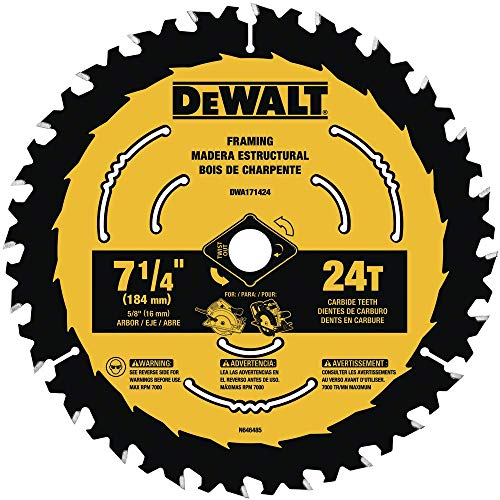 TOP CHOICEBest overallDEWALT Circular Saw Blade, 7 1/4 Inch, 24 Tooth, Wood Cutting (DWA171424)View on Amazon
- 2
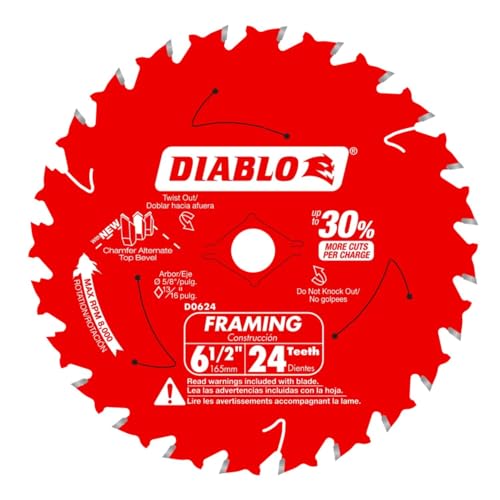 TOP CHOICEBest for framing lumberDiablo Framing Saw Blade for Wood – 6-1/2" Dia, 24 ATB Teeth, 5/8" Arbor (D0624A)View on Amazon
- 3
 TOP CHOICEBest budget pickRevvstark 5-1/2" (10mm Arbor) Circular Saw Blade 24T&48T for Cutting WoodView on Amazon
- 4
 Best for smooth crosscutsDEWALT 6-1/2 in. 24T Circular Saw Blade, Smooth Cutting (DWA261224)View on Amazon
- 5
 Best for mixed cuttingRevvstark Circular Saw Blade 6-1/2" 24T&60T for Cutting Wood, 5/8" ArborView on Amazon
Our Top Picks
Quick Comparison
| Product | Best for | Key feature |
|---|---|---|
| DEWALT Circular Saw Blade, 7 1/4 Inch, 24 Tooth | General wood cutting on 7-1/4″ saws | 24-tooth ATB geometry for fast rough cuts |
| Diablo Framing Saw Blade for Wood, 6-1/2″ | Framing lumber | Carbide teeth with non-stick coating |
| Revvstark 5-1/2″ Circular Saw Blade 24T&48T | Budget-minded general use | Two tooth configurations in one listing |
| DEWALT 6-1/2 in. 24T Circular Saw Blade | Smooth crosscuts in dimensional wood | Tracking and durability focus |
| Revvstark Circular Saw Blade 6-1/2″ 24T&60T | Mixed rip and crosscut work | 24T for speed, 60T for finer cuts |
DEWALT Circular Saw Blade, 7 1/4 Inch, 24 Tooth, Wood Cutting (DWA171424)
DEWALT Circular Saw Blade, 7 1/4 Inch, 24 Tooth, Wood Cutting (DWA171424)
Best for: General wood cutting on 7-1/4″ circular saws
This is a sensible choice for someone who wants a single blade for lumber, plywood and sheet goods on a standard 7-1/4″ saw. Its 24-tooth count leans toward speed over edge refinement, which suits framing and rough carpentry.
Key specs
- Diameter: 7-1/4 inch
- Tooth count: 24
- Application: wood cutting
Pros
- Matches the common 7-1/4″ saw size
- 24 teeth clear material quickly on rip and crosscut work
- Brand-backed fit with DEWALT saws and many other tools
Cons
- Edge finish is rougher than a higher tooth count blade
- Not suited to fine trim or plywood with delicate veneers
Bottom line: A strong default for framers and general contractors who run a 7-1/4″ saw and mostly cut dimensional lumber.
View on AmazonDiablo Framing Saw Blade for Wood – 6-1/2″ Dia, 24 ATB Teeth, 5/8″ Arbor (D0624A)
Diablo Framing Saw Blade for Wood – 6-1/2" Dia, 24 ATB Teeth, 5/8" Arbor | Ideal for Wood Cutting – TiCo Hi-Density Carbide, Perma-SHIELD Non-stick Coating, 8800 Max RPM – D0624A
Best for: Framing lumber
Framers who cut a lot of studs, joists and plates will appreciate the aggressive 24-tooth alternate top bevel geometry. It is built for fast, rough cuts rather than finish work.
Key specs
- Diameter: 6-1/2 inch
- Teeth: 24 ATB
- Arbor: 5/8 inch
- Carbide: hi-density TiCo grade
Pros
- Non-stick coating helps resin buildup release from the plate
- Alternate top bevel teeth suit fast crosscuts in framing lumber
- Fits the common 6-1/2″ saw platform
Cons
- Leaves a coarser edge than finer tooth counts
- Not intended for trim, cabinetry or veneered panels
Bottom line: Best suited to framing crews and remodelers who prioritize speed on dimensional lumber.
View on AmazonRevvstark 5-1/2″ (10mm Arbor) Circular Saw Blade 24T&48T for Cutting Wood
Revvstark 5-1/2"(10mm Arbor) Circular Saw Blade 24T&48T for Cutting Wood | Carbide Tipped Teeth, Heavy Duty TCT Saw Blades for Cutting Various Wood, Plastic and Composite Materials
Best for: Budget-minded general use
Homeowners and occasional DIYers who want a blade for wood, plastic and composite materials on a smaller saw may find this a practical starting point. The 24T and 48T options in one listing let you adjust for rough or cleaner cuts.
Key specs
- Diameter: 5-1/2 inch
- Arbor: 10 mm
- Teeth: 24T and 48T options
- Carbide-tipped teeth
Pros
- Two tooth counts give flexibility for different cuts
- Carbide-tipped construction for wood and composites
- Useful size for compact and cordless saws
Cons
- Smaller diameter limits maximum cutting depth
- Confirm the 10 mm arbor matches your saw before buying
Bottom line: A reasonable choice for light wood projects on a compact saw, provided the arbor fits.
View on AmazonDEWALT 6-1/2 in. 24T Circular Saw Blade, Smooth Cutting (DWA261224)
DEWALT 6-1/2 in. 24T Circular Saw Blade, Smooth Cutting, Superior Tracking and Durability (DWA261224)
Best for: Smooth crosscuts in dimensional wood
Users who want cleaner crosscuts on boards, shelving and trim-adjacent work often look for a blade that tracks straight. This 24-tooth 6-1/2″ option is positioned around smooth cutting and stable tracking.
Key specs
- Diameter: 6-1/2 inch
- Tooth count: 24
- Brand: DEWALT
Pros
- Smooth cutting focus suits shelving and visible crosscuts
- Tracking-oriented design helps keep straight lines
- Matches the 6-1/2″ saw size used by many compact models
Cons
- Slower on thick stock than aggressive framing blades
- Fewer teeth than a fine-finish blade for plywood veneers
Bottom line: A good pick for woodworkers and remodelers who want cleaner crosscuts without moving to a fine-tooth blade.
View on AmazonRevvstark Circular Saw Blade 6-1/2″ 24T&60T for Cutting Wood, 5/8″ Arbor
Revvstark Circular Saw Blade 6-1/2" 24T&60T for Cutting Wood, 5/8" Arbor | Carbide Tipped Teeth, TCT Saw Blades for Cutting Wood, Plastic and Composite Materials, Fit Dewalt Craftsman Ryobi Milwaukee
Best for: Mixed rip and crosscut work
If your work alternates between fast rough cuts and finer finish cuts, the 24T and 60T configurations let you choose per job. It is also listed as fitting several popular brands, which helps when you own tools from more than one platform.
Key specs
- Diameter: 6-1/2 inch
- Arbor: 5/8 inch
- Teeth: 24T and 60T options
- Carbide-tipped teeth
Pros
- 24T for speed and 60T for finer edges in one listing
- 5/8″ arbor fits common 6-1/2″ saws
- Listed compatibility with DEWALT, Craftsman, Ryobi and Milwaukee tools
Cons
- Higher tooth count runs slower on thick stock
- Owners should verify arbor and blade-guard clearance before cutting
Bottom line: Suits DIYers and pros who want one versatile 6-1/2″ blade for both rough and cleaner cuts.
View on AmazonBuying Guide
Blade diameter and saw compatibility
Start with the diameter printed on your saw’s nameplate or in its manual. Common sizes include 7-1/4″, 6-1/2″ and 5-1/2″. Using a blade that is too large can prevent the guard from closing and may be unsafe, while a smaller blade will not reach the cutting depth you need.
Good picks for this: DEWALT Circular Saw Blade, 7 1/4 Inch; DEWALT 6-1/2 in. 24T Circular Saw Blade
Arbor size
The arbor is the center hole that mounts on the saw. Most listings specify 5/8 inch or 10 mm. Check your saw’s requirements; an arbor that does not match can wobble or fail to seat. Adapter rings exist, but a correctly sized blade is the safer route.
Good picks for this: Diablo Framing Saw Blade for Wood; Revvstark Circular Saw Blade 6-1/2″ 24T&60T
Tooth count
Fewer teeth (roughly 14 to 24) clear material faster and suit framing and rough rip cuts. More teeth (40 to 60 and up) leave a finer edge but cut more slowly and generate more heat. Match the count to the work rather than defaulting to the highest number.
Good picks for this: Revvstark Circular Saw Blade 5-1/2″ 24T&48T; Revvstark Circular Saw Blade 6-1/2″ 24T&60T
Tooth geometry
Alternate top bevel (ATB) teeth alternate angles to shear cleanly across the grain and are common on general-purpose and crosscut blades. Flat top grind (FTG) teeth remove material quickly and suit rip cuts. Many multipurpose blades combine both approaches.
Good picks for this: Diablo Framing Saw Blade for Wood; DEWALT 6-1/2 in. 24T Circular Saw Blade
Carbide quality and tip construction
Carbide-tipped teeth hold an edge far longer than steel. Manufacturers often describe carbide grades in terms of density or grain size; finer, denser carbide generally holds an edge longer but can be more brittle. Look for brazed or secured tips and a clear statement that the blade is intended for wood.
Good picks for this: Diablo Framing Saw Blade for Wood; Revvstark Circular Saw Blade 5-1/2″ 24T&48T
Coatings and resin resistance
Pitch and resin buildup slows cuts and causes heat. Non-stick or anti-friction coatings help material slide off the plate. Coatings wear over time, so clean the blade with a resin remover when cutting sappy wood like pine or fir.
Good picks for this: Diablo Framing Saw Blade for Wood; DEWALT 6-1/2 in. 24T Circular Saw Blade
Intended use and material
Blades labeled for wood are designed for lumber, plywood and similar stock. Some general blades also cut plastics and composites, but these materials can dull or damage a wood blade faster. Keep a dedicated blade for each material family if you cut them regularly, and never cut metal with a wood blade.
Good picks for this: Revvstark Circular Saw Blade 6-1/2″ 24T&60T; Revvstark Circular Saw Blade 5-1/2″ 24T&48T
FAQ
What size wooden circular saw blade do I need?
Check the diameter stated on your saw and in its manual. The most common sizes are 7-1/4″, 6-1/2″ and 5-1/2″. Choose the size your saw is designed for, and confirm the arbor size matches as well.
How many teeth should a wood blade have?
For rough framing and fast rip cuts, 14 to 24 teeth is typical. For smoother crosscuts in solid wood, 40 or more teeth is common. Many people find a 24-tooth blade a good all-around compromise.
Can a wood circular saw blade cut plywood?
Yes. Many wood blades cut plywood and sheet goods, but fine veneers may chip with an aggressive tooth count. A higher tooth count and a slower feed rate usually produce cleaner edges on plywood.
What does arbor size mean?
The arbor is the center hole that fits onto the saw’s spindle. Common sizes are 5/8 inch and 10 mm. The blade must match the saw’s arbor, or it will not mount securely.
How do I know when to sharpen or replace a blade?
Signs include burning on the cut, more force needed to push the saw, rough or torn edges, and visible tooth damage. Sharpening can extend a blade’s life, but badly chipped or warped blades should be replaced. Guidelines from the manufacturer are the best reference for your specific blade.
Is it safe to install a blade myself?
Many users change blades at home, but always unplug or remove the battery, wear gloves and follow the saw’s manual. If you are unsure about the mounting or your saw’s condition, consult a qualified tool technician or a professional.
Conclusion
For a single all-purpose wooden circular saw blade on a standard 7-1/4″ saw, the DEWALT 24-tooth option is a sound starting point. For framing crews focused on speed, the Diablo framing blade fits the job. Budget-minded users with a compact saw can look at the Revvstark 5-1/2″ listing, provided the arbor matches. For smoother crosscuts, the DEWALT 6-1/2″ 24T blade is a reasonable pick, and the Revvstark 6-1/2″ 24T&60T suits anyone who alternates between rough and finish work. Confirm diameter, arbor and tooth count against your saw before buying.
Sources
- Workplace guidance on power saw hazards, guarding and safe operation (osha.gov)
- Consumer safety information on power tool injuries and prevention (cpsc.gov)
- Standards and measurement resources relevant to cutting tool materials (nist.gov)
Before you buy: helpful guides
- How to Replace Blade on Ryobi Circular Saw: Step-by-Step Guide
- Circular Saw Blade Sharpening Tools: A Step-by-Step Guide (2026)
- Change Blade on Ryobi Circular Saw: Step-by-Step for Safe Swaps
- Circular Saw Blade Sharpening Machine: How to Choose and Use One (2026)
- How to Sharpen Circular Saw Blades at Home: A Step-by-Step Guide
Related reading
About Caleb Morgan
Caleb Morgan is part of our editorial team and reviews and edits our power tools guides, checking product details against manufacturer specifications and owner feedback.