By Caleb Morgan
Updated November 2026
Shopping for a dewalt miter saw 12in usually comes down to one question: how much cutting do you actually do, and where? A 12-inch saw handles wider stock like 2x10s and 2x12s, crown molding and larger trim work that a 10-inch saw struggles with. This guide compares four DeWalt options against four practical criteria: cut capacity, bevel style, corded versus cordless fit, and how well each pairs with a quality blade. Everything here is based on manufacturer specifications, brand reputation and common owner feedback patterns. None of these models were tested by us.
Our top picks at a glance
- 1
 TOP CHOICEBest overallDEWALT 12-Inch Miter Saw, 15-Amp, Single Bevel, Compound (DWS715)View on Amazon
- 2
 Best for angled cuts on both sidesDEWALT Miter Saw, 12-Inch, Double Bevel, Compound, XPS Cutline (DWS716XPS)View on Amazon
- 3
 Best for wide stock and sliding cutsDewalt DWS779 12" Sliding Compound Miter SawView on Amazon
- 4
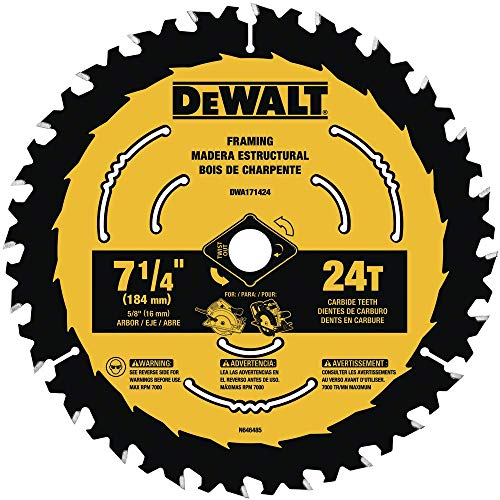
 Best blade pairing for finish workDEWALT 12 in. 40T General Purpose Saw Blade (DWA11240)View on Amazon
Our Top Picks
Quick Comparison
| Product | Best for | Key feature |
|---|---|---|
| DEWALT 12-Inch Miter Saw, 15-Amp, Single Bevel, Compound (DWS715) | General framing and trim in a home shop | Compound cuts with a single bevel direction |
| DEWALT Miter Saw, 12-Inch, Double Bevel, Compound, XPS Cutline (DWS716XPS) | Crown molding and mirrored angles | Bevel in both directions plus an XPS cut line |
| Dewalt DWS779 12″ Sliding Compound Miter Saw | Wide boards and jobsite work | Sliding rails for extra crosscut capacity |
| DEWALT 12 in. 40T General Purpose Saw Blade (DWA11240) | Cleaner finish cuts on existing saws | 40-tooth carbide-tipped general-purpose blade |
DEWALT 12-Inch Miter Saw, 15-Amp, Single Bevel, Compound (DWS715)
DEWALT 12-Inch Miter Saw, 15-Amp, Single Bevel, Compound (DWS715)
Best for: General framing and trim in a home shop
This is a straightforward compound miter saw for someone who wants a 12-inch blade without paying for features they may not use. It suits DIYers building shelving, decks or trim packages who make mostly square and simple miter cuts.
Key specs
- 12-inch blade diameter
- 15-amp motor
- Single bevel, compound cutting
Pros
- Simple setup with fewer adjustments to learn
- Corded power means no battery to manage
- Compound capability covers most trim angles
Cons
- Single bevel direction means flipping stock for opposite angles
- Corded operation limits placement on remote jobsites
Bottom line: A sensible choice for a home workshop where most cuts are straight or mitered in one direction.
View on AmazonDEWALT Miter Saw, 12-Inch, Double Bevel, Compound, XPS Cutline (DWS716XPS)
DEWALT Miter Saw, 12-Inch, Double Bevel, Compound, XPS Cutline, 15-Amp (DWS716XPS)
Best for: Crown molding and mirrored angles
The double bevel design lets you tilt the head left or right without rotating the workpiece. That matters for crown molding, which is cut flat against the saw table, and for picture frames and compound cuts that repeat on both sides.
Key specs
- 12-inch blade diameter
- 15-amp motor
- Double bevel, compound cutting
- XPS cut line for aligning the blade to the mark
Pros
- Bevels both directions, saving time on repeat angles
- XPS cut line helps with accurate marking-to-cut alignment
- Good fit for trim carpenters and cabinet installers
Cons
- More adjustments to set and check than a single-bevel model
- Corded, so jobsite placement requires an extension cord or outlet nearby
Bottom line: The better pick if crown molding or mirrored compound cuts are a regular part of your work.
View on AmazonDewalt DWS779 12″ Sliding Compound Miter Saw
Dewalt DWS779 12" Sliding Compound Miter Saw
Best for: Wide stock and sliding cuts
A sliding saw moves the blade forward on rails, which adds crosscut capacity beyond what a fixed-head saw can handle. It suits anyone regularly cutting wide boards, flooring or deck material, or working on a jobsite where a larger cut width is needed.
Key specs
- 12-inch blade diameter
- Sliding compound design for wider crosscuts
Pros
- Sliding rails increase crosscut width compared with fixed-head models
- Suits wide boards and sheet-adjacent trim work
- Compound capability for angled cuts across wide stock
Cons
- Sliding mechanisms need periodic cleaning and alignment checks
- Typically takes up more bench or stand space than a fixed-head saw
Bottom line: The right call for frequent wide-board work, but overkill for light trim projects.
View on AmazonDEWALT 12 in. 40T General Purpose Saw Blade (DWA11240)
DEWALT 12 in. 40T General Purpose Saw Blade (DWA11240) | Saw Blades, Circular Saw Blades, Carbide Tipped Blades, Wood Cutting Blades, Dewalt DWA11240 General-Purpose Circular Saw
Best for: Cleaner finish cuts on existing saws
This is a blade, not a saw. It suits anyone who already owns a 12-inch miter saw and wants a cleaner cut than a stock or worn blade provides. Owners often pair a general-purpose blade like this with framing and trim work.
Key specs
- 12-inch diameter
- 40 teeth
- Carbide-tipped, general-purpose tooth geometry
Pros
- Fits 12-inch miter saws, including DeWalt models
- 40 teeth balance speed and finish for mixed wood cuts
- Carbide tips hold an edge longer than standard steel blades
Cons
- General-purpose geometry is not ideal for dense hardwood or fine plywood
- Not a substitute for a dedicated finish blade if you cut very fine trim
Bottom line: A worthwhile upgrade for anyone whose current blade is dull or underperforming on everyday cuts.
View on AmazonBuying Guide
Cut capacity and blade size
A 12-inch blade cuts wider than a 10-inch blade, which matters for 2×10 and 2×12 lumber and crown molding laid flat. Check the vertical and horizontal capacity figures in the manufacturer specs before buying, since those numbers determine what you can cut in a single pass.
Good picks for this: DEWALT 12-Inch Miter Saw, 15-Amp, Single Bevel, Compound (DWS715) and Dewalt DWS779 12″ Sliding Compound Miter Saw
Single bevel versus double bevel
A single bevel head tilts in one direction, so opposite-angle cuts require flipping the workpiece. A double bevel head tilts both ways, which speeds up repeat cuts and makes crown molding easier. If your work involves many mirrored angles, the extra adjustment time on a double bevel saw is usually worth it.
Good picks for this: DEWALT Miter Saw, 12-Inch, Double Bevel, Compound, XPS Cutline (DWS716XPS)
Sliding versus fixed-head design
Sliding saws extend crosscut capacity by moving the blade along rails. Fixed-head saws are lighter, simpler and take up less space. If you rarely cut boards wider than about 6 inches, a fixed-head model is usually enough. Frequent wide-board work is where sliding designs earn their footprint.
Good picks for this: Dewalt DWS779 12″ Sliding Compound Miter Saw
Power source and jobsite fit
Corded saws offer consistent power without battery management. Cordless platforms give you portability on remote sites but require charged packs and enough runtime for the cuts you need. Consider where you will use the saw most often before committing to a corded or cordless model.
Good picks for this: DEWALT 12-Inch Miter Saw, 15-Amp, Single Bevel, Compound (DWS715) and DEWALT Miter Saw, 12-Inch, Double Bevel, Compound, XPS Cutline (DWS716XPS)
Blade tooth count and material
Tooth count affects cut quality and speed. Lower tooth counts (around 24 to 32) cut faster and suit rough framing. Higher counts (around 60 to 80) produce cleaner finish cuts in trim and cabinetry. A 40-tooth general-purpose blade sits in the middle, which is why it works for mixed jobs. Carbide-tipped blades generally hold their edge longer than steel-tooth blades.
Good picks for this: DEWALT 12 in. 40T General Purpose Saw Blade (DWA11240)
Fence and table accuracy
Check that the fence sits square to the blade and that the table locks firmly at common miter stops such as 0 and 45 degrees. Owners often recommend verifying square with a combination square after setup and again after blade changes, since small misalignments show up quickly on trim and frame joints.
Good picks for this: DEWALT 12-Inch Miter Saw, 15-Amp, Single Bevel, Compound (DWS715) and DEWALT Miter Saw, 12-Inch, Double Bevel, Compound, XPS Cutline (DWS716XPS)
Care and blade replacement
Keep the blade guard clean, clear sawdust from the motor vents and check blade bolt tightness regularly. Always unplug a corded saw or remove the battery before changing a blade. Use a blade rated for the saw’s diameter and arbor size. If you are unsure about electrical or mechanical maintenance, consult a qualified tool service technician.
Good picks for this: DEWALT 12 in. 40T General Purpose Saw Blade (DWA11240) and Dewalt DWS779 12″ Sliding Compound Miter Saw
FAQ
Is a 12-inch miter saw better than a 10-inch one?
A 12-inch saw cuts wider boards and larger crown molding in a single pass. A 10-inch saw is lighter and often less expensive to run, which some hobbyists prefer. Choose based on the widest material you cut regularly.
What is the difference between a compound and a sliding miter saw?
A compound saw tilts the blade to cut bevels. A sliding compound saw adds rails that move the blade forward, increasing how wide a board it can cross-cut.
Can I use any 12-inch blade on a DeWalt miter saw?
Blades must match the saw’s diameter, arbor size and maximum rated speed. Check the saw’s manual for the correct specifications before buying a replacement blade.
How many teeth should a miter saw blade have?
Lower tooth counts cut faster and suit rough framing. Higher counts give cleaner finishes for trim and cabinetry. A 40-tooth general-purpose blade is a common middle ground.
Do I need a double bevel saw for crown molding?
Not always. Crown molding can be cut with a single bevel saw using nested setups, but a double bevel saw is generally easier for repeat mirrored angles.
How do I know the saw is square?
Use a reliable combination square against the blade and the fence, and check after every blade change. If the saw does not stay square after adjustment, consult the manual or a qualified service technician.
Conclusion
For most home shops, the DEWALT DWS715 covers general framing and trim with simple controls. If crown molding or mirrored compound cuts are common, the DWS716XPS double bevel model is the better fit. Jobsite users who regularly cut wide stock will get more from the Dewalt DWS779 sliding saw. Whatever saw you choose, pairing it with the DEWALT 40-tooth general-purpose blade is a practical way to improve everyday cut quality. Confirm current specifications and compatibility on the manufacturer’s site before purchase.
Sources
- Workplace guidance on power saw safety, guarding and operator training (osha.gov)
- Consumer safety information on power tool hazards and kickback prevention (cpsc.gov)
- Measurement standards and tools for verifying square and dimensional accuracy (nist.gov)
Before you buy: helpful guides
Related reading
- 5 Best DeWalt 12in Compound Miter Saws for Home and Jobsite (2026)
- Top 3 DeWalt Compound Miter Saw 12 Inch Picks Compared for Home and Job Sites
About Caleb Morgan
Caleb Morgan is part of our editorial team and reviews and edits our power tools guides, checking product details against manufacturer specifications and owner feedback.