
 By Caleb Morgan
Updated November 2026
Choosing a miter saw for baseboard trim comes down to a few practical questions: how wide your boards are, how much bevel and slide capacity you need, how precise the angle settings are, and whether you will be cutting in a shop or on site. This list weighs those factors across six products, with attention to specifications, brand reputation and the patterns owners tend to describe after months of use.
What the list weighs: blade size and cut capacity for standard 3 to 5 inch baseboard, bevel range for inside and outside corners, angle accuracy, footprint, and how well each tool suits trim work rather than framing or metal.
Our top picks at a glance
- 1
 TOP CHOICEBest overallMarvtool 10-inch Compound Miter SawView on Amazon
- 2
 TOP CHOICEBest for small kitchensVEVOR Mini Miter Cut-off Chop SawView on Amazon
- 3
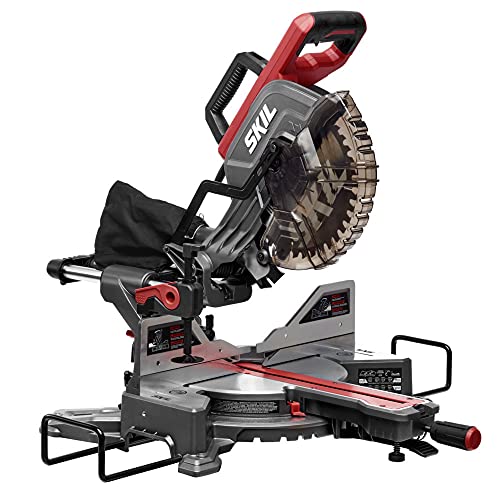 TOP CHOICEBest for wide casing and sliding cutsSKIL 10" Dual Bevel Sliding Compound Miter SawView on Amazon
- 4
 Best budget pickSKIL 10 Amp 7-1/4" Single Bevel Miter SawView on Amazon
- 5
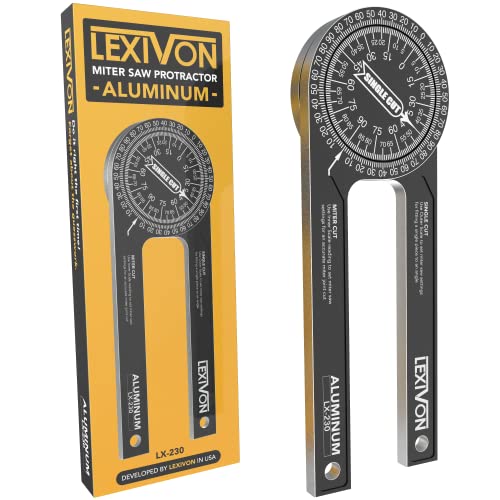 Best for checking corner anglesLEXIVON Aluminum Miter Saw ProtractorView on Amazon
- 6
 Best for transferring coped and mitered cornersBora MiteriX Angle Aluminum Wood DuplicatorView on Amazon
Our Top Picks
Quick Comparison
| Product | Best for | Key feature |
|---|---|---|
| Marvtool 10-inch Compound Miter Saw | Most trim jobs in a home workshop | 10-inch blade with 0-45° single bevel and extension table |
| VEVOR Mini Miter Cut-off Chop Saw | Small kitchens and benchtop work | Compact benchtop footprint with 0-45° miter range |
| SKIL 10″ Dual Bevel Sliding Compound Miter Saw | Wide casing and crown molding | Dual bevel and sliding head for wider stock |
| SKIL 10 Amp 7-1/4″ Single Bevel Miter Saw | Budget-conscious DIY trim work | Compact rail system with LED shadow line |
| LEXIVON Aluminum Miter Saw Protractor | Setting and checking saw angles | Precision laser-engraved scales, rust-proof aluminum |
| Bora MiteriX Angle Aluminum Wood Duplicator | Transferring corner angles to the saw | Internal and external corner capture from 0-180° |
Marvtool 10-inch Compound Miter Saw
Marvtool 10-inch Compound Miter Saw, 5000RPM, 15 Amp, Single Bevel 0-45° with Extension Table, 36T Blade, Power Saw for Metal, Plastic, Wood, Laminates
Best for: Most trim jobs in a home workshop
This suits homeowners who cut baseboard, casing and shoe molding regularly and want a full-size 10-inch blade without moving up to a large sliding saw. It also works for general wood and laminate cuts around the house.
Key specs
- 10-inch blade, 36-tooth
- 5000 RPM, 15 Amp motor
- Single bevel, 0-45°
- Extension table included
Pros
- Full 10-inch blade handles standard baseboard profiles in a single pass
- Extension table helps support longer lengths of trim
- Single bevel setup keeps the head simple to adjust
Cons
- Single bevel means you flip the workpiece for opposite-direction bevels
- Limited documentation on fine angle calibration compared with premium brands
Bottom line: A good first saw for a homeowner who needs reliable trim cuts and does not want to spend on a sliding model.
View on AmazonVEVOR Mini Miter Cut-off Chop Saw
VEVOR Mini Miter Cut-off Chop Saw, Two 2-5/16" Blade of Steel and Resin with 1/2inch Cutting Depth, 0-45° Benchtop Miter Saw for Copper, Aluminum, Wood, Zinc in Hobby Craft, 110V
Best for: Small kitchens and benchtop work
This is aimed at people working in tight spaces, such as a small kitchen remodel or a corner of a garage, who need to cut short trim pieces and smaller profiles rather than full-length boards.
Key specs
- Two 2-5/16 inch blades
- Cutting depth of about 1/2 inch
- 0-45° miter range
- 110V benchtop design
Pros
- Small footprint fits on a workbench or sawhorse
- Good for short pieces such as quarter round and corner blocks
- Simple setup with few adjustments
Cons
- Shallow cutting depth limits use on wider baseboard
- Not suited to long boards without extra support
Bottom line: Best for short trim pieces in a compact space, not for full-width baseboard runs.
View on AmazonSKIL 10″ Dual Bevel Sliding Compound Miter Saw
SKIL 10" Dual Bevel Sliding Compound Miter Saw-MS6305-00
Best for: Wide casing and sliding cuts
This suits anyone trimming wider stock such as 5 to 7 inch baseboard, crown molding or wide door casing, where a sliding head and dual bevel make a real difference to how many passes you need.
Key specs
- 10-inch blade
- Dual bevel for both left and right cuts without flipping the board
- Sliding head for extended crosscut capacity
Pros
- Dual bevel speeds up crown and inside-corner work
- Sliding head handles wider boards in one pass
- Owners often describe the setup as straightforward for repeated cuts
Cons
- Sliding mechanisms need periodic cleaning and alignment checks
- Larger footprint than single bevel models
Bottom line: The strongest pick here if your trim runs wide or you cut a lot of crown molding.
View on AmazonSKIL 10 Amp 7-1/4″ Single Bevel Miter Saw
SKIL 10 Amp 7-1/4" Single Bevel Miter Saw with Compact Rail System & LED Shadow Line (Stand SRS0001 Sold Separately)-MS6306-00
Best for: Best budget pick
This is for DIYers doing occasional trim work, such as a weekend baseboard replacement, who want a basic miter saw without a large investment. The listing notes that the stand is sold separately, so plan for a table or sawhorse setup.
Key specs
- 7-1/4 inch blade
- 10 Amp motor
- Single bevel
- Compact rail system and LED shadow line
Pros
- Lightweight and easy to move between jobs
- LED shadow line helps line up cuts on the marked line
- Good fit for short trim runs and light use
Cons
- Smaller 7-1/4 inch blade limits cutting depth on wider baseboard
- Stand is sold separately
Bottom line: A sensible budget choice for light trim work, but wider baseboard will test its capacity.
View on AmazonLEXIVON Aluminum Miter Saw Protractor
LEXIVON Aluminum Miter Saw Protractor | 7-Inch Rust Proof Angle Finder Featuring Precision Laser Engraved Scales (LX-230)
Best for: Best for checking corner angles
This is not a saw. It is an angle finder for people who need to confirm the miter and bevel settings on their saw before cutting, which matters most for inside and outside corners on trim.
Key specs
- 7-inch aluminum body
- Rust-proof construction
- Precision laser-engraved scales
Pros
- Helps verify saw angles against a physical reference
- Rust-proof body suits garage and shop conditions
- Engraved scales are easier to read than printed markings
Cons
- Does not cut anything, so it is an accessory only
- Useful only if you already have a saw
Bottom line: A worthwhile accessory for anyone who wants to check their miter saw before committing to a cut on finished trim.
View on AmazonBora MiteriX Angle Aluminum Wood Duplicator
Bora MiteriX Angle Aluminum Wood Duplicator 530401 | Aluminum arms, 0-180° internal and external corners, miter saw transfer, crown molding and baseboard trim
Best for: Best for transferring coped and mitered corners
This tool is for trim carpenters who need to capture the exact angle of an existing corner, such as an out-of-square wall, and transfer it to the miter saw. It is less about cutting and more about measuring corners accurately.
Key specs
- Aluminum arms
- Captures 0-180° internal and external corners
- Designed for miter saw transfer, crown molding and baseboard trim
Pros
- Captures real wall angles, which helps with out-of-square corners
- Simple transfer process to the saw
- Useful for crown molding and baseboard alike
Cons
- Requires practice to get consistent readings
- Not a cutting tool, so it supplements rather than replaces a saw
Bottom line: Ideal for trim work in older homes where corners are rarely square.
View on AmazonBuying Guide
Blade size and cut capacity
For standard 3 to 5 inch baseboard laid flat, a 10-inch blade gives comfortable room. A 7-1/4 inch blade will handle smaller profiles but may struggle with wider stock. Check the listed maximum crosscut width at 0° and 45° before buying, since that number tells you more about real capacity than blade size alone.
Good picks for this: Marvtool 10-inch Compound Miter Saw, SKIL 10″ Dual Bevel Sliding Compound Miter Saw
Bevel and miter range
Inside and outside corners on baseboard usually require a bevel setting around 45°, and crown molding often needs a compound angle. Single bevel saws are simpler but require flipping the workpiece for opposite bevels. Dual bevel saws avoid flipping but cost more in complexity and footprint.
Good picks for this: SKIL 10″ Dual Bevel Sliding Compound Miter Saw, SKIL 10 Amp 7-1/4″ Single Bevel Miter Saw
Sliding versus fixed head
A sliding head extends the crosscut capacity, which matters for boards wider than the blade’s fixed reach. If most of your trim is 3 to 4 inches wide, a fixed-head saw is usually enough. If you regularly trim 6 inch or wider stock, a sliding model saves you from making multiple passes.
Good picks for this: SKIL 10″ Dual Bevel Sliding Compound Miter Saw, Marvtool 10-inch Compound Miter Saw
Footprint and portability
Measure your workspace before buying. A benchtop saw suits a small kitchen or a corner of a garage, while a full-size saw needs a stand or a dedicated table. Remember that some listings, such as the SKIL 7-1/4 inch model, sell the stand separately, which changes the real footprint and cost of setup.
Good picks for this: VEVOR Mini Miter Cut-off Chop Saw, SKIL 10 Amp 7-1/4″ Single Bevel Miter Saw
Angle accuracy and verification
Miter saws can drift out of calibration over time, and even a small error shows up as a gap at a corner. Checking the saw against a known reference, such as an angle protractor, catches problems before you cut finished trim. Calibrate the saw at 45° and 90° at least before a major trim job.
Good picks for this: LEXIVON Aluminum Miter Saw Protractor, Bora MiteriX Angle Aluminum Wood Duplicator
Use case: baseboard, crown and casing
Baseboard is generally the easiest trim to cut because it sits flat on the saw table. Crown molding is harder because it sits at an angle, and it needs a compound setting that matches the wall and ceiling angle. Casing falls in between. Match the saw to the profile you cut most often, not the one you cut once a year.
Good picks for this: Bora MiteriX Angle Aluminum Wood Duplicator, Marvtool 10-inch Compound Miter Saw
Care and maintenance
Keep the blade sharp and clean the saw after heavy use, especially if you cut MDF or composite trim, which generates fine dust that can affect the slide rails and the detent settings. Check that the blade guard moves freely and that the fence is square to the blade. Replace the blade when cuts begin to show burn marks or tear-out.
Good picks for this: SKIL 10″ Dual Bevel Sliding Compound Miter Saw, Marvtool 10-inch Compound Miter Saw
FAQ
What size miter saw is best for baseboard trim?
A 10-inch miter saw covers most standard baseboard profiles, including boards up to about 5 inches wide when laid flat. A 7-1/4 inch saw works for smaller profiles but has less room for wider stock.
Do I need a sliding miter saw for baseboard?
Not always. Fixed-head saws handle most baseboard well. A sliding saw becomes useful when you regularly trim boards wider than the blade’s fixed crosscut reach, such as 6 inch casing or crown molding.
Is a single bevel or dual bevel saw better for trim?
A dual bevel saw saves time on inside corners and crown molding because you do not flip the board. A single bevel saw is simpler and often cheaper, but you must flip the workpiece for opposite-direction cuts.
How do I check my miter saw for accuracy?
Make a test cut on scrap at 45° and join two pieces to see whether they form a clean 90° corner. An angle protractor can also confirm the saw’s setting against a known reference.
Can a mini miter saw cut baseboard?
A mini or benchtop saw can cut short pieces of trim and smaller profiles, but its shallow cutting depth limits how wide a board it can handle. For full-length baseboard, a 10-inch saw is the safer choice.
Is a miter saw safe to use for trim at home?
Miter saws are safe when used with the blade guard in place, both hands clear of the blade path, and the workpiece clamped or held firmly against the fence. For complex or large jobs, consider consulting a professional carpenter or trim installer.
Conclusion
For most homeowners trimming a room, the Marvtool 10-inch Compound Miter Saw offers a practical full-size option. If your baseboard runs wide or you cut a lot of crown molding, the SKIL 10″ Dual Bevel Sliding Compound Miter Saw gives you the capacity and bevel flexibility to match. Choose the VEVOR Mini Miter Cut-off Chop Saw for a small space and short pieces, and the SKIL 10 Amp 7-1/4″ Single Bevel Miter Saw for light DIY work. Pair any saw with the LEXIVON Aluminum Miter Saw Protractor or the Bora MiteriX Angle Aluminum Wood Duplicator to check angles and handle out-of-square corners.
For related reading, see Miter Saw for Baseboard: 5 Best Picks for Clean Trim Cuts (2026), Single Versus Double Bevel Miter Saw (2026): Which One Fits Your Cuts?, Miter Saw for Quarter Round: 3 Best Options for Clean Trim Cuts, and Saw Blades: Tooth Count, Kerf and Grind for Circular, Miter and Table Saws.
Sources
- Workplace guidance on power saw safety, including guarding and hand clearance around circular and miter saw blades (osha.gov)
- Consumer safety information on power tool injuries and safe operating practices (cpsc.gov)
- Standards and measurement resources relevant to angle accuracy and dimensional verification (nist.gov)
About Caleb Morgan
Caleb Morgan is part of our editorial team and reviews and edits our power tools guides, checking product details against manufacturer specifications and owner feedback.




