Some links on this page are affiliate links. If you buy through them, we may earn a commission at no extra cost to you. As an Amazon Associate I earn from qualifying purchases. Learn more ›
Best Bench Vises
A side-by-side look at bench vises by listed jaw size, clamping force, swivel base, and mounting, with notes on what each listing says to check.
This post contains Amazon affiliate links. As an Amazon Associate I earn from qualifying purchases, at no extra cost to you.
Bench vises hold workpieces steady while you cut, file, drill, or shape them. The best bench vises for a given shop depend on jaw width, throat depth, how the base swivels, and whether the vise bolts down, clamps on, or does both.
The picks below were chosen by comparing listing specs and features, not by hands-on testing. Nothing here reflects personal use. Check each listing for current price, availability, and full details before you buy, since those can change.
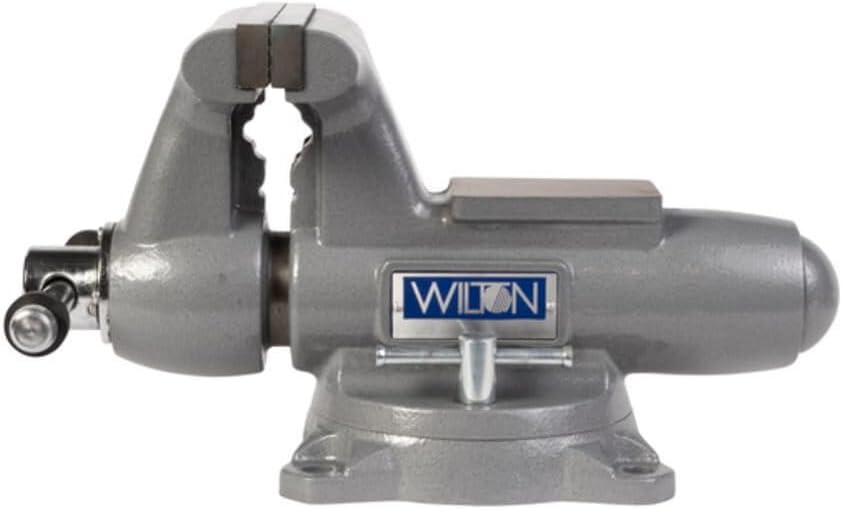
The Wilton WVA6 is a 6-inch bullet-style bench vise with built-in pipe jaws that grip stock from 1/4 to 3 inches in diameter, so it can cover much of a shop's pipe work without a second vise. Its enclosed ductile iron body, 360-degree swivel base, and Lifetime Warranty make it a practical choice for apprentices, students, DIYers, and tradespeople setting up a home garage or training bench.
Pros & Cons
Pros
Combines a flat bench vise and a pipe vise in one unit, which saves bench space and money for most small shops.
Heavy ductile iron construction and a precision-machined slide bar give a steady, firm hold with minimal wobble.
Rubber pinch-point guards and the enclosed body add a layer of hand and spindle protection during daily use.
The Lifetime Warranty and replaceable jaws, spindle, and handle parts make long-term ownership more practical.
Cons
The vise must be bolted down through its four mounting holes, so it is not a portable clamp-on option and needs a sturdy workbench.
At about 25.7 pounds, it is heavy to move around, which may be inconvenient for users who reposition their bench often.
The handle must not be extended or struck, and the vise cannot be used as a press, which limits some heavy-duty tasks.
Detailed Review
The Wilton WVA6 is a 6-inch apprentice bench vise built for home shops, garages, and technical classrooms where a full-size vise is needed without professional-grade bulk. It suits apprentices, students, DIYers, and tradespeople who handle cutting, filing, drilling, grinding, and assembly work regularly. The 6-inch jaw width and 3-3/4-inch throat depth accommodate most flat stock, brackets, and small assemblies.
Its standout feature is the built-in pipe jaws, which grip pipe and round stock from 1/4 inch to 3 inches in outside diameter. This means many shop pipe jobs can be handled on the same bench without buying a separate pipe vise. The 360-degree swivel base and two side lockdowns make it easy to rotate the work to a comfortable angle and hold it there securely.
The 72,000 PSI ductile iron body delivers up to 8,300 lb of clamping force, and the enclosed bullet design keeps the spindle covered for low-maintenance use. Rubber pinch-point guards help protect hands, and the precision-machined slide bar keeps the front jaw steady as it travels. The flat anvil behind the jaws adds a convenient surface for light hammering and forming.
The vise has real limitations that buyers should weigh. It must be bolted to a workbench through four 0.51-inch holes, so it cannot be clamped on and moved as needed. At roughly 25.7 pounds, it is also heavy to reposition, and users must never extend the handle with a pipe or hammer it, since that defeats the safety design and can damage the vise.
Overall, the Wilton WVA6 is a well-built, versatile bench vise that gives beginners and working tradespeople a solid combination of flat and pipe gripping in a compact footprint. For a permanent workbench setup where pipe and flat work both matter, it is a dependable choice backed by a Lifetime Warranty and replaceable parts.
The Nakkaa 6 inch bench vise is a ductile iron workbench clamp with a 360° swivel base, 5.5 inch maximum jaw opening, and replaceable microgroove steel jaws. It suits woodworkers, metalworkers, and DIY users who need a stable, rotatable vise for a variety of clamping angles.
Pros & Cons
Pros
Solid ductile iron construction provides a heavy, stable base that resists movement during hard use
Swivel base offers flexible positioning for angled cuts, drilling, and assembly work
Replaceable jaws let you restore grip performance or swap in different jaw styles over time
Competitive price point for a 6 inch vise with swivel and anvil features
Cons
At roughly 16 kg, it is very heavy, so it is best kept permanently mounted rather than moved often
Mounting requires a sturdy workbench with enough clearance for the three bolts, which may not suit thin or portable tables
Detailed Review
The Nakkaa 6 inch bench vise is a heavy-duty clamp designed for people who regularly work with wood, metal, or other materials on a workbench. It is aimed at hobbyists, home mechanics, and small shop owners who want a sturdy vise that can handle a range of tasks without constant readjustment.
Its standout feature is the 360° swivel base, which lets you turn the workpiece to any angle for drilling, filing, or assembly. The 5.5 inch maximum jaw opening and 2.16 inch throat depth accommodate most common stock sizes, and the non-slip microgroove jaws keep material secure during cutting and shaping.
Construction is solid, with ductile iron housing, a chrome-plated spindle and nuts, and jaws that receive quenching and re-firing for added hardness. The jaws are replaceable, which extends the life of the tool when the teeth eventually wear. Three mounting holes provide a firm anchor, though the vise's weight means installation takes some care.
The main drawbacks are its considerable weight and the need for a sturdy, permanently mounted workbench. Buyers working from a portable or thin table may find it less practical, and the modest review count means long-term reliability is still being tested by the wider community.
Overall, the Nakkaa bench vise offers strong value for those who need a durable, swivel-capable vise for a permanent workshop setup. It delivers reliable clamping and flexible positioning, making it a practical choice for regular, demanding use.
The SEDY 4.5 inch bench vise is a gray iron table clamp with a 240-degree swivel base and a 3-3/4 inch jaw opening, fitted with magnetic polyurethane jaw pads that grip round and flat stock without marring. It suits hobbyists and home shop users who need a versatile holding tool for woodworking, metal, and welding projects.
Pros & Cons
Pros
Sturdy gray iron body provides a stable, vibration-resistant base for drilling and milling tasks.
Included magnetic jaw pads help prevent scratches and marks on finished wood and metal surfaces.
Swivel base offers flexible positioning that adds real value on varied projects.
Strong value for a versatile, multi-purpose bench vise with two jaw pads included.
Cons
At roughly 4.9 kg, the vise is heavy to move, though this weight contributes to stability during use.
The 4.5 inch size is best suited for light to medium work and may feel limited for very large or heavy-duty fabrication.
Jaw pad magnets and polyurethane covers may wear over time with frequent high-pressure clamping.
Detailed Review
The SEDY 4.5 inch bench vise is a versatile table clamp designed for hobbyists, home woodworkers, and small workshop owners who need a dependable holding tool. It is built to handle woodworking, light metalwork, pipe work, and welding setups from a single fixture.
Its multi-jaw design is the standout feature, holding both flat boards and round stock like pipe or dowels with consistent pressure. The 240-degree swivel locking base lets you rotate the workpiece for angled drilling, sawing, or assembly, which makes the vise practical across different projects.
The body is cast from premium gray iron and feels solid when clamped down, with little flex under moderate load. The included magnetic jaw pads with a diamond-pattern texture grip well and reduce the risk of marring finished surfaces, which is a real benefit for furniture and detail work.
The main drawbacks are its weight, which makes it a permanent fixture rather than a portable tool, and its 4.5 inch size, which may feel restrictive for large or heavy fabrication. The jaw covers are also a consumable part that can wear with heavy use over time.
Overall, this is a well-priced, sturdy vise that delivers strong versatility for light to medium shop tasks. It is a good choice for anyone setting up a home workbench who wants one tool that handles wood, metal, and round stock reliably.
The Forward DT08125A is a 5-inch ductile iron bench vise with a 360-degree rotating head and swivel base, rated for at least 5,500 lbs of clamping force. It suits DIY enthusiasts and light industrial users who need a sturdy vise that handles flat, round, and angled workpieces.
Pros & Cons
Pros
Heavy-duty ductile iron body feels solid and resists flexing under pressure
Versatile jaw set handles flat stock, pipe, and round pieces without buying accessories
Swivel base and rotating head make angled clamping simple and efficient
Cons
At 33 lbs, it is heavy, so it is best permanently mounted to a sturdy workbench
Mounting bolts are the only hardware included, so you will need a suitable mounting surface and possibly additional fasteners
The 2.6-inch throat depth may limit clamping of deeper or bulkier workpieces
Detailed Review
The Forward DT08125A is a 5-inch heavy duty bench vise built for hobbyists, home workshop owners, and light industrial users who need a dependable clamp for metalwork, woodworking, and repair tasks. Its ductile iron construction and generous clamping capacity set it apart from lighter vises in the same size class.
Its standout feature is the combination of a 360-degree rotating front head and swivel base, which lets you position awkward workpieces at any angle without shifting your project. The three included jaw sets add real versatility, covering flat stock with microgroove top jaws, pipe from 3/5 inch to 2 1/2 inch with the built-in pipe jaws, and round stock with the V-jaws.
Build quality is a clear strength. Both the stationary and floating bodies use ductile iron rated at 60,000 PSI, and the rated clamping force of at least 5,500 lbs gives confidence when gripping stubborn parts. The large reinforced anvil handles tapping and light hammering well, which broadens its use beyond simple clamping.
The vise has a few drawbacks to consider. At 33 pounds it is heavy, so it is best bolted to a solid bench rather than a flimsy table. The included hardware is limited to bolts, and the 2.6-inch throat depth restricts work on thicker or bulkier pieces.
Overall, the DT08125A is a well-built, highly versatile vise that offers strong value for DIY and light industrial use. If you have a stable workbench and need a rotating, multi-jaw vise that will hold up over years of use, it is a solid choice.
The WorkIQTools IQ Vise is a 360° articulating bench vise built from hardened steel and cast aluminum, with a ball and socket that locks in eight fixed positions rated to 130 ft-lbs of torque. It suits hobbyists, woodworkers, and repair technicians who need to reposition workpieces often and hold them securely with one hand.
Pros & Cons
Pros
One-handed Quick Cam lever makes repositioning fast and convenient during detailed work.
Rugged hardened steel and cast aluminum construction offers a solid, stable feel on the bench.
Interchangeable Flex-Fit and Sure-Fit jaw pads adapt the vise to a wide range of materials and shapes.
Accessory ports let you build a complete, hands-free workstation around the vise.
Strong customer rating reflects consistent satisfaction with grip strength and articulation.
Cons
Locking positions are fixed at eight points, so it cannot hold an infinitely variable angle.
At about 10 pounds, it is heavy to move around, and it must be bolted to a bench for best stability.
Jaws and accessories are sold separately, which adds to the total cost of a full setup.
Detailed Review
The IQ Vise is a 360° articulating bench vise designed for people who regularly need to hold a workpiece at different angles. It is well suited to hobbyists, woodworkers, metalworkers, and repair technicians who value quick, precise positioning.
Its standout feature is the ball and socket mechanism, which rotates, tilts, and swivels your work to the exact position you need. The Quick Cam lever then locks everything in place with one hand, and the eight fixed positions rated to 130 ft-lbs keep parts steady while you file, saw, chisel, drill, or wrench.
Construction is solid, combining hardened steel with cast aluminum that bolts firmly to a workbench. The 5-inch parallel jaws accept dual-sided Flex-Fit pads that swap in seconds, and optional Sure-Fit or leather jaws protect delicate finishes.
The main drawback is that the locking positions are fixed, so you cannot dial in an infinitely variable angle. At roughly 10 pounds, the vise is also heavy to move, and the jaws and accessories must be purchased separately.
Overall, the IQ Vise delivers reliable articulation and a secure hold for users who need flexible positioning at the bench. If you can work within its eight locking positions and mount it to a sturdy surface, it is a practical and capable choice.
The PONY 4 Inch Bench Vise delivers up to 4400 lbs of clamping force from a ductile iron body with a 360-degree swivel base and built-in anvil. It suits home garage and workshop users who handle woodworking, metalworking, and pipe work on a bench with limited space.
Pros & Cons
Pros
Strong clamping force for a 4-inch bench vise, suitable for both woodworking and metalworking tasks
Swivel base adds real versatility and makes efficient use of bench space
Built-in anvil and replaceable pipe jaws expand what the vise can do without extra tools
Cons
At 10.15 x 5.25 x 6 inches with a ductile iron body, it is relatively heavy and needs a sturdy bench for mounting
The 4-inch jaw width limits the size of workpieces it can hold compared with larger industrial vises
Swivel base locking and jaw wear over time depend on regular care, and replacement parts should be checked before purchase
Detailed Review
The PONY 4 Inch Heavy Duty Bench Vise is a workshop-grade clamp built for hobbyists, home mechanics, and professional tradespeople who need solid holding power on a bench. It is designed for woodworking, metal fabrication, and pipe work in both home garages and commercial shops.
Its headline feature is up to 4400 lbs of clamping force, which holds workpieces steady during sawing, drilling, and filing. The 360-degree swivel base lets you rotate the work to any angle without repositioning the vise, which is especially useful for awkward cuts and tight workspaces. The built-in anvil and replaceable pipe jaws add forging and round-stock capability.
The body is made from ductile iron with a 6000 PSI tensile strength rating, giving it good resistance to cracking and corrosion. The fully enclosed rear design keeps dust and debris out of the mechanism, and the redesigned round guide bar slides more smoothly than earlier versions. The replaceable U-shaped steel part is a practical touch for long-term maintenance.
The vise is fairly heavy at roughly 10 by 5 by 6 inches, so it is best mounted to a solid, well-anchored bench. The 4-inch jaw width suits small to medium stock, so users with oversized projects may need a larger model. Regular cleaning and lubrication of the swivel and slide will keep it operating smoothly.
Overall, the PONY 4 Inch Bench Vise offers strong clamping force, useful versatility, and durable construction at a sensible level for its class. It is a dependable choice for garage and workshop users who want one vise that handles woodworking, metalwork, and pipe tasks.
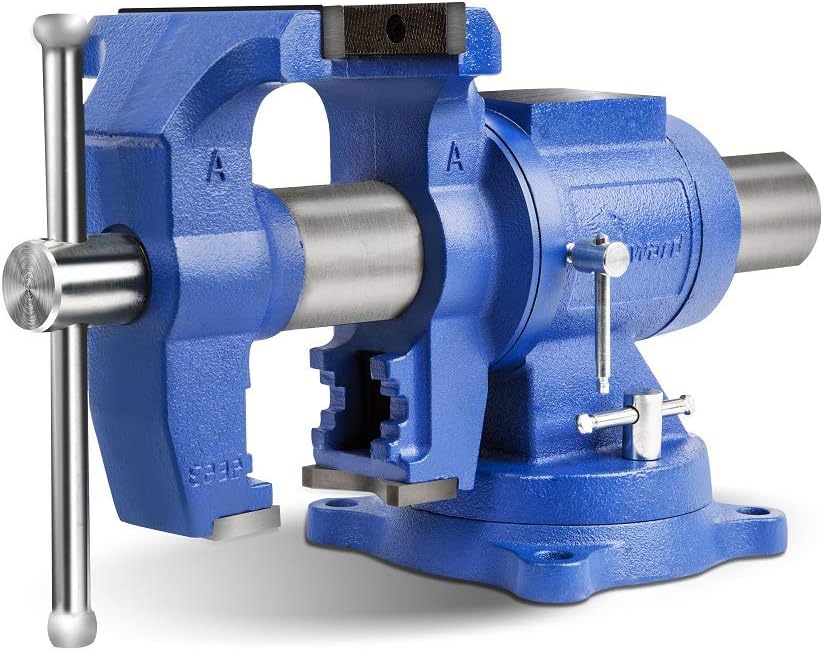
The Lustriix 2-in-1 Bench Vise is a cast iron table vise with a 360° swivel base, non-slip jaws, and both clamp-on and bolt-down mounting options. It suits hobbyists and DIY users who need a flexible, budget-friendly vise for woodworking, light metalwork, and crafts.
Pros & Cons
Pros
Swivel base saves time on multi-angle sanding, drilling, and filing tasks
Flexible clamp-on and bolt-down installation suits both temporary and permanent setups
Non-slip jaws grip a wide range of materials securely
Affordable option that adds metalworking capability to a woodworking bench
Cons
Maximum jaw opening of 2.5 inches limits the size of workpieces it can accommodate
Clamp-on mounting is best suited to light-duty work and may not hold up to heavy force as well as a bolted installation
Detailed Review
The Lustriix 2-in-1 Bench Vise is a cast iron table vise designed for hobbyists, DIY enthusiasts, and home workshop users who need a versatile holding tool. It fits most table and workbench thicknesses and handles everything from thin wooden strips to small metal parts.
Its 360° swivel base is the standout feature, letting you rotate the workpiece to a comfortable angle during sanding, drilling, or filing. The textured non-slip jaws grip wood, plastic, metal, and pipe securely, and the integrated anvil adds light hammering and bending capability for small brackets and connectors.
The cast iron body feels substantial for its 4.2-pound weight, and the compact footprint of roughly 8.5 by 7 inches keeps it manageable on smaller benches. The dual mounting system, offering both clamp-on and bolt-down options, makes it adaptable whether you need a temporary setup or a permanent fixture.
The main limitation is the 2.5-inch maximum jaw opening, which rules out larger stock. Clamp-on installation is best reserved for light-duty tasks, and the limited number of customer reviews means long-term durability is not yet well documented.
Overall, this is a practical and affordable vise for woodworkers and hobbyists who want swivel flexibility and metalworking support in one unit. It is less suited to heavy industrial use or oversized workpieces, but for everyday shop tasks it offers good value.
The MYTEC 6-inch 2-in-1 bench vise is a heavy-duty cast steel vise that can be bolted permanently to a workbench or clamped on for portable use. Its 270° swivel base and 4.3-inch maximum jaw opening make it a practical pick for home workshops, DIY metalworking, and jobsite tasks, especially for users who need a flexible, clamp-on option.
Pros & Cons
Pros
Clamp-on base makes it a genuinely portable vise for jobsites and temporary work tables.
Strong clamping force with a smooth-turning spindle for everyday shop and DIY work.
Swivel base and dual jaw types offer good versatility for a wide range of projects.
Competitive value for a heavy-duty vise, with strong customer ratings across thousands of reviews.
Cons
At roughly 17 pounds, it is heavy for frequent carrying, and the clamp-on setup works best on sturdy workbenches within the 2.1-inch base clamping range.
Product photos and dimensions should be checked carefully before ordering, since the listing emphasizes that sizing details matter for fit.
Not a precision machinist vise, so users needing tight tolerances or very large capacity may want a larger or more specialized model.
Detailed Review
The MYTEC 2-In-1 Bench Vise is a 6-inch heavy-duty vise built for home workshops, garages, and professional jobsites. It suits hobbyists, DIY builders, and tradespeople who want a sturdy vise that can either be bolted to a permanent bench or clamped on for portable work.
Its standout feature is the dual installation option. The clamp base grips workbenches up to about 2.1 inches thick, so you can set up a vise almost anywhere. The 270° swivel base adds flexibility, letting you angle the jaws for awkward workpieces and accommodate left-handed use.
Build quality centers on high-strength cast steel with a chrome-plated spindle that turns smoothly under high clamping pressure. The serrated pipe jaws and flat jaws are hardened, which helps them grip round tubing and flat stock securely. The polished anvil is handy for straightening nails and tapping small parts.
The vise is heavy at about 17 pounds, so it is better suited to a fixed or semi-permanent location than frequent carrying. The clamp-on base also depends on the thickness and stability of your bench, and buyers should review the product photos closely to confirm the dimensions match their setup.
Overall, this is a strong value for anyone needing a durable, versatile vise with the flexibility to bolt down or clamp on. Home users and portable workers will get the most out of it, while those needing machinist-grade precision should look at specialized alternatives.
The Tipton Ultra Gun Vise is a glass-filled nylon gunsmithing vise on a steel tube frame, with ball-and-socket clamp pads that adapt to a wide range of firearm contours. It suits gunsmiths and firearm owners who need a stable, non-marring bench setup for cleaning, maintenance, and light gunsmithing work.
Pros & Cons
Pros
Non-marring construction helps preserve finishes on firearms
Adaptable clamp pads secure a wide variety of firearm shapes
Sturdy steel frame with non-slip, independently adjustable feet
Limited lifetime warranty adds long-term confidence in the purchase
Cons
At roughly 13.6 pounds and 32.5 inches long, it requires dedicated bench space
Mounting hardware is not included and the vise must be bolted to the benchtop
Not intended as a shooting rest or bow press, which limits its use to gunsmithing and maintenance
Detailed Review
The Tipton Ultra Gun Vise is a bench-mounted holding fixture designed for cleaning, gunsmithing, and routine firearm maintenance. It is aimed at gunsmiths, armorers, and firearm owners who want a stable, dedicated platform to hold a rifle or shotgun securely while working on it.
Its standout feature is the ball-and-socket articulating clamp pads, which adapt to the curves and contours of different firearms. The height and length adjustable front and rear clamps let you position the gun comfortably, and the non-marring glass-filled nylon construction helps protect finishes during repeated handling.
The build centers on a steel tube frame that feels rigid under load. The four non-slip feet are independently adjustable, so the vise can be leveled on uneven benches, and the removable accessory trays and included Mag Well Block add practical organization at the workstation.
The main drawbacks are size and setup. At about 13.6 pounds and 32.5 inches long, it demands a permanent spot on the bench, and mounting hardware is not included. It is also explicitly not meant to serve as a shooting rest or bow press, so buyers should keep that use case in mind.
For users who need a durable, non-marring vise for cleaning and gunsmithing, the Tipton Ultra Gun Vise is a well-regarded option backed by a limited lifetime warranty. Buyers with a dedicated workbench and a regular maintenance routine will get the most value from it.
The IRWIN 226306ZR is a 6-inch cast iron bench vise with a swivel base, captured safety jaw, and anvil and pipe jaws, rated for over 3000 pounds of clamping pressure. It suits home workshop users and tradespeople who need a stable, heavy-duty vise backed by a limited lifetime warranty.
Pros & Cons
Pros
Heavy cast iron body resists movement during aggressive work
Swivel base offers flexible positioning for different projects
Captured safety jaw adds a practical layer of protection
Limited lifetime warranty offers long-term value
Cons
At over 30 pounds, it is not portable and is best suited to a fixed workbench
Mounting hardware and clamp setup may require some effort on thinner or unsupported tables
Steel jaws are aggressive, so delicate materials may need protective pads
Detailed Review
The IRWIN 226306ZR is a 6-inch heavy-duty bench vise built from cast iron, designed for hobbyists, home mechanics, and professional tradespeople who need a dependable workholding tool. It serves well in workshops where clamping strength and stability matter more than portability.
Its standout features include a captured safety jaw that prevents the sliding jaw from coming loose during demanding work, and a swivel base that makes it easy to reposition the vise without re-clamping. The aggressive steel jaws grip material firmly, and the integrated anvil and pipe jaws add versatility for forming and holding round stock.
Construction quality reflects the weight of the unit, which exceeds 30 pounds. The cast iron body feels rigid and planted under load, and the swivel mechanism gives the user a wide range of working angles. Build quality is consistent with the IRWIN brand reputation for durable hand tools.
The vise is not without drawbacks. Its weight makes it unsuitable for frequent relocation, and it requires a sturdy mounting surface to reach its full potential. The aggressive jaw teeth can mark softer materials, so protective jaw covers are advisable for finished work.
Overall, the IRWIN 226306ZR is a reliable, well-built vise that delivers strong clamping performance and stable hold for heavy-duty jobs. With a limited lifetime warranty and solid customer satisfaction, it is a sound investment for a permanent workshop setup.
Bench Vise Buying Guide
Jaw width, maximum opening, and throat depth
Jaw width is the length of the jaws that contact your work, and maximum opening sets how thick a piece can be when the jaws are fully open. Throat depth measures how far the jaws reach back from the front of the spindle, which affects how far into a piece you can clamp. Compare these three numbers against the largest and deepest work you expect to hold.
The Wilton listing gives a 6-inch jaw width, a 6-inch maximum opening, and a 3-3/4-inch throat depth, which is a useful reference point for flat stock, brackets, and assemblies. The Forward listing gives 5-inch jaw width and opening with a 2.6-inch throat depth. For a deeper look at matching a vise to the job, see the bench vise and workholding guide. Our guide on how to clamp odd-shaped workpieces also covers how jaw shape and opening affect grip.
Clamping force and body construction
Many listings state a clamping force and a material for the body. The Wilton listing names 72,000 PSI ductile iron and up to 8,300 lb of clamping force. The Forward listing describes ductile iron rated at 60,000 PSI and states clamping force of at least 5,500 lb. The MYTEC listing gives a recommended working maximum clamping force of 3,300 lb and describes its body as cast steel.
Clamping force figures come from each manufacturer, and they are not measured by a common test, so use them as listed claims rather than direct comparisons. Enclosed bodies are another feature to look for. The Wilton listing describes an enclosed, bullet-style body that covers the spindle, and the PONY listing describes a fully enclosed rear design meant to keep dust out of the vise body.
Swivel bases and mounting options
A swivel base lets you turn the work to a comfortable angle without moving the vise. The IQ Vise listing describes a 360-degree ball-and-socket head with a locking pin that engages 8 fixed working positions, rated to 130 ft-lbs of torque. The PONY listing describes a smooth 360-degree swivel base, and the Nakkaa listing describes a 360-degree base with three mounting holes.
Mounting varies. The Lustriix listing describes both clamp-on and bolt-down attachment, and the MYTEC listing describes a 270-degree rotation with a clamp base and a permanent bolt-down option. Some listings describe bolt-down mounting only, so confirm how each vise attaches before ordering.
Jaw inserts, pipe jaws, and anvils
Replaceable jaw inserts and pipe jaws make a vise more adaptable. The SEDY listing includes two magnetic jaw pads made of thermoplastic polyurethane with a diamond pattern, which the listing says helps protect work surfaces. The IRWIN listing describes a captured safety jaw that keeps the slide from falling out during heavy use, along with built-in anvil and pipe jaws. The Forward listing describes three sets of jaws, including built-in pipe jaws for diameters from 3/5 inch to 2 1/2 inches, and V-jaws.
Anvils are useful for light hammering and shaping. The PONY listing describes a built-in anvil surface for forging and hammering, and the MYTEC listing describes a polished flat anvil for straightening small items. Check whether a vise includes a feature before you plan to rely on it.
Manufacturer safety instructions
Read the manufacturer’s manual and listing warnings before use. The Wilton listing says the vise is not a press, that it should not be used as one, and that a hammer, pipe, or cheater bar should never be placed on the handle, which the listing says is designed to bend. Follow the manufacturer’s manual for mounting, load limits, and maintenance.
Final Thoughts
For shops that work with pipe and round stock, the Wilton WVA6 bench vise lists built-in pipe jaws for diameters from 1/4 inch to 3 inches, so it may cover tasks that would otherwise need a separate pipe vise. Shops that want a deeper throat and a swivel that locks in several positions may compare the IQ Vise articulating bench vise, which lists a ball-and-socket head and multiple locking positions.
For a smaller workspace or a lighter build, the SEDY 4.5-inch bench vise lists item dimensions and includes magnetic jaw pads, which may suit light projects. Shops that need a clamp-on option for a bench that cannot be bolted down can look at the Lustriix 2-in-1 bench vise, which lists both clamp-on and bolt-down mounting. For a option with a 270-degree swivel and pipe and flat jaws, the MYTEC 2-in-1 bench vise is another listing to compare.
Frequently Asked Questions
What jaw width should I look for in a bench vise?
Choose a jaw width and maximum opening that fit the largest pieces you plan to hold. Compare the listed throat depth too, since it limits how far into a workpiece the jaws reach.
Can a bench vise be used as a press?
Some listings warn against it. The Wilton listing says the vise should not be used as a press. Follow the manufacturer’s manual for the vise you choose.
Do these vises clamp on or bolt down?
It depends on the model. The Lustriix and MYTEC listings describe both clamp-on and bolt-down options, while other listings describe bolt-down mounting through holes in the base. Check the listing for the mounting method before you buy.
Are pipe jaws included with these vises?
Some listings include them. The Wilton, Forward, and IRWIN listings describe built-in pipe jaws, and the PONY listing describes replaceable pipe jaws. Listings for other models do not list pipe jaws, so check the full listing for details.
A cordless drill for home use should match the projects you tackle. Look at voltage, motor type, clutch, chuck size, battery capacity, and whether you need a hammer function.
A guide to choosing and using bench vises and workholding tools, covering the differences between metalworking and woodworking vises, mounting, and safety.
DeWalt vs Milwaukee vs Makita compared on tool range, battery platforms, build quality and jobsite fit, so you can pick the right cordless brand for your work.
Learn how to use a Makita impact drill driver for drilling and driving screws, with setup steps, mode settings, bit choices and common mistakes to avoid.
Compare the best milwaukee tools impact driver options by voltage, kit contents and best-fit jobs. Find the right Milwaukee impact driver for your work.
Milwaukee tool vs DeWalt compared on battery platform, tool range, durability, warranty and jobsite fit, so you can pick the right brand for your work.