
 By Caleb Morgan
Updated November 2026
Choosing a bosch 12″ compound miter saw comes down to a few practical questions: how wide a board you need to cut, whether you want a corded or cordless tool, and how often you will be making bevel and slide cuts. This list is built on product specifications, brand reputation and common owner feedback patterns, not on our own bench testing. Each pick is judged on cutting capacity, bevel and miter range, power source and how well it suits a specific job.
Our top picks at a glance
- 1
 TOP CHOICEBest overallBOSCH GCM18V-12SDN PROFACTOR 18V 12 In. Dual-Bevel Slide Miter Saw (Bare Tool)View on Amazon
- 2
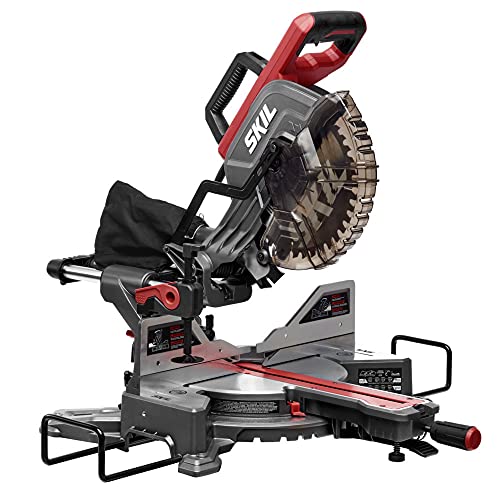 TOP CHOICEBest for corded home useSKIL 10" Dual Bevel Sliding Compound Miter Saw-MS6305-00View on Amazon
- 3
 TOP CHOICEBest for jobsite cordless useDEWALT 20V MAX XR 12 inch Double Bevel Sliding Miter Saw, Cordless, Tool Only (DCS785B)View on Amazon
- 4
 Best for tight shopsBOSCH 15.0 Amp CM10GD 10 In. Dual-Bevel Glide Miter Saw for WoodworkingView on Amazon
- 5
 Best for precision detail workMetabo HPT 12-Inch Dual Bevel Sliding Miter Saw, C12RSH3View on Amazon
Our Top Picks
| Product | Best for | Key feature |
|---|---|---|
| BOSCH GCM18V-12SDN PROFACTOR | Overall cordless performance | 18V 12-inch dual-bevel slide |
| SKIL 10″ Dual Bevel Sliding MS6305-00 | Corded home use | Dual bevel with slide |
| DEWALT 20V MAX XR DCS785B | Jobsite cordless use | 20V MAX XR 12-inch slide |
| BOSCH CM10GD Glide Miter Saw | Tight shops | Axial-glide, reduced footprint |
| Metabo HPT C12RSH3 | Precision detail work | 9 detent stops |
BOSCH GCM18V-12SDN PROFACTOR 18V 12 In. Dual-Bevel Slide Miter Saw (Bare Tool)
BOSCH GCM18V-12SDN PROFACTOR™ 18V 12 In. Dual-Bevel Slide Miter Saw (Bare Tool)
Best for: Overall cordless performance
This is a strong fit for anyone who wants a 12-inch slide saw on a battery platform and expects to move the tool between sites.
Pros
- Dual-bevel design speeds up left and right bevel cuts.
- Slide mechanism gives a wide crosscut capacity in a single pass.
Cons
- Bare tool only, so batteries and a charger are purchased separately.
SKIL 10″ Dual Bevel Sliding Compound Miter Saw-MS6305-00
SKIL 10" Dual Bevel Sliding Compound Miter Saw-MS6305-00
Best for: Corded home use
A practical choice for homeowners doing trim, picture frames and occasional deck work who do not want to manage battery charge levels.
Pros
- Dual bevel and slide functions cover most common trim angles.
- No battery to buy or charge keeps the setup simple.
Cons
- The 10-inch blade limits capacity compared with a 12-inch saw.
DEWALT 20V MAX XR 12 inch Double Bevel Sliding Miter Saw, Cordless, Tool Only (DCS785B)
DEWALT 20V MAX XR 12 inch Double Bevel Sliding Miter Saw, Cordless, Tool Only (DCS785B)
Best for: Jobsite cordless use
Suited to framers and trim carpenters who already own 20V MAX batteries and need a 12-inch slide saw without a cord.
Pros
- Works on an existing 20V MAX battery platform.
- Double bevel capability handles compound trim cuts.
Cons
- Tool only, so you will need batteries and a charger if you do not already have them.
BOSCH 15.0 Amp CM10GD 10 In. Dual-Bevel Glide Miter Saw for Woodworking
BOSCH 15.0 Amp CM10GD 10 In. Dual-Bevel Glide Miter Saw for Woodworking | Articulated hinge arms, reduce the saw’s front-to-back footprint by up to 10 in., axial-glide system
Best for: Tight shops
A good match for garages and small workshops where a saw needs to sit close to a wall. Manufacturers specify articulated arms that reduce the front-to-back footprint by up to 10 inches.
Pros
- Articulated hinge arms reduce the saw’s front-to-back footprint.
- Axial-glide system keeps the cutting path smooth.
Cons
- The 10-inch blade gives less crosscut capacity than a 12-inch saw.
Metabo HPT 12-Inch Dual Bevel Sliding Miter Saw, C12RSH3
Metabo HPT 12-Inch Dual Bevel Sliding Miter Saw, C12RSH3 | Precision Angles, 9 Detent Stops, Xact Cut Shadow Line, 4000 RPM No-Load Speed, 45° Left and Right Range
Best for: Precision detail work
Aimed at users who repeat the same angles, such as molding and picture framing, and want quick, repeatable detents. Manufacturers list 9 detent stops and a 4000 RPM no-load speed.
Pros
- Nine detent stops help with repeatable angle settings.
- Full 45-degree left and right bevel range.
Cons
- Owners who prefer a specific brand’s battery ecosystem may find it less convenient.
Buying Guide
Blade size and cutting capacity
A 12-inch blade lets you crosscut wider stock, such as 2×12 boards, in a single pass. Smaller blades are lighter but may require a second pass or a flip for wide material.
Corded versus cordless
Cordless models on an 18V or 20V platform are easier to move around a jobsite, while corded saws avoid battery management altogether. Check which batteries you already own before choosing.
FAQ
Is a 12-inch miter saw really better than a 10-inch model?
A 12-inch saw can cut wider boards and larger crown molding in a single pass, which is why many framing and trim pros prefer it. A 10-inch saw is lighter, more compact and often easier to move around a small shop or job site. Choose based on the widest material you cut most often.
What does a dual-bevel saw do that a single-bevel saw does not?
A dual-bevel saw tilts both left and right, so you do not have to flip the workpiece to make mirrored angle cuts. This saves time on repetitive work like picture frames, trim corners and angled braces. Single-bevel saws are usually simpler and sometimes less expensive, but they are slower for these tasks.
Why would I choose a sliding miter saw over a non-sliding one?
The sliding arms let the blade travel across the board, which gives you a cutting capacity much wider than the blade diameter alone. This is useful for wide stock like shelving, decking boards and large trim. Non-sliding saws are more compact and generally more rigid for narrow stock.
Is a cordless miter saw powerful enough for regular work?
Modern cordless saws with high-capacity batteries can handle most framing, trim and general carpentry tasks. They shine on job sites where outlets are scarce and for quick cuts without dragging an extension cord. For heavy, continuous production cutting, a corded saw still offers the most consistent power.
Do I need to buy batteries and a charger with a cordless model?
Many cordless saws are sold as bare tools, which means the battery and charger are purchased separately. If you already own batteries from the same tool platform, a bare-tool purchase can keep your overall cost lower. Check the battery voltage and platform compatibility before you buy.
What blade size should I use with a 12-inch saw?
A standard 12-inch saw takes a 12-inch blade, and choosing the right tooth count matters more than the diameter alone. Fewer teeth work well for fast rough cuts in framing lumber, while higher tooth counts give smoother finishes on trim and finished wood. Always match the blade to the saw and confirm the arbor size before installing.
Conclusion
If you want a capable, widely compatible 12-inch saw for general carpentry and framing, a dual-bevel sliding model from a major brand is a solid core choice. Cordless buyers who already own a battery platform will get the most value from a bare-tool option, while those who cut all day in one shop may prefer a corded saw for steady power.
For budget-minded shoppers or anyone working mostly with narrower stock, a smaller 10-inch dual-bevel saw can deliver plenty of capacity in a lighter, more portable package. Match the saw to your most common cuts, your power source and your workspace, and you will be well served by any of these Bosch-focused picks.
Related reading
- Bosch Compound Miter Saw Gcm12sd: Setup, Cutting Steps and Safety Tips (2026)
- Top 3 DeWalt Compound Miter Saw 12 Inch Picks Compared for Home and Job Sites
- Slide Compound Miter Saw Compared: 7 Best Picks for Every Need (2026)
- Ryobi Compound Miter Saw 10-Inch: 3 Best Picks Compared (2026)
- Miter Saw Buying Guide: Size, Sliding and Compound Explained
About Caleb Morgan
Caleb Morgan is part of our editorial team and reviews and edits our power tools guides, checking product details against manufacturer specifications and owner feedback.





