By Caleb Morgan
Updated November 2026
A circular saw flush cut lets you trim material level with a surface, such as a subfloor edge, door casing, or a plug sitting just above a board. Most circular saws cannot reach that close to a wall or floor, so the right choice depends on what you are cutting and how much clearance you have. This list compares five tools that handle flush trimming, with attention to blade reach, cutting depth control, the kind of material each is meant for, and how owners describe working with them day to day. Picks are based on manufacturer specifications, brand reputation and common owner feedback patterns rather than on hands-on testing.
Our top picks at a glance
- 1
 TOP CHOICEBest overallToe Kick Saw, Premium Flush Cutting Saw for FlooringView on Amazon
- 2
 TOP CHOICEBest for fine trim and plugsSUIZAN Flush Cut Saw 5" Japanese Pull SawView on Amazon
- 3
 TOP CHOICEBest for battery-powered cuttingCut Off Tool, 3" Brushless Circular Saw Compatible with DeWalt 20VView on Amazon
- 4
 Best for woodworking pull cutsJORGENSEN 5 Inch Double Edge Japanese Flush Cut Saw with SK5 BladeView on Amazon
- 5
 Best budget pickJORGENSEN 5 Inch Japanese Flush Cut Saw with SK5 Double Edge BladeView on Amazon
Our Top Picks
Quick Comparison
| Product | Best for | Key feature |
|---|---|---|
| Toe Kick Saw, Premium Flush Cutting Saw for Flooring | Subfloor and flooring trim | Adjustable cutting depth with blade designed for flush work |
| SUIZAN Flush Cut Saw 5″ | Fine trim, dowels and plugs | Double-edge ryoba blade with no set teeth |
| Cut Off Tool, 3″ Brushless Circular Saw (DeWalt 20V) | Compact battery cuts in tight spaces | Small blade diameter on a DeWalt 20V platform |
| JORGENSEN 5 Inch Double Edge Japanese Flush Cut Saw | Woodworking and hardwood trim | Double-edge SK5 blade, 18/25 TPI |
| JORGENSEN 5 Inch Japanese Flush Cut Saw | Budget woodworking and light trim | Beech handle with flexible 18/25 TPI blade |
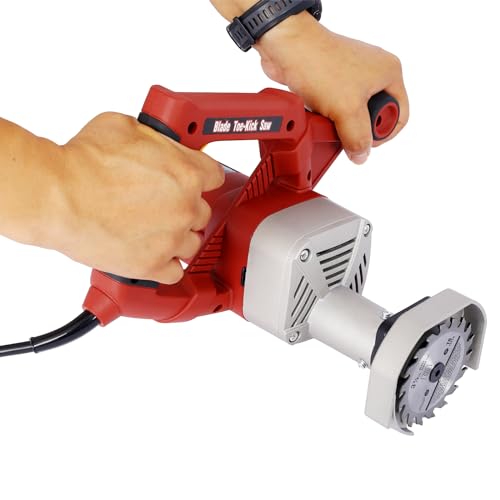
Toe Kick Saw, Premium Flush Cutting Saw for Flooring
Toe Kick Saw, Premium Flush Cutting Saw for Flooring, 3-3/8 in. Circular Saw Blades, Precision Subfloor Cutter for Tile & Wood Removal, Adjustable Depth, Professional Masonry Tool
Best for: Trimming subfloor and flooring flush at walls and toe kicks
This saw suits contractors and serious DIYers removing or trimming flooring where a standard circular saw cannot get close enough to the wall. Owners frequently mention it for cutting under door jambs and along baseboards.
Key specs
- 3-3/8 in. circular saw blade
- Adjustable cutting depth
- Designed for flooring, subfloor and tile removal work
Pros
- Reaches tight spots that full-size circular saws cannot
- Adjustable depth helps avoid cutting into the layer below
- Built for repeated flooring jobs
Cons
- Small blade limits maximum cut depth
- Requires care to keep the guard and base flat for a clean line
Bottom line: Best for anyone doing regular flooring or subfloor trim who needs flush cuts right against walls.
View on AmazonSUIZAN Flush Cut Saw 5″ Japanese Pull Saw
Professional Pull Saw for Woodworking Furniture Making DIY Tools Dowel Trim Plugs No Set Teeth Sharp Blade Ryoba Double Edge SUIZAN Flush Cut Saw 5" – Japanese Pullsaw Hand Saws Wood Cutting
Best for: Fine flush trimming of dowels, plugs and small woodworking details
This pull saw fits woodworkers and furniture makers who need controlled, close trimming where a powered saw would be overkill or too aggressive.
Key specs
- 5-inch blade
- Double-edge ryoba-style blade
- No set teeth, which helps the cut track cleanly
Pros
- Pull-stroke action gives good control on thin stock
- Double edge gives a fine cut in one tool
- Inexpensive way to add flush trimming to a workshop
Cons
- Slow compared with any powered saw
- Not suited to thick stock or production volume
Bottom line: A good hand-tool addition for woodworkers doing detail trim and plug cutting.
View on AmazonCut Off Tool, 3″ Brushless Circular Saw Compatible with DeWalt 20V
Cut Off Tool, 3" Brushless Circular Saw Compatible with DeWalt 20V Battery | (NO Battery) Electric Mini Grinder 19,000 RPM With 2 Speeds Mini Saw with 6 Blades For Cutting Wood, Metal, Plastic
Best for: Compact battery-powered cuts in tight spaces
This tool is aimed at users already invested in DeWalt 20V batteries who want a small saw for trimming in confined areas. Because it is a compact cut-off style tool, it suits light trim and small-stock work more than heavy framing. Worth reading next: Flush Cut Circular Power Saw: 5 Best Picks for Tight Cuts (2026).
Key specs
- 3-inch blade diameter
- Brushless motor
- Compatible with DeWalt 20V battery platform (battery not included)
Pros
- Small body fits tight corners
- Works on the DeWalt 20V platform owners may already have
- Cuts wood, plastic and light metal
Cons
- Battery must be purchased separately
- Small blade limits depth and is less suited to thick material
Bottom line: Best for DeWalt 20V owners who need a compact tool for trim work in tight spaces.
View on AmazonJORGENSEN 5 Inch Double Edge Japanese Flush Cut Saw with SK5 Blade
JORGENSEN 5 Inch Double Edge Japanese Flush Cut Saw with SK5 Blade | Flexible pull saw with 18/25 TPI blade and soft grip handle for precise flush cuts on hardwood, softwood and wood trim
Best for: Hardwood and softwood trim where two cutting edges are useful
This pull saw suits woodworkers and cabinetmakers who want a double-edged option for different tooth sizes on one handle.
Key specs
- 5-inch double-edge blade
- SK5 high-carbon steel blade
- 18/25 TPI tooth configuration
Pros
- Two tooth sizes give flexibility across materials
- Flexible blade supports controlled flush cuts
- Suitable for hardwood and softwood
Cons
- Manual cutting is slower than powered tools
- Requires practice to keep the cut straight
Bottom line: A solid choice for woodworkers who want a double-edged pull saw for flush trimming.
View on AmazonJORGENSEN 5 Inch Japanese Flush Cut Saw with SK5 Double Edge Blade
JORGENSEN 5 Inch Japanese Flush Cut Saw with SK5 Double Edge Blade | Beech handle pull saw with flexible 18/25 TPI blade for hardwood, softwood, woodworking and flush trimming
Best for: Budget-friendly woodworking and light flush trim
This is a beech-handled version of the same style of pull saw, suited to hobbyists and anyone building a basic flush-cut kit.
Key specs
- 5-inch blade
- Beech handle
- SK5 blade with 18/25 TPI
Pros
- Lightweight and comfortable for short jobs
- Same tooth configuration as the double-edge model
- Good entry point into Japanese pull saws
Cons
- Limited to light work and small stock
- Blade can flex more than heavier saws, so guidance matters
Bottom line: Best for hobbyists who want an affordable pull saw for occasional flush trimming.
View on AmazonBuying Guide
Blade Diameter and Cutting Depth
Check the blade diameter against the thickness of the material you need to trim. Small blades (around 3 inches) reach into tight corners but cannot cut deep. Larger blades, like those on flooring-specific saws, cover more depth but still need the base set flat against the surface to keep the cut level.
Good picks for this: Toe Kick Saw, Premium Flush Cutting Saw for Flooring; Cut Off Tool, 3″ Brushless Circular Saw
Clearance to the Wall or Floor
Measure the gap between your cut line and the nearest obstruction before buying. Standard circular saws often need several inches of clearance on the blade side. If your cut sits within an inch or two of a wall, a compact or specialty saw will likely be needed.
Good picks for this: Toe Kick Saw, Premium Flush Cutting Saw for Flooring; Cut Off Tool, 3″ Brushless Circular Saw
Tooth Count and Tooth Size
For hand pull saws, tooth count is given as teeth per inch (TPI). Higher TPI produces a finer, smoother cut, which suits trim and plugs. Lower TPI removes material faster but leaves a rougher edge. Double-edge blades offer two options on one tool.
Good picks for this: SUIZAN Flush Cut Saw 5″; JORGENSEN 5 Inch Double Edge Japanese Flush Cut Saw
Blade Flex and Control
Japanese pull saws use thin, flexible blades that cut on the pull stroke. Flex lets the blade track a fine line, but it also means you should keep light, steady pressure and short strokes. Owners often report that practice on scrap wood improves line control quickly.
Good picks for this: JORGENSEN 5 Inch Japanese Flush Cut Saw; SUIZAN Flush Cut Saw 5″
Battery Platform and Power Source
If you already own a battery platform, a compatible tool avoids buying another full battery set. Check whether the battery is included, since many compact tools in this category are sold as bare tools. Corded and battery-powered options differ in runtime and portability.
Good picks for this: Cut Off Tool, 3″ Brushless Circular Saw Compatible with DeWalt 20V
Use Case and Material
Match the tool to the material. Flooring and subfloor work benefits from a dedicated flush-cut saw, while hardwood trim and furniture parts suit fine-tooth pull saws. Metal and plastic need blades rated for those materials, so check the listing before cutting something outside wood.
Good picks for this: Toe Kick Saw, Premium Flush Cutting Saw for Flooring; JORGENSEN 5 Inch Double Edge Japanese Flush Cut Saw
Safety and Blade Care
Keep fingers well clear of the cut line and use a stable work surface. Manufacturers generally specify that guards must stay in place on powered tools. For pull saws, keep the blade sharp and clean; a dull blade forces more pressure and increases the chance of slipping.
Good picks for this: JORGENSEN 5 Inch Japanese Flush Cut Saw; SUIZAN Flush Cut Saw 5″
FAQ
What is a circular saw flush cut?
A flush cut trims material level with an adjacent surface, such as cutting a subfloor edge flush with a wall or trimming a plug even with a board face. It requires a blade or saw that can reach close to the surface without catching on it.
Can a standard circular saw make flush cuts?
Often not, because the blade guard and saw base need clearance from the surface. Specialty or compact flush-cut saws are designed to get closer. You can read more about setup in Using a Circular Saw: A Step-by-Step Guide for Safe, Straight Cuts.
Is a Japanese pull saw good for flush trimming?
Yes, for fine work. Pull saws give control on thin stock and plugs, but they are slow. Owners often report they work best on trim and dowels rather than large areas.
What TPI should I use for a flush cut?
Higher TPI, such as 18 or 25 on the pull saws listed here, produces a smoother finish suited to trim. Lower TPI removes material faster but leaves a rougher edge.
Do I need a battery to use a compact flush-cut tool?
Some are sold without batteries. Check the listing before buying, since the battery may be a separate purchase.
How do I keep a flush cut straight?
Mark a clear reference line, support the workpiece, and make slow, steady passes. For circular saws, a guide or straight edge helps. More technique tips are in How to Cut Straight with a Circular Saw.
Should I use a circular saw or a miter saw for trim?
Each has a role. A comparison is in Circular Saw or Miter Saw (2026): Which Is Better for Your Cuts?.
Conclusion
For a circular saw flush cut in flooring or subfloor work, the Toe Kick Saw is the most purpose-built option here. For fine woodworking trim and plugs, the SUIZAN and JORGENSEN pull saws give precise control. The DeWalt 20V-compatible cut-off tool suits owners who already run that battery platform and need a compact saw. Choose based on material, clearance and how often you will make these cuts.
Sources
- Workplace guidance on power saw safety, guarding and safe operating practices (osha.gov)
- Consumer safety information on power tool hazards and blade injury prevention (cpsc.gov)
- Standards context for cutting tools and measurement accuracy (nist.gov)
Related reading
- Using a Circular Saw to Cut Plywood: A Step-by-Step Guide
- Top 5 Tables for Circular Saw Options Compared for Benchtop Cuts
About Caleb Morgan
Caleb Morgan is part of our editorial team and reviews and edits our power tools guides, checking product details against manufacturer specifications and owner feedback.