By Caleb Morgan
Updated November 2026
A compound miter saw Milwaukee models are known for is a straightforward tool once you understand its two angle controls. This guide walks you through checking the saw before you cut, setting miter and bevel angles, making accurate repeat cuts, and picking the right model for the work you do. Most cutting errors come from skipped setup steps, not from the saw itself, so the order here matters. For a deeper look, Dust Collection System for Miter Saw: Setup, Hoses and Shop Tips (2026) covers this in detail.
What a Compound Miter Saw Does
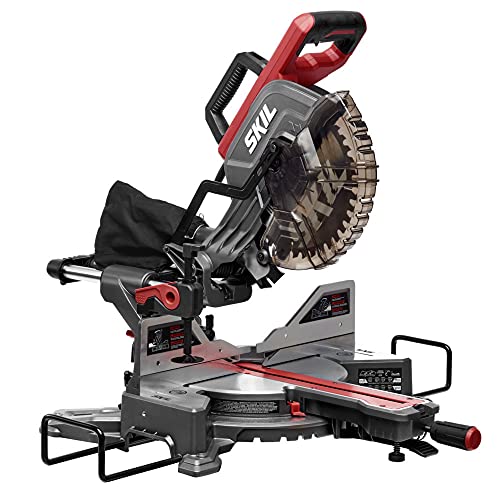
A compound miter saw cuts angles in two directions at once. The miter angle swings the blade left or right across the workpiece, while the bevel angle tilts the blade so the cut is angled through the thickness of the board. That combination is what makes crown molding, picture frames and angled trim possible without hand-fitting every joint. Milwaukee sliding compound miter saw models add a rail system that lets the blade travel forward and back, which lets you cut wider boards than a fixed-head saw can handle.
Shopping for one? See our guide: 7 Best Sliding Compound Miter Saws of 2026.
Setting Up Your Milwaukee Compound Miter Saw
Before the first cut, confirm the saw is stable and the blade is in good condition. Manufacturers specify that the saw should sit on a flat, solid surface and be secured so it cannot tip during the cut. Check the blade for missing carbide teeth and make sure the arbor nut is tight. For a fuller walkthrough of rail alignment and fence adjustment, see Milwaukee Sliding Compound Miter Saw: Setup, Cuts and Common Pitfalls (2026).
- Unplug the saw or remove the battery, then confirm the blade is clean and undamaged.
- Lock the miter detent at 0 degrees and check that the blade sits square to the fence with a reliable square.
- Lock the bevel at 0 degrees and check the blade is perpendicular to the table.
- Clamp the saw or workpiece as needed, and confirm the guard retracts freely.
Making Miter and Bevel Cuts Accurately
Set the miter angle first, then the bevel, and lock both before you start the motor. Pull the trigger, let the blade reach full speed, and lower it through the cut at a steady pace without forcing it. Keep your hands clear of the blade path and hold the workpiece firmly against the fence and table.
Cutting Crown Molding and Compound Angles
Crown molding is cut with the molding lying flat or upright against the fence, depending on the spring angle. Many users find it easier to check a test piece before cutting the final stock. For a dedicated walkthrough, see Miter Saw to Cut Crown Molding: Angles, Settings and Tips (2026).
Choosing the Right Milwaukee Model
Match the saw to your typical workpiece. Blade diameter, sliding capacity and whether the saw is single or double bevel all affect what you can cut. Single bevel saws tilt in one direction only, while double bevel saws tilt both ways, which can save time on trim work. For a side-by-side look at how these options differ, read Single Versus Double Bevel Miter Saw: Which One Fits Your Cuts? (2026). If you are still deciding between sizes and sliding designs, the Miter Saw Buying Guide: Size, Sliding and Compound Explained covers the trade-offs in plain terms.
| Cut type | Miter setting | Bevel setting |
|---|---|---|
| Square crosscut | 0 degrees | 0 degrees |
| 45-degree miter | 45 degrees | 0 degrees |
| 45-degree bevel | 0 degrees | 45 degrees |
| Compound cut (crown) | Per molding spec | Per molding spec |
Common Mistakes
- Cutting without first checking the 0-degree detent against a reliable square.
- Changing miter or bevel settings with the blade still spinning.
- Letting the workpiece shift during the cut instead of clamping it.
- Pushing the blade through the cut rather than letting it cut at its own pace.
- Using a dull or damaged blade, which causes tear-out and inaccurate angles.
Recommended Gear
A stable work surface makes the biggest difference to repeat accuracy, so a sturdy stand or extension support is worth considering. View on Amazon is a common starting point for jobsite setups. Clamps keep workpieces from shifting during cuts. View on Amazon options are widely used for this. A quality carbide blade matched to your material also improves cut quality, and View on Amazon lists blades sized for many Milwaukee saws.
FAQ
Can a compound miter saw cut metal?
Only with a blade rated for metal and the correct speed and technique. Most wood blades will not cut metal safely, so check the saw manufacturer’s guidance before attempting it.
How do I know if my saw is square?
Use a reliable square against the blade and the fence at 0 degrees, and check the bevel against the table. Small adjustments usually follow the manufacturer’s calibration instructions.
Is a sliding model worth it?
A sliding model is useful when you regularly cut boards wider than the blade’s fixed capacity. For occasional trim work, a non-sliding compound saw is often enough.
Conclusion
A compound miter saw Milwaukee models offer is accurate and versatile once you set it up carefully and lock your angles before each cut. Check the blade, verify square, clamp your work and cut at a steady pace. Consult the owner’s manual or a qualified professional for any setup questions specific to your model.
Related reading
- Milwaukee Sliding Miter Saw: Setup, Cutting Tips and Common Mistakes
- How to Change Blade on DeWalt Compound Miter Saw: Step-by-Step Guide (2026)
Ready to choose one?
About Caleb Morgan
Caleb Morgan is part of our editorial team and reviews and edits our power tools guides, checking product details against manufacturer specifications and owner feedback.