By Caleb Morgan
Updated November 2026
A circular saw chain saw is a term people use when they want to cut with a chain-style blade on a circular saw, or when they compare a circular saw with a chain saw and wonder which one fits their job. This guide explains what each tool does, where a chain-type attachment makes sense, and how to make safe, controlled cuts. By the end, you will know which setup to pick and how to run it without kickback or wandering cuts.
What a Circular Saw Chain Saw Actually Means
A circular saw is a handheld saw with a rotating round blade, usually 7-1/4 inches in diameter on common corded and cordless models. A chain saw uses a loop of linked cutters running around a guide bar. The two tools cut differently, and the phrase “circular saw chain saw” usually points to one of three situations:
Shopping for one? See our guide: 7 Best DeWalt Electric Circular Saw Models for Home and Jobsite Use.
- You want a chain-style cut from a circular saw platform, using a specialty chain or bar-style attachment made for that purpose.
- You are comparing a circular saw with a chain saw to decide which tool to buy.
- You want to know whether a standard circular saw blade can do the work of a chain saw on a particular material.
A standard circular saw blade is not a chain. Its teeth follow a fixed circular path, so the cut is controlled by the saw base sliding along the workpiece. A chain saw bar carries cutters in a loop, which cuts more aggressively along the length of a log. Keeping those two designs separate in your head will prevent most of the confusion.
When a Circular Saw Works Better Than a Chain Saw
For most sheet goods and dimensional lumber, a circular saw is the better choice. It produces straight, repeatable cuts when paired with a guide, and it is far easier to control on a sawhorse or across a sheet of plywood. Common jobs include:
- Crosscutting 2x4s and 2x6s to length for framing.
- Ripping plywood or OSB sheets down to width.
- Trimming decking boards and subfloor panels.
- Making bevel cuts on rafters or fascia.
For a broader look at typical applications, see What Is a Circular Saw Used For? Common Jobs and How to Choose. If you are working with sheet goods specifically, Using a Circular Saw to Cut Plywood: A Step-by-Step Guide walks through support, scoring and blade height.
When a Chain Saw Makes More Sense
A chain saw is built for cutting logs, limbing trees and felling brush. Its chain moves fast and removes material aggressively, which a circular saw blade cannot match in round stock or thick timber. If your job involves cutting firewood, clearing storm debris or bucking large logs, a dedicated chain saw is the right tool. Attempting those cuts with a circular saw fitted with a standard blade is slow, unsafe and hard on the tool.
Choosing a Chain-Style Setup for a Circular Saw
If you want a chain-type cut from a circular saw platform, check the attachment and its manufacturer specifications before you buy. Look for these factors:
- Compatibility: Confirm the attachment fits your saw’s arbor size and motor output. Manufacturers specify maximum RPM and arbor diameter, and exceeding those limits is dangerous.
- Guard coverage: The blade or chain must remain covered by a working lower guard when not cutting.
- Depth adjustment: The cutting depth should lock firmly so it cannot drift during a pass.
- Material rating: Check whether the attachment is rated for the wood species and thickness you plan to cut, including treated lumber.
- Chain or tooth condition: Dull or damaged cutters increase kickback risk and produce rough cuts.
Owners often report that the best results come from keeping a circular saw for straight cuts and a separate chain saw for log work, rather than forcing one tool to do both.
Step-by-Step: Making a Safe Straight Cut With a Circular Saw
Whether you run a standard circular saw or a chain-style attachment, the setup steps are similar. Follow this sequence.
Step 1: Prepare the Workpiece
Support the wood on both sides of the cut line so the kerf does not pinch the blade. Sawhorses placed about 12 to 18 inches from the cut line work for most dimensional lumber. Clamp the material to the work surface whenever possible.
Step 2: Set the Cutting Depth
Set the blade so it projects about 1/4 inch below the workpiece. This keeps the teeth working efficiently and reduces the amount of exposed blade. For a 2×6, that means setting the depth to roughly 2 inches and a quarter.
Step 3: Mark and Align
Mark your cut line on both faces of the board. Align the saw so the blade sits just on the waste side of the line. Many saws have a left or right blade-line indicator on the base plate to help with this.
Step 4: Use a Guide for Long Cuts
For rip cuts longer than a few feet, clamp a straightedge or factory edge guide along the line. A ripping fence can also keep the base tracking straight; Ripping Fence for Circular Saw: How to Set Up and Use One for Straight Rip Cuts covers setup in detail. Track saws offer another route to dead-straight cuts, and Track Saw vs Circular Saw: Which Is Right for You? compares the two approaches.
Step 5: Start the Saw Before Contact
Let the blade reach full speed before it touches the wood. Stand to the side of the line of the cut, not directly behind the saw, so kickback cannot strike your body.
Step 6: Feed Steadily
Push the saw forward at a steady rate. The blade should cut without bogging or smoking. If the motor slows noticeably, ease up on pressure.
Step 7: Let the Blade Stop Completely
Release the trigger at the end of the cut and wait for the blade to stop before lifting the saw. Never pull a spinning blade out of a cut.
Quick Comparison Table
| Factor | Circular Saw | Chain Saw |
|---|---|---|
| Main job | Straight cuts in lumber and sheet goods | Cutting logs, limbs and brush |
| Cut style | Guided by the base plate | Guided by the bar and operator |
| Typical material | Dimensional lumber, plywood, OSB | Green and dry timber, firewood |
| Kickback concern | Managed with a stable base and guard | Managed with bar tip awareness and PPE |
| Best for straight rip cuts | Yes, with a guide | Not designed for this |
Common Mistakes
- Using the wrong blade. A framing blade in a plywood rip produces tear-out. Match the tooth count to the material. Saw Blades: Tooth Count, Kerf and Grind for Circular, Miter and Table Saws explains the basics.
- Setting the depth too deep. Excess blade exposure increases kickback and makes the saw harder to control.
- Cutting without support. Unsupported panels can bind and pinch the blade.
- Forcing the cut. Pushing hard slows the blade and causes burning and kickback.
- Ignoring the lower guard. The guard should retract smoothly and return on its own. Do not tape it back.
Tips for Better Results
- Score the top of plywood with a utility knife before sawing to reduce splintering.
- Cut with the good face of the material facing down when using a standard blade, since the blade cuts upward and tear-out appears on the top.
- Keep the base plate flat on the workpiece throughout the cut.
- Store chains and blades in a dry place and check them before each job.
Recommended gear
A few supplies make a noticeable difference for straight, safe cuts. Start with a straightedge guide, since it keeps long rips on line without relying on freehand control. Add a set of sawhorses or a folding support stand so the workpiece stays steady. A clamp or two keeps thin stock from shifting, and a dedicated framing or plywood blade matched to your material will do more for cut quality than any other single change.
- Straightedge guide clamp: holds the saw base against a line for long, accurate rips. View on Amazon
- Folding sawhorse set: supports the material at a comfortable working height. View on Amazon
- Bar clamps: secure the workpiece so it does not pinch the blade. View on Amazon
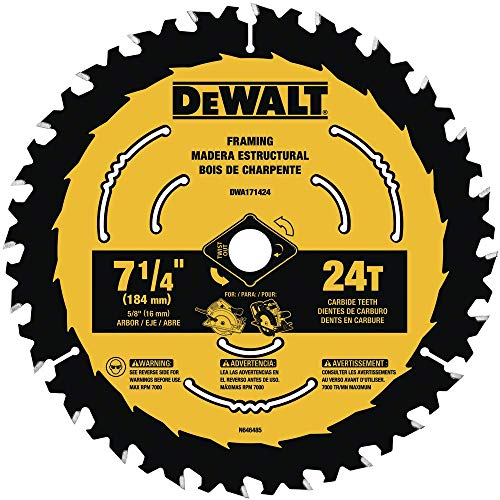
- Carbide-tipped framing blade: suited to dimensional lumber cuts. View on Amazon
FAQ
Can a circular saw cut like a chain saw?
Not in the way a chain saw cuts logs. A circular saw is designed for straight cuts in lumber and sheet goods. Chain-style attachments exist for some circular saw platforms, but you should confirm compatibility and rated materials before using one.
Is a chain saw safer than a circular saw?
Neither is safe without proper protective equipment and technique. Each carries kickback risk, and each requires eye, hearing and hand protection. Check the manufacturer manual for your specific tool.
Can I cut firewood with a circular saw?
Standard circular saw blades are not made for round logs and will bind and stall. Firewood is best cut with a chain saw built for that work.
What blade should I use on a circular saw for lumber?
A carbide-tipped framing or combination blade suits most dimensional lumber. Match the tooth count and kerf to the material you are cutting.
How deep should I set the blade?
Set the blade to about 1/4 inch below the workpiece. This gives efficient cutting and reduces exposed blade.
Do I need a guide for straight cuts?
For long rips, yes. A straightedge guide or ripping fence keeps the base tracking straight and produces far more accurate results than freehand cutting.
Should I consult a professional before using a chain-style attachment?
If you are unsure whether an attachment is compatible with your saw, or if you plan to cut in unusual materials or conditions, consult the manufacturer or a qualified tool professional before proceeding.
Conclusion
A circular saw and a chain saw are built for different work, and the phrase “circular saw chain saw” often signals confusion between them. Use a circular saw for straight, controlled cuts in lumber and sheet goods, and reach for a chain saw when the job involves logs or brush. If you want a chain-style cut from a circular saw, verify compatibility and material ratings first, and always follow the manufacturer’s safety instructions.
Ready to choose one?
About Caleb Morgan
Caleb Morgan is part of our editorial team and reviews and edits our power tools guides, checking product details against manufacturer specifications and owner feedback.