By Caleb Morgan
Updated November 2026
A circular saw Milwaukee M12 is a compact, battery-powered saw built for light framing, trim, sheet goods and quick field cuts where a full-size 18V or corded saw would be overkill. This guide explains what the M12 platform is best suited for, how to set up the saw for accurate cuts, and what to check before you buy or use one.
What the M12 Circular Saw Is Best At
The M12 platform trades cutting depth and raw power for weight and size. A saw in this class is easier to hold at arm’s length, fits into tight spaces and runs longer on a small battery, which makes it a good match for overhead work, cabinet fitting and punch-list jobs. Manufacturers generally position the M12 saws for those tasks rather than thick hardwood or heavy structural cuts.
Shopping for one? See our guide: 7 Best Milwaukee Tools Circular Saw Models for Jobsite and Home Use (2026).
Before you commit, compare your typical material thickness with the saw’s stated maximum depth of cut at 90 and 45 degrees. If most of your work is thicker than that, a larger saw will save time. For a broader look at how the platforms differ, see Milwaukee M12 vs Dewalt 20v: Which Platform Fits Your Jobs? (2026).
Setting Up the Saw for Accurate Cuts
Most cut problems come from setup, not from the saw itself. Work through these steps before every session:
- Check that the blade is sharp, the teeth are intact and the blade is rated for your material.
- Confirm the blade is installed with the teeth pointing in the direction of rotation shown on the saw’s guard.
- Set the depth so the blade extends about 1/8 inch (roughly 3 mm) below the workpiece. Less depth binds the blade; more depth adds kickback risk and tear-out.
- Check the bevel and base stops with a square, then make a test cut on scrap.
- Clamp the workpiece and support both sides of the cut so the offcut does not pinch the blade.
For more on blade geometry and why tooth count matters, read Saw Blades: Tooth Count, Kerf and Grind for Circular, Miter and Table Saws.
Making Straight Cuts on Lumber and Sheet Goods
Hand-guided cuts drift unless you guide the saw. Run the base plate against a straightedge or a clamped guide, keep steady forward pressure and let the blade do the work. Plywood and sheet goods chip less when scored first and cut with the good face down, which is the reverse of what most people expect for a standard saw.
If you need repeatable long rips, a guide rail system will do better than freehand work. The process is covered in How to Cut Straight with a Circular Saw and Circular Saw Guide Rail: How to Make Straight Cuts Every Time.
Cutting Thicker Stock
If the material is near the saw’s maximum depth, make two passes instead of one. Set the depth for half the thickness, cut once, then reset and finish the cut. This reduces strain on the motor and keeps the blade from wandering.
Common Mistakes to Avoid
- Running a dull or wrong-tooth-count blade, which causes burning and kickback.
- Setting the depth too shallow, which pinches the blade.
- Cutting with the base unsupported, so the saw tips at the end of the cut.
- Forcing the saw instead of letting the blade cut at its own pace.
- Ignoring a battery that is getting low, which can cause the blade to slow and bind.
Recommended Gear
- Milwaukee M12 battery pack: keeping a second charged pack on hand avoids downtime on longer days. View on Amazon
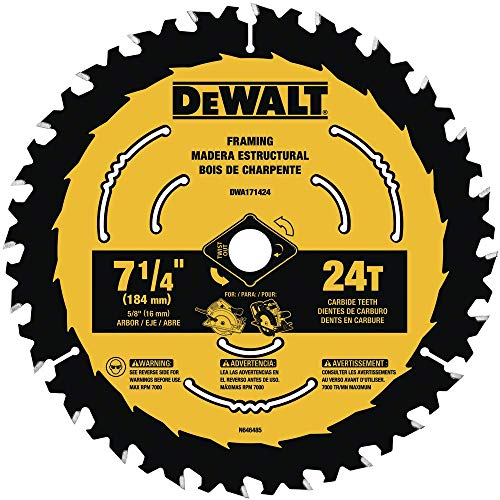
- Carbide-tipped circular saw blade for wood: a blade sized for the saw’s diameter and suited to your material gives cleaner edges than a generic blade. View on Amazon
- Clamp-on straightedge guide: a clamped guide keeps long cuts true without a full rail system. View on Amazon
FAQ
Is a circular saw Milwaukee M12 strong enough for framing lumber?
It can handle dimensional lumber such as 2x4s at typical framing depths, but the blade depth limit is the main constraint. For thick timbers or frequent heavy framing, a larger saw is more practical.
Which blade should I use with an M12 saw?
Match the blade diameter to the saw’s specification and choose a tooth count suited to your material. Fewer teeth cut faster in rough lumber, while more teeth give smoother edges on plywood and trim.
How do I know when to replace the battery?
If runtime drops noticeably, the saw slows under light load or the battery gets hot during normal use, it is time to test or replace it. Check the manufacturer’s guidance and follow their charging and storage instructions.
Conclusion
A circular saw Milwaukee M12 suits light to medium cutting where portability and battery convenience matter most. Set the depth correctly, guide the cut and choose the right blade, and most of the common frustrations disappear. Always follow the manufacturer’s safety instructions, and consult a qualified professional for structural or code-related cutting decisions.
Related reading
Ready to choose one?
About Caleb Morgan
Caleb Morgan is part of our editorial team and reviews and edits our power tools guides, checking product details against manufacturer specifications and owner feedback.