By Caleb Morgan
Updated November 2026
Craftsman circular saw blades cover a wide range of jobs, from rough framing and ripping lumber to clean plywood cuts and finish work. Choosing the right one comes down to four things: blade diameter and arbor size, tooth count, the tooth geometry the manufacturer specifies, and whether the blade is built for wood, composites or mixed materials. This guide compares seven blades on those points, with notes on the cuts each one handles best and the trade-offs you should expect.
Our top picks at a glance
- 1
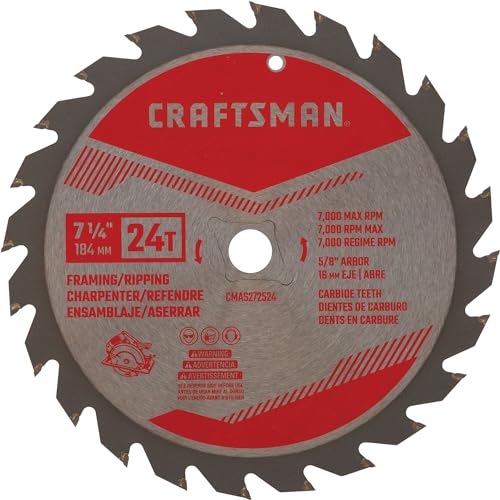 TOP CHOICEBest overallCRAFTSMAN 7-1/4 Inch 24T Framing/Ripping Circular Saw BladeView on Amazon
- 2
 TOP CHOICEBest for finish cutsCRAFTSMAN 7-1/4 Inch 60T Finishing/Plywood Saw BladeView on Amazon
- 3
 TOP CHOICEBest for framing lumberCRAFTSMAN 6-1/2 Inch 18T Framing and RippingView on Amazon
- 4
 Best for mixed wood and plasticRevvstark Circular Saw Blade 6-1/2" 24T&60T for Cutting WoodView on Amazon
- 5
 Best for larger stockCRAFTSMAN 10 Inch 40T Carbide Circular Saw Blade/Table Saw BladeView on Amazon
- 6
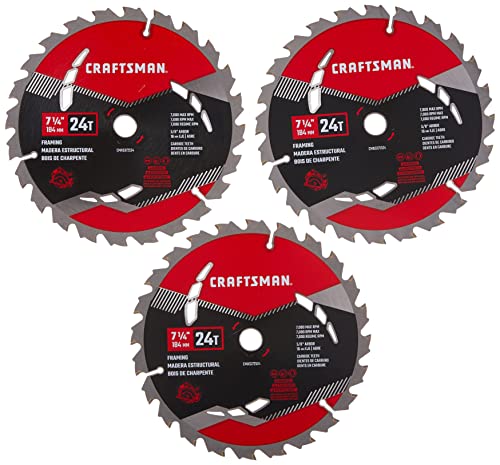 Best budget pickCRAFTSMAN CMAS3725243 3 Pack 7-1/4-In 24-Tooth Carbide Circular Saw BladeView on Amazon
- 7
 Best for varied wood cutsRevvstark Circular Saw Blade 5-1/2"(10mm Arbor) 24T&48TView on Amazon
Our Top Picks
The list below is built from manufacturer specifications, brand reputation for these blade lines, and the patterns owners tend to describe in their feedback. None of these blades were cut-tested for this article. Before buying, confirm that the blade diameter and arbor match your saw, since that is the most common mistake. For background, see Circular Saw Blade Size: How to Pick the Right Diameter (2026) and Circular Saw Blade Dimensions: Diameter, Arbor and Kerf Explained. For another angle, check out 6 Best Craftsman Table Saw Table Options for Home Shops (2026).
Quick Comparison
| Product | Best for | Key feature |
|---|---|---|
| CRAFTSMAN 7-1/4 Inch 24T Framing/Ripping | General framing and ripping | 24 teeth for fast rip cuts |
| CRAFTSMAN 7-1/4 Inch 60T Finishing/Plywood | Finish cuts in plywood | 60 teeth for smooth edges |
| CRAFTSMAN 6-1/2 Inch 18T Framing and Ripping | Lumber framing | 18 teeth for aggressive cuts |
| Revvstark 6-1/2″ 24T&60T | Wood, plastic and composites | Mixed tooth set for versatility |
| CRAFTSMAN 10 Inch 40T Carbide | Larger stock and sheet goods | 10-inch diameter with 5/8 inch arbor |
| CRAFTSMAN 7-1/4 Inch 24T 3 Pack | Value buyers needing spares | Three blades in one pack |
| Revvstark 5-1/2″ 24T&48T | Varied wood cutting | Carbide tipped teeth in a compact size |
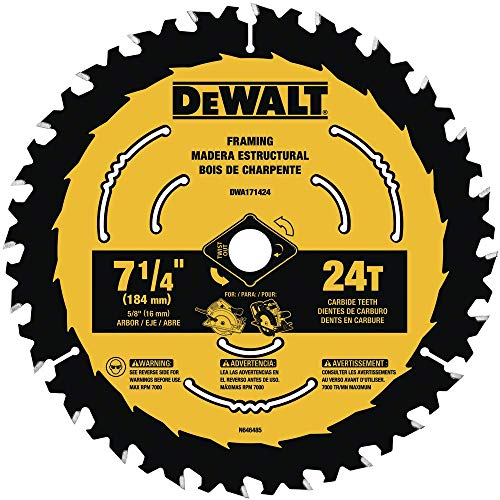
CRAFTSMAN 7-1/4 Inch 24T Framing/Ripping Circular Saw Blade
CRAFTSMAN 7-1/4 Inch 24T Framing/Ripping Circular Saw Blade (CMAS272524)
Best for: General framing and ripping of dimensional lumber
This is a practical all-round choice for carpenters and DIYers who cut a lot of softwood studs, joists and rough stock. The 24-tooth count is a common compromise between speed and cut quality.
Key specs
- 7-1/4 inch diameter
- 24 teeth
- Designed for framing and ripping
Pros
- Fast cutting through dimensional lumber
- Good match for 7-1/4 inch worm-drive and sidewinder saws
- Suited to a wide range of rough carpentry tasks
Cons
- Leaves a rougher edge than a high tooth-count blade
- Not the right choice for fine plywood or trim
Bottom line: A sensible first blade for framers and anyone who mainly cuts rough lumber.
View on AmazonCRAFTSMAN 7-1/4 Inch 60T Finishing/Plywood Saw Blade
CRAFTSMAN 7-1/4 Inch 60T Finishing/Plywood Saw Blade (CMAS272560)
Best for: Finish cuts in plywood, melamine and trim
Shops and cabinet builders often keep a high tooth-count blade for cuts that will be visible. This model is aimed at clean edges rather than speed.
Key specs
- 7-1/4 inch diameter
- 60 teeth
- Designed for finishing and plywood
Pros
- Produces cleaner edges on sheet goods
- Reduces tearout on veneered plywood
- Suitable for crosscuts and light rips
Cons
- Cuts more slowly and generates more heat in thick stock
- Less efficient for framing lumber
Bottom line: The right pick for cabinet work and visible plywood cuts, best kept as a second blade.
View on AmazonCRAFTSMAN 6-1/2 Inch 18T Framing and Ripping
CRAFTSMAN Circular Saw Blade 6-1/2 Inch 18T, Framing and Ripping (CMAS265018)
Best for: Lumber framing on 6-1/2 inch saws
Owners of compact 6-1/2 inch saws who mostly cut framing lumber will find this the most direct option. The low tooth count clears material quickly.
Key specs
- 6-1/2 inch diameter
- 18 teeth
- Designed for framing and ripping
Pros
- Aggressive cutting speed in rough lumber
- Matches compact saws well
- Simple, focused purpose
Cons
- Rough finish on any visible cut
- Limited use outside framing work
Bottom line: A focused choice for framers using a 6-1/2 inch saw who need speed over finish.
View on AmazonRevvstark Circular Saw Blade 6-1/2″ 24T&60T for Cutting Wood
Revvstark Circular Saw Blade 6-1/2" 24T&60T for Cutting Wood, 5/8" Arbor | Carbide Tipped Teeth, TCT Saw Blades for Cutting Wood, Plastic and Composite Materials, Fit Dewalt Craftsman Ryobi Milwaukee
Best for: Mixed wood, plastic and composite cutting
Users who switch between wood, plastic and composite decking often want one blade that handles several materials. The carbide-tipped design is aimed at that versatility.
Key specs
- 6-1/2 inch diameter
- 24 and 60 tooth configuration
- 5/8 inch arbor, carbide tipped teeth
Pros
- Handles wood, plastic and composites
- Carbide teeth hold an edge longer than standard steel
- Fits several major brands’ 6-1/2 inch saws
Cons
- A compromise blade, not a specialist for any one material
- Third-party brand, so check fit against your saw’s manual
Bottom line: A good versatile option for DIYers working across several materials on a 6-1/2 inch saw.
View on AmazonCRAFTSMAN 10 Inch 40T Carbide Circular Saw Blade/Table Saw Blade
CRAFTSMAN 10 Inch 40T Carbide Circular Saw Blade/Table Saw Blade with 5/8 Inch Arbor (CMAS21040)
Best for: Larger stock and sheet goods on 10-inch saws
Anyone running a 10-inch table saw or a larger circular saw will need this diameter. The 40-tooth count sits between framing and finish blades.
Key specs
- 10 inch diameter
- 40 teeth
- 5/8 inch arbor
Pros
- Deeper cuts than 7-1/4 inch blades allow
- Balanced tooth count for general sheet goods
- Works on table saws as well as compatible circular saws
Cons
- Requires a 10-inch saw, so it is not interchangeable with smaller tools
- Heavier blade, which can load a motor more on thick stock
Bottom line: The right choice for shop owners with a 10-inch saw doing regular sheet and board work.
View on AmazonCRAFTSMAN CMAS3725243 3 Pack 7-1/4-In 24-Tooth Carbide Circular Saw Blade
CRAFTSMAN CMAS3725243 3 Pack 7-1/4-In 24-Tooth Carbide Circular Saw Blade
Best for: Value buyers who want spares
Three blades in one package suit people who go through blades quickly on job sites or want a spare on hand. The 24-tooth geometry keeps it general-purpose.
Key specs
- 7-1/4 inch diameter
- 24 teeth per blade
- Pack of three
Pros
- Multiple blades in one purchase
- Carbide teeth for longer life than steel
- Useful for crews who rotate blades
Cons
- General-purpose blades will not give the finish of a 60-tooth model
- Three identical blades offer no mix of tooth counts
Bottom line: A practical pick for anyone who wants backup blades for rough and general cuts.
View on AmazonRevvstark Circular Saw Blade 5-1/2″(10mm Arbor) 24T&48T
Revvstark 5-1/2"(10mm Arbor) Circular Saw Blade 24T&48T for Cutting Wood | Carbide Tipped Teeth, Heavy Duty TCT Saw Blades for Cutting Various Wood, Plastic and Composite Materials
Best for: Varied wood cutting with a compact saw
Owners of smaller saws who cut a range of wood thicknesses may find the mixed tooth set useful. The smaller diameter suits lighter-duty tools.
Key specs
- 5-1/2 inch diameter
- 10mm arbor
- 24 and 48 tooth configuration, carbide tipped
Pros
- Compact size for lighter saws
- Mixed tooth set covers rip and cross cuts
- Carbide tips for durable cutting
Cons
- Limited cutting depth compared with 6-1/2 and 7-1/4 inch blades
- Arbor size is uncommon, so confirm compatibility before buying
Bottom line: Best for owners of compact saws with a 10mm arbor who need light to medium wood cuts.
View on AmazonBuying Guide
Before comparing individual models, check these factors. Most blade mismatches come from ignoring the first two.
Blade diameter and arbor size
Diameter sets maximum cutting depth, and the arbor hole must match your saw’s spindle. Common sizes include 5-1/2, 6-1/2, 7-1/4 and 10 inches. Check your saw’s manual or the blade label before buying. The mismatch guide at Circular Saw Blade Measurements: How to Get the Right Size and Fit walks through the measurements.
Good picks for this: CRAFTSMAN 7-1/4 Inch 24T Framing/Ripping; CRAFTSMAN 10 Inch 40T Carbide
Tooth count
Fewer teeth cut faster and leave a rougher edge. More teeth cut slower and leave a cleaner finish. Low counts such as 18 to 24 suit framing. Counts of 40 to 60 suit finish and plywood work. For a deeper look, see Saw Blades: Tooth Count, Kerf and Grind for Circular, Miter and Table Saws.
Good picks for this: CRAFTSMAN 7-1/4 Inch 60T Finishing/Plywood; CRAFTSMAN 6-1/2 Inch 18T Framing and Ripping
Material to be cut
Wood, plywood, composites and plastics each respond differently to tooth geometry. A blade built for dimensional lumber may chip laminate or melamine. Match the blade to the material you cut most often, and keep a second blade for other work.
Good picks for this: Revvstark 6-1/2″ 24T&60T; CRAFTSMAN 7-1/4 Inch 60T Finishing/Plywood
Carbide tipping and durability
Carbide-tipped teeth hold their edge longer than plain steel in most wood applications. Manufacturers generally specify carbide for longer service life. Expect to resharpen or replace blades as teeth dull, and stop cutting when a blade starts burning the wood or pulling the saw.
Good picks for this: CRAFTSMAN CMAS3725243 3 Pack; Revvstark 5-1/2″ 24T&48T
Kerf width and cutting efficiency
The kerf is the width of the cut. Thinner kerfs remove less material and reduce load on the motor, but can deflect in thick stock. Thicker kerfs are steadier but waste more wood. Check the kerf specification if you cut a lot of thin stock.
Good picks for this: CRAFTSMAN 7-1/4 Inch 24T Framing/Ripping; CRAFTSMAN 10 Inch 40T Carbide
Safety and proper installation
Always unplug the saw before changing a blade. Install the blade with the teeth pointing in the direction of rotation, and check that the guard operates freely. If you are unsure of the process, follow How to Replace a Circular Saw Blade: A Step-by-Step Guide. For injury questions, consult a qualified professional or your local safety resources.
Good picks for this: CRAFTSMAN 7-1/4 Inch 24T Framing/Ripping; CRAFTSMAN 6-1/2 Inch 18T Framing and Ripping
Blade care and sharpening
Clean resin buildup off the teeth and store blades in a dry place. Dull blades increase kickback risk, so replace or sharpen them before they start to burn wood. Sharpening guidance is in How to Sharpen Circular Saw Blades at Home: A Step-by-Step Guide.
Good picks for this: CRAFTSMAN CMAS3725243 3 Pack; Revvstark 6-1/2″ 24T&60T
FAQ
What size circular saw blade do I need?
Match the blade diameter and arbor to your saw’s specifications. Most 7-1/4 inch saws use a 5/8 inch arbor, while some compact saws use smaller diameters and arbor sizes. Check the manual before buying.
How many teeth should a circular saw blade have?
Lower tooth counts, around 18 to 24, cut faster and suit framing. Higher counts, around 40 to 60, cut slower and leave cleaner edges for plywood and finish work.
Can I use a framing blade for plywood?
You can, but expect more tearout and a rougher edge. For visible plywood cuts, a higher tooth-count blade gives a cleaner result.
Are carbide-tipped blades better than steel?
Carbide tips generally hold an edge longer in wood, which manufacturers specify as a benefit. Steel blades cost less but dull faster in most applications.
How do I know when to replace a blade?
Replace or sharpen a blade when it burns the wood, cuts slowly, leaves rough edges, or pulls the saw. Continuing to use a dull blade increases strain and kickback risk.
Do blades from different brands fit the same saw?
Some third-party blades list compatibility with several brands, but always confirm the diameter, arbor size and rotation direction against your saw before cutting.
Conclusion
For most framing and general carpentry, the CRAFTSMAN 7-1/4 Inch 24T Framing/Ripping blade is the most sensible starting point. Choose the 60-tooth CRAFTSMAN finishing blade for plywood and visible cuts, and the 10-inch 40-tooth model if you run a larger saw. Buyers working across wood, plastic and composites may prefer the Revvstark 6-1/2″ 24T&60T. Confirm arbor and diameter before buying, and keep at least two tooth counts on hand if you cut both rough and finished stock.
Sources
- Workplace safety guidance on power saw operation and guarding (osha.gov)
- Consumer safety information on power tool injuries and prevention (cpsc.gov)
- Standards and measurement references relevant to tool dimensions (nist.gov)
About Caleb Morgan
Caleb Morgan is part of our editorial team and reviews and edits our power tools guides, checking product details against manufacturer specifications and owner feedback.