By Caleb Morgan
Updated November 2026
Choosing milwaukee circular saw blades comes down to three things: the material you cut, the tooth count that matches it, and whether the blade fits your saw’s 5/8-inch arbor and diameter. This list compares seven blades sold on Amazon, sorted by how well each one fits a specific job. Selection is based on product listings, brand reputation and common owner feedback, not on hands-on testing.
Our top picks at a glance
- 1
 TOP CHOICEBest overallMilwaukee 48-40-0720 7-1/4" 24T Framing Blade 3 PackView on Amazon
- 2
 TOP CHOICEBest for contractor volumeMilwaukee 7-1/4" 24T Framing Circular Saw Blade Contractor PackView on Amazon
- 3
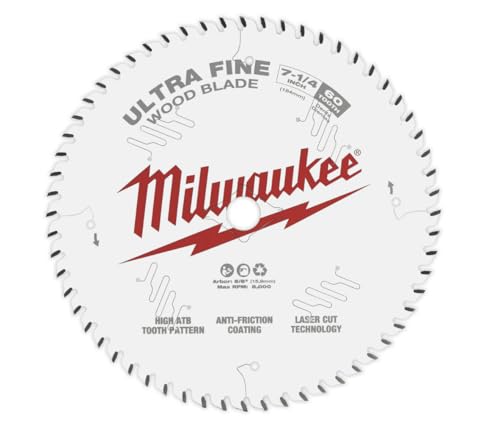 TOP CHOICEBest for fine finish cutsMilwaukee 48-41-0730 7-1/4" 60T Ultra Fine Finish Circular Saw BladeView on Amazon
- 4
 Best for thick framing stockMilwaukee 7-1/4" 24T Thick Kerf Framing Circular Saw BladeView on Amazon
- 5
 Best for metal cuttingMilwaukee Electric 8" 50-Tooth Metal Cutting Circular Saw BladeView on Amazon
- 6
 Best for smaller sawsRevvstark Circular Saw Blade 6-1/2" 24T&60T for Cutting Wood, 5/8" ArbView on Amazon
- 7
 Best for coated carbide durabilityDiablo Framing Saw Blade – 7-1/4" x 24-Tooth, 8000 Max RPM, 10-Pack |View on Amazon
Our Top Picks
Quick Comparison
| Product | Best for | Key feature |
|---|---|---|
| Milwaukee 48-40-0720 3 Pack | General framing | 24 teeth, 7-1/4″ |
| Framing Blade Contractor Pack | High-volume crews | 25-pack value |
| Milwaukee 48-41-0730 | Fine finish cuts | 60 teeth, ultra fine |
| Milwaukee Thick Kerf Framing | Heavy framing stock | Thick kerf body |
| Milwaukee 8″ Metal Cutting | Ferrous metal | 50 teeth, 8-inch |
| Revvstark 6-1/2″ Set | Smaller saws | 24T and 60T combo |
| Diablo D0724A 10-Pack | Long-life framing | Non-stick coated carbide |
Milwaukee 48-40-0720 7-1/4″ 24T Framing Blade 3 Pack
Milwaukee 48-40-0720 7-1/4" 24T Framing Circular Saw Blade 3 Pack
Best for: General framing and rough cuts in dimensional lumber.
A solid all-round choice for carpenters who want a dependable 24-tooth blade in a small pack.
Pros
- Fast rip and crosscut performance in softwood
- Three-pack covers a typical job
Cons
- Leaves a rougher edge than finish blades
Milwaukee 7-1/4″ 24T Framing Circular Saw Blade Contractor Pack
7-1/4" 24T Framing Circular Saw Blade Contractor Pack for Milwaukee(25 PK of 48-40-0720)
Best for: Crews that go through blades quickly on framing sites.
Aimed at job sites that need a large stock of replacement blades on hand.
Pros
- Large pack suits steady, high-volume use
- Same 24-tooth geometry as the core framing line
Cons
- More blades than a light-duty user needs
Milwaukee 48-41-0730 7-1/4″ 60T Ultra Fine Finish Circular Saw Blade
Milwaukee 48-41-0730 7-1/4 60T Ultra Fine Finish Circular Saw Blades
Best for: Clean crosscuts in trim, plywood and finished stock. Milwaukee Circular Saw for Metal: 6 Best Picks Compared (2026) goes further into this.
Best suited to cabinetmakers and finish carpenters who care more about edge quality than speed.
Pros
- 60 teeth produce a much smoother cut
- Good for visible edges and veneered sheet goods
Cons
- Slower feed rate and not ideal for thick framing
Milwaukee 7-1/4″ 24T Thick Kerf Framing Circular Saw Blade
Milwaukee Electric – 7-1/4 INCH 24T Thick KERF FRAMING Circular Saw BLA
Best for: Heavy framing stock and dense hardwood where blade stiffness matters.
A good fit for users who notice blade wander or deflection in thin-kerf blades.
Pros
- Thicker body resists deflection under load
- Stays stable in thick stock
Cons
- Removes more material, so it asks more of the motor
Milwaukee Electric 8″ 50-Tooth Metal Cutting Circular Saw Blade
Milwaukee Electric – 8 CIRCULAR SAW METAL CUTTING 50 TEETH BLADE
Best for: Cutting ferrous metal with a compatible saw and proper speed control.
Intended for users who need to cut metal occasionally and want one blade that handles it without swapping tools.
Pros
- Fine 50-tooth pitch suits thin metal stock
- Useful for occasional metal work
Cons
- Not designed for wood and needs slower speed than framing blades
Buying Guide
Tooth Count and Cut Quality
Tooth count is the biggest factor in how a blade performs. Lower tooth counts, such as 24 teeth, clear material quickly and suit rough framing work where speed matters more than a clean edge. Higher tooth counts, such as 60 teeth, produce smoother cuts with less tear-out, which makes them better for trim, cabinets and visible finish work.
Material and Application
Make sure the blade is designed for the material you cut most often. Wood-cutting blades use carbide teeth set for dimensional lumber and sheet goods, while metal-cutting blades have a different tooth geometry built for ferrous materials. Using a wood blade on metal, or the reverse, can dull the teeth quickly and create unsafe conditions.
Arbor Size and Blade Diameter
Confirm that the blade diameter matches your saw’s rated size and that the arbor hole fits your saw. Most Milwaukee circular saws use a 5/8-inch arbor, and the blade should be rated for the saw’s maximum RPM. A mismatch in diameter or arbor size can make a blade unsafe, so check your saw’s manual before buying.
Kerf Thickness
Kerf is the width of the slot a blade cuts. Thick-kerf blades are sturdier and handle heavy use well, but they require more power and remove more material. Thinner-kerf blades cut faster with less drag, which can help with battery-powered saws, though they may flex more under demanding loads.
Pack Size and Replacement Plans
If you go through blades quickly, a contractor pack or multi-blade set can make more sense than a single blade. Buying in bulk is practical for jobs that wear through teeth fast. For occasional home projects, a smaller pack keeps storage simple and avoids having blades sit unused.
FAQ
Can I use a framing blade for finish work?
A framing blade with 24 teeth cuts quickly but leaves a rougher edge than a finish blade. For visible trim, cabinet parts or plywood you want to look clean, a higher tooth count blade will give you a much smoother result. Framing blades are best kept for rough cuts where appearance does not matter.
Do I need a special blade for cutting metal?
Yes, metal requires a blade designed for it. Metal-cutting blades have tooth shapes and materials engineered to handle the heat and hardness of metal. Using a wood blade on metal can damage the blade and create a safety risk, so always match the blade to the material.
What arbor size do Milwaukee circular saws use?
Most Milwaukee circular saws use a 5/8-inch arbor. Before buying any blade, check the arbor size and maximum RPM listed in your saw’s manual. Blades labeled as compatible with Milwaukee tools generally fit, but it is still worth confirming the specs against your specific model.
How do I know when a blade needs replacing?
Signs that a blade is worn include burning or scorching on the cut, more force needed to push the saw through the material, rougher cut edges and visible chipping or missing carbide on the teeth. A dull blade can strain the saw motor and reduce safety, so replace it promptly rather than forcing cuts.
Are cheaper blades worth it for occasional use?
For light, occasional home projects, an affordable blade can handle the job well enough. However, blades with better carbide quality and tooth design often stay sharp longer and produce cleaner cuts. Consider how often you will use the blade and what the cut needs to look like before deciding.
Conclusion
For rough framing and fast cutting of dimensional lumber, a 24-tooth framing blade is the practical choice, especially in a contractor pack if you go through blades often. For trim, cabinets and any work where the edge will be visible, the 60-tooth finish blade is the better fit.
If your work includes metal, choose the dedicated metal-cutting blade rather than trying to adapt a wood blade. Match the blade to your material, tooth count and saw specifications, and most buyers will find a suitable option on this list.
Related reading
- Top 7 Milwaukee Electric Circular Saws Compared for Every Need
- Saw Blades: Tooth Count, Kerf and Grind for Circular, Miter and Table Saws
- Ryobi Circular Saw Blade Installation: A Step-by-Step Guide
- Milwaukee vs DeWalt Circular Saw (2026): Which Is Better for Your Jobs?
About Caleb Morgan
Caleb Morgan is part of our editorial team and reviews and edits our power tools guides, checking product details against manufacturer specifications and owner feedback.