Using power tools without the right safety gear can lead to serious injuries that are entirely preventable. This guide walks you through the essential protection for your eyes, ears, lungs, and hands, plus proper clothing, footwear, and the habit of keeping tool guards in place. You will learn which standards to look for, when to add extra protection like a face shield or respirator, and how to avoid common mistakes such as wearing gloves near spinning blades. For a general overview of workshop safety basics, see our complete workshop safety gear guide.
Why safety gear matters
Even a small wood chip or airborne particle can cause permanent damage to your eyes or lungs. High‑decibel noise from saws, planers, and sanders adds up over time, leading to hearing loss that often goes unnoticed until it is too late. Safety gear is not optional — it is the second line of defense after a tool’s guards and your own attention. The Occupational Safety and Health Administration (OSHA) provides clear guidelines for hand and power tool safety that apply to home workshops as much as professional sites. Always read and follow the manual that came with your tool, and check the OSHA hand and power tool safety page for additional best practices. Building a basic safety kit early on also makes sense; if you are assembling a starter collection, our beginner tool kit checklist includes the essential gear.
Eye and face protection
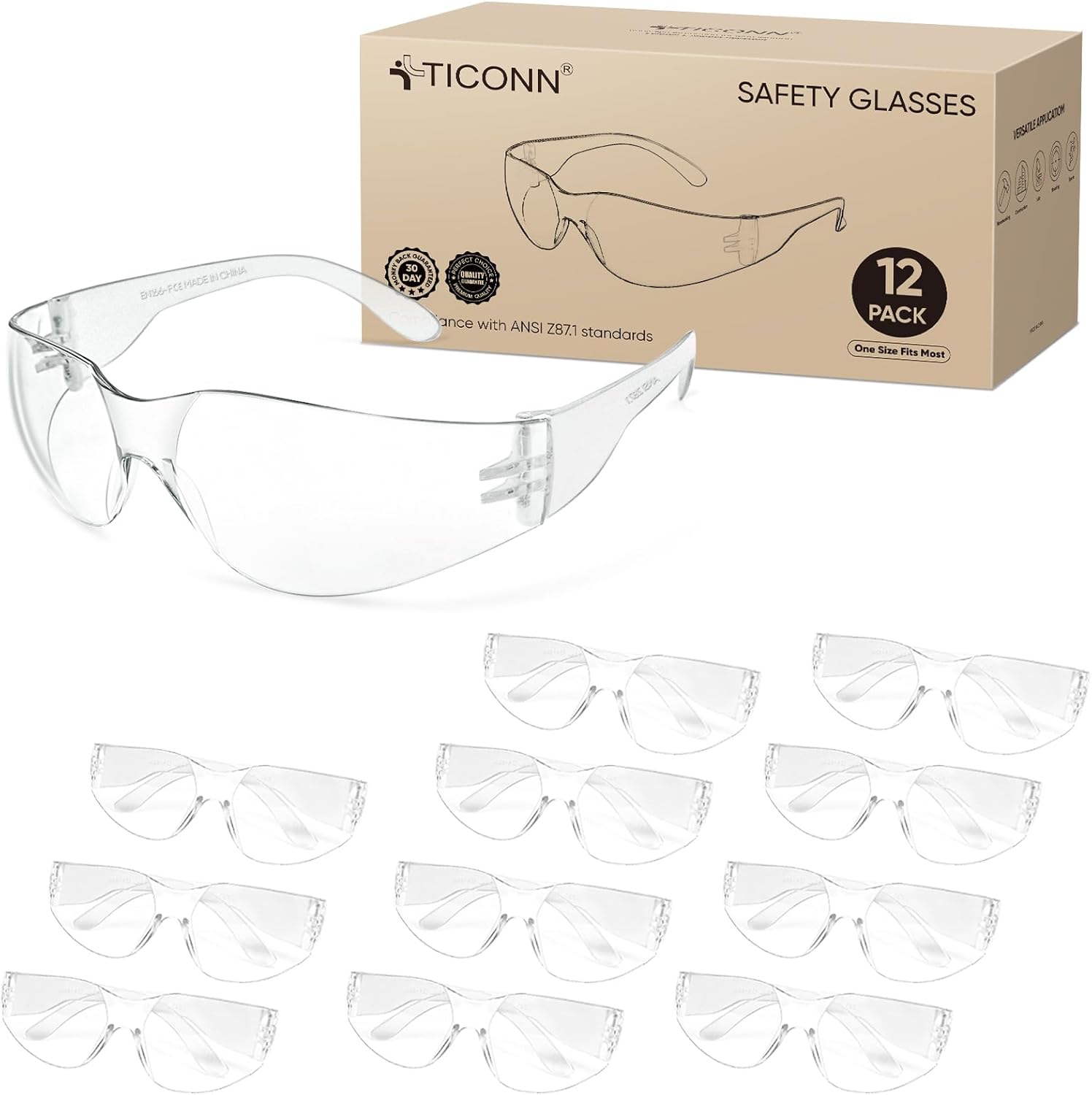
Your eyes are the most vulnerable part of your body in a workshop. Flying debris, dust, and splinters can strike at any moment. Standard safety glasses are rated under ANSI Z87.1, a voluntary consensus standard that tests impact resistance. Look for “Z87” or “Z87+” stamped on the frame or lens. A plus sign indicates higher impact protection, which is recommended for heavy‑duty tasks such as grinding or cutting.
Safety glasses alone are not enough when the hazard can come from above or the side — for example, when using a miter saw or grinder. A face shield adds protection for your entire face, but it is not a substitute for safety glasses. Always wear safety glasses underneath a face shield. A face shield protects against large chips and splashes, but it does not seal around your eyes like glasses do.
You can find safety glasses in various tints (clear, amber, dark) and styles. Clear lenses are fine for indoor work; amber enhances contrast in dim light; dark lenses are for outdoor use only. Polycarbonate lenses offer the best impact resistance and are lighter than glass. Replace any safety glasses that become scratched, pitted, or cracked, because damage weakens the lens.
When you are using a lathe, router, or angle grinder, consider a face shield plus safety glasses. If you wear prescription glasses, you have two options: buy over‑the‑glass safety goggles or have safety lenses made to your prescription. Goggles that wrap around provide better dust protection and fog resistance.
Hearing protection
Many power tools produce noise levels well above 85 decibels, the threshold where hearing damage can begin after prolonged exposure. According to the National Institute for Occupational Safety and Health (NIOSH), repeated exposure to noise above that level gradually destroys the tiny hair cells in your inner ear — damage that is irreversible. You can learn more at the NIOSH noise and hearing loss page.
Two main types of hearing protection are available: earplugs and earmuffs. Earplugs are inserted into the ear canal and come as foam, silicone, or pre‑molded. Earmuffs form a seal around the outer ear. Both carry a Noise Reduction Rating (NRR) expressed in decibels. The higher the NRR, the more noise is blocked. For typical workshop use, an NRR of 22 to 30 is effective. Below is a comparison to help you choose.
| Feature | Earplugs | Earmuffs |
|---|---|---|
| NRR (typical) | 28–33 (when inserted correctly) | 22–30 |
| Convenience | Must roll and insert; can be tricky | Easy to put on and remove |
| Comfort in heat | No sweat buildup | Can get hot and sweaty |
| Hygiene | Single-use or washable | Pads can be replaced |
| Compatibility with glasses | No interference | May break seal with glasses |
For most tasks, you can use either type. If you often work with a loud tool like a planer or a table saw for more than a few minutes, double up by wearing earplugs under earmuffs. This provides an extra margin of safety. Never listen to music through earbuds while using power tools; you need to hear the tool’s pitch and any unexpected sounds that indicate a problem.
Dust and respiratory protection
Wood dust, especially from sanding and sawing, contains fine particles that can irritate your lungs over time. Some wood species produce toxic or allergenic dust. Paint fumes, adhesives, and solvents also require respiratory protection. The level of hazard determines whether a simple dust mask is sufficient or whether you need a respirator.
A dust mask is a loose-fitting paper or cloth mask. It captures larger particles but does not seal around your face. It is okay for brief, low-dust tasks like sweeping up sawdust, but not for fine airborne dust or chemicals. A respirator, on the other hand, fits snugly against your face and uses a filter or cartridge. The most common type for woodworkers is an N95 respirator. “N95” means it filters at least 95% of airborne particles (including fine dust) and is not resistant to oil. If you work with paints, varnishes, or solvents, you need a respirator with organic vapor cartridges.
Choose a respirator that is NIOSH-approved. The approval number is printed on the packaging and on the respirator itself. For sanding and sawing, an N95 respirator is the minimum. For heavy sanding, especially with a random orbital sander, consider upgrading to a P100 filter for higher efficiency. Our random orbital sander guide covers dust collection options that reduce airborne particles, which is always the best first step.
You can buy N95 respirators in several styles. Look for a model with an exhalation valve to reduce heat buildup. Fit is critical: if you feel air leaking around the nose or chin, the respirator is not protecting you. Perform a user seal check every time you put one on. Replace the respirator when it becomes dirty, damaged, or hard to breathe through.
Gloves: when and when not
Gloves protect your hands from cuts, splinters, and chemicals, but they also create a serious hazard around rotating machinery. Never wear gloves when operating tools with spinning bits, blades, or spindles — this includes table saws, miter saws, jointers, planers, drill presses, and handheld routers. A glove can catch on the rotating part and pull your hand into the tool instantly. For those tools, keep your hands clear and use push sticks, push blocks, or featherboards instead.
When are gloves safe? When handling lumber, moving material, using hand tools such as chisels or hammers, sanding by hand, or applying finishes and adhesives. For general material handling, choose a leather or fabric glove that fits snugly without loose material at the cuff. For chemical resistance, use nitrile or latex gloves but discard them if they become torn. For splinters, a tight-fitting knit glove with a nitrile palm coating works well.
A good rule of thumb: if a bit, blade or spindle could catch the glove, take it off. Close-fitting gloves are sometimes used with tools such as sanders or jigsaws for grip, but check the manufacturer’s instructions for your specific tool.
Clothing, hair and footwear
Loose clothing, dangling jewelry, and unsecured hair can be pulled into machinery instantly. Follow these guidelines to stay safe:
- Shirts. Roll up long sleeves above the elbow or wear short sleeves. Avoid loose-fitting hoodie strings or drawstrings. Button cuffs so they do not catch.
- Pants. Wear full-length trousers, not shorts, to protect against chips and splinters. Cuffs can catch debris, so tuck them into socks or roll them up.
- Hair. Tie back long hair securely. Even short hair can be caught if you lean too close; a hair net or cap can help.
- Jewelry. Remove rings, watches, bracelets, and necklaces. A ring caught on a spinning router bit can cause a degloving injury.
- Footwear. Wear sturdy, closed-toe shoes with non-slip soles. Leather work boots are best. Sandals, flip-flops, and canvas sneakers offer no protection from falling tools or sharp objects. Steel-toe shoes are not necessary for most home workshops but provide extra safety if you move heavy lumber or equipment.
Also consider a shop apron to keep loose clothing contained and to protect your clothes from dust and splinters. Some aprons have a breakaway feature that releases if snagged.
Tool guards and habits
Every power tool comes with guards for a reason — they prevent accidental contact with blades, bits, and belts. Never remove or disable a guard, even if it seems to get in the way during setup. The brief inconvenience is far less serious than a lost finger. If a guard interferes with a specific cut, check the manual for approved procedures. For example, a table saw riving knife can be removed for non‑through cuts like dadoes, but must be reinstalled immediately afterward.
Develop these habits every time you use a power tool:
- Inspect the guard for proper operation before plugging in the tool. If it is stuck or missing, do not use the tool until the guard is repaired or replaced.
- Keep your hands at least six inches away from the cutting area. Use push sticks, push blocks, hold-downs, or featherboards to maintain distance.
- Unplug or remove the battery before changing blades, bits, or adjusting any part of the tool. This simple step prevents accidental startups.
- Do not reach into the tool while it is coasting to a stop. Wait for the blade or bit to come to a complete stop.
- Use a splitter or riving knife on a table saw to prevent kickback. Kickback can throw a workpiece at your face with tremendous force.
- Keep the workspace clean and well‑lit. Clutter hides hazards and increases trip risks.
Tool guards are part of your personal safety system, just like your glasses and respirator. For more guidance on safe workshop practices, review the OSHA guidelines.
FAQ
Can I wear safety glasses over my prescription glasses?
Yes, but choose goggles or wraparound safety glasses designed to fit over prescription frames. This type is labeled “OTG” (over the glasses). Alternatively, you can order prescription safety lenses that meet ANSI Z87.1.
How do I know if my earplugs are inserted correctly?
For foam earplugs, roll them into a thin cylinder, insert them into the ear canal, and hold them in place while they expand. You should notice a sudden drop in noise. If voices sound muffled but clear, the seal is good. If voices are still loud, reinsert. Practice initially to get the technique right.
What is the difference between a dust mask and a respirator?
A dust mask is loose‑fitting and only catches large particles. A respirator (like an N95) seals around your face and filters fine dust. For sawing, sanding, or any task that creates visible airborne dust, use a respirator. For chemical fumes, use a respirator with the appropriate cartridge.
Are cut‑resistant gloves safe to wear while using a table saw?
No. Even cut‑resistant gloves can be pulled into the blade by the rotating motion. The best protection for your hands around saws is to keep them completely out of the blade path using push sticks and other accessories.
Putting on your safety gear before starting any tool is a habit that takes only a few seconds but can save your eyesight, hearing, and fingers. Start with the basics — safety glasses, ear protection, and appropriate breathing protection — and add face shields, respirators, and the right clothing as your projects grow. For a full list of safety equipment to stock in your workshop, visit our workshop safety gear guide. Always read and follow the manual for each tool, and never bypass a guard or safety feature.