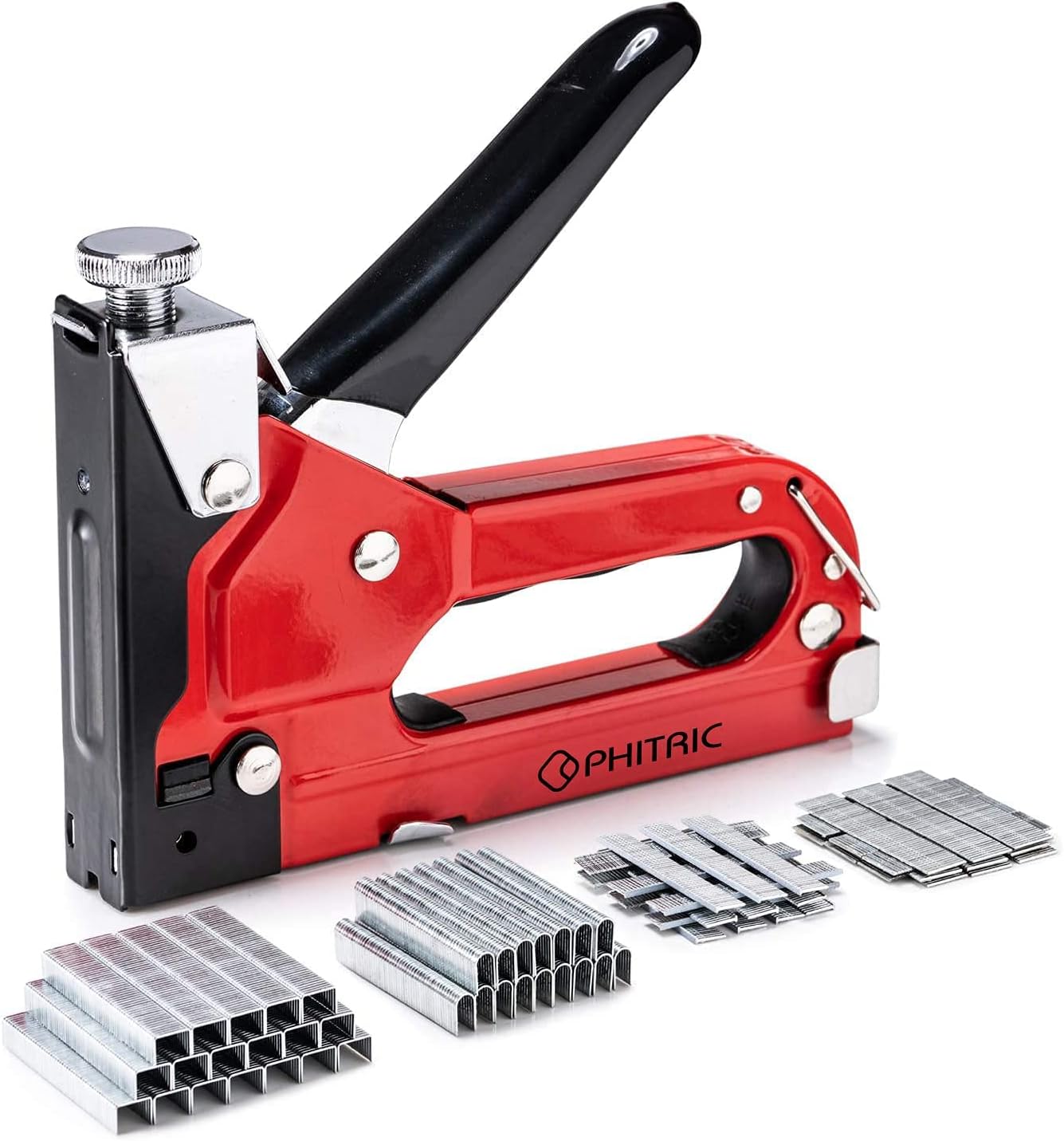
Staple guns drive staples into wood, fabric, cardboard and other materials for upholstery, trim, screening, house wrap and general repair work. The key to a clean, secure job is matching the tool, the staple size, and the material you are fastening. This guide covers the four main types of staple guns, how staples are sized and labeled, and how to use them safely at home.
What a staple gun is and who it suits
A staple gun is a handheld fastening tool that pushes a U-shaped staple out of a magazine and into a workpiece. It is a practical choice for attaching fabric, thin plywood, plastic sheeting, screens, insulation facing, paper and cardboard. Homeowners and DIYers commonly reach for a staple gun when they re-cover a chair, build a simple screen frame, staple house wrap, or hold a material in place while working on a larger project.
Staple guns are not designed to replace framing nailers or structural connections. If your project involves thick hardwood, framing lumber or load-bearing connections, you may need a nailer or a heavier fastening tool. You can compare your options in the nailers and fastening tools guide.
Main types and how they differ
The four main types are manual, electric, cordless and pneumatic. They all do the same basic job, but they differ in how they generate force, how much effort they require, and what kind of work they suit best.
Manual staple guns
Manual models use a spring or lever mechanism and fire with hand pressure. They are lightweight, affordable and simple to maintain, so they suit small projects like craft builds, screens and upholstery touch-ups. The trade-off is hand force; firing into hardwood or dense plywood is tiring, and you usually fire one staple at a time.
Electric staple guns
Electric staplers plug into an outlet and use a motor-driven driver. They deliver consistent force with less hand pressure, which helps when you are covering a chair, hanging house wrap or working through a long row of staples. You need an outlet nearby, and the cord can limit your reach.
Cordless staple guns
Cordless models run on rechargeable batteries and offer the same powered performance without a cord. They are useful around a house, on a porch or in a yard where an outlet is not close. Runtime varies by model and material, so compare the manufacturer’s spec sheet and keep spare batteries if you expect long sessions.
Pneumatic staple guns
Pneumatic staplers run on compressed air from an air compressor. They are fast, consistent and popular for repetitive work such as house wrap, insulation and fencing. The tool is a bit of a system because you need a compressor and hose, and air pressure needs vary, so check the manual before adjusting the regulator.
Features that actually matter
Price is not the only thing that separates a pleasant staple gun from a frustrating one. Look at the features that affect daily use:
- Staple compatibility: a gun that takes only one standard staple size is simpler to load and less likely to jam.
- Jam release: a quick-open magazine or a jam-clearing lever saves time when a staple bends or misfires.
- Adjustable depth control: lets you set how deeply the staple seats, which is useful in soft wood, thin trim, or when you need a flush finish.
- Trigger and handle comfort: a well-shaped grip reduces fatigue during long jobs and helps you keep the tool steady.
- Contact safety: many powered guns require the nose to touch the surface before firing, which reduces the chance of accidental discharge.
- Magazine capacity and loading: a clear, easy-to-load magazine matters when you are working on a big project and need to reload often.
How staples are sized and what the numbers mean
Staple measurements matter more than brand names. Three things describe a staple: crown width, leg length and wire gauge. The crown is the flat top portion that lies across the surface, the legs are the two points that penetrate the material, and the wire gauge describes how thick the staple wire is.
A wider crown spreads the holding force over a larger area, which helps with thin materials. Longer legs reach deeper into the workpiece for a stronger hold, but they can poke through the other side if you choose them too long. Thicker wire resists bending and grips harder, but it takes more force to drive into the wood.
| Staple type | Typical crown | Typical leg length | Common uses |
|---|---|---|---|
| Fine wire | Narrow, often about 3/8 inch | Short, often 1/4 to 9/16 inch | Upholstery, fabric, craft projects, light trim |
| Narrow crown | Narrow, often about 1/4 to 5/16 inch | Medium, varies by tool | Screens, plastic sheeting, thin wood, trim |
| Heavy-duty | Wider crown, often 1/2 inch or more | Longer legs, sometimes over 1 inch | House wrap, wire fencing, thicker wood, sheathing |
These ranges are general guidance, not universal rules. Manufacturers list the exact staple sizes for each tool in the manual and often on the bottom of the magazine, so compare the spec sheet before you buy.
Matching staples to the specific tool
Not every staple fits every gun. The crown width must match the driver and magazine, the wire gauge must be within the tool’s capacity, and the leg length must not exceed the clearance of the tool. A staple that looks similar can still be too wide, too thick, or too long, causing a jam or a poor shot.
Check the instruction manual that came with your stapler and the label on the magazine. Many tools print the acceptable staple type right on the tool. If you are buying staples from a rack or online, compare the type code and measurements with what the manual lists. For a fuller explanation of sizing conventions and maintenance supplies, see the nail and staple sizes guide.
Common jobs and practical staple choices
The right staple depends on what you are fastening and the material underneath it. These examples follow common practice, but always follow the instructions that come with the material and the tool.
Upholstery
Use fine wire staples with short legs so the points do not poke through the wood or fabric. Pull the fabric taut, fold it under, and staple along the underside of the frame.
Insulation facing
Choose staples that are long enough to grip the framing but short enough to avoid crushing the insulation. Follow the insulation manufacturer’s instructions for the recommended staple size and spacing.
House wrap
Wide-crown or capped staples hold house wrap without tearing the material. Follow the wrap manufacturer’s guidance on spacing and fasten around the marked seams.
Screens and screening
Use narrow crown staples that fit the screen frame and grip the mesh without poking through. Pull the screen taut and keep the staples straight along the frame.
Wire fencing
For light wire mesh, use heavy-duty outdoor staples, ideally galvanized or coated. For heavy woven wire, the fence manufacturer may call for hand-driven fence staples with a mallet instead of a powered gun.
Common buying mistakes
Most staple gun problems come down to a handful of avoidable mistakes. Knowing them helps you buy the right tool and the right staples the first time.
- Buying staples by appearance instead of by manual: two staples can look identical and still have different crown widths or wire thicknesses.
- Assuming one brand of staple works in every tool: compatibility depends on exact measurements, not on the name printed on the box.
- Choosing legs that are too short: the staple may not reach far enough to hold the material in thick wood or stacked layers.
- Choosing legs that are too long: staples can poke through the other side, damage furniture, or scratch a surface you are covering.
- Ignoring wire gauge: very thin wire buckles in hardwood, while very thick wire may not fit the tool or may overstress the motor.
- Buying more power than you need: a heavy pneumatic setup is overkill for small upholstery and craft jobs, while a manual tool can feel frustrating on a big sheathing project.
Why ordinary staples are wrong for electrical cables
Never use a general-purpose staple to secure electrical cables, extension cords or low-voltage wiring. An ordinary staple is not rated for wiring, has a narrow or sharp profile, and can crush the cable, damage the insulation, or create a fire hazard over time as the cable heats or expands.
For wiring, use insulated cable staples that are listed for the specific cable type, position them so they hold the cable without crushing it, and follow the spacing required by the local electrical code. Never staple over an existing cable to hide a repair. If you are not experienced with electrical work, check the applicable building code and hire a licensed electrician for any wiring work that requires one. Keep circuit breakers off and verify with a tester before working near existing wires.
Clearing jams safely
Every stapler can jam, usually from a wrong-size staple, a partial misfire, or debris in the magazine. Clearing a jam is simple as long as you follow the safety steps.
- Disconnect the power source. Unplug an electric stapler, remove the battery from a cordless model, and disconnect the air hose from a pneumatic gun.
- Point the tool away from your body and hands before you open it.
- Open the magazine or the jam-release door according to the manual.
- Use the tool’s jam-clearing feature if it has one; otherwise use pliers or a screwdriver to pull out the bent or stuck staple. Do not use your fingers.
- Inspect the channel and remove any debris or broken staple pieces.
- Close the magazine, reconnect power or air, and test-fire into a piece of scrap wood or cardboard.
Wear eye protection while clearing a jam, and never look down the open magazine while the tool is connected. For pneumatic guns, release any residual air pressure in the tool and hose before disassembling the magazine. If the tool jams again after you clear it, the staple size may be wrong or the driver may be worn.
Care, cleaning and upkeep
A staple gun lasts a long time with basic care. Keep the magazine and firing channel free of dust, sawdust and adhesive residue, and wipe the metal parts with a dry cloth. A soft brush helps remove debris from tight corners.
For pneumatic models, the manufacturer’s manual typically recommends lubricating the tool with pneumatic tool oil at the air inlet on a regular basis. Follow the instructions for how much oil to use and how often; do not use household oil or other substitutes. For battery models, keep the contacts clean and store batteries according to the manufacturer’s guidance.
Store the tool in a dry place so the driver and spring do not rust, and keep the manual in a drawer or toolbox for reference. If a powered tool misfires or the driver looks damaged, stop using it and have it serviced or replaced. Read and follow the tool manual for your specific model before every job.
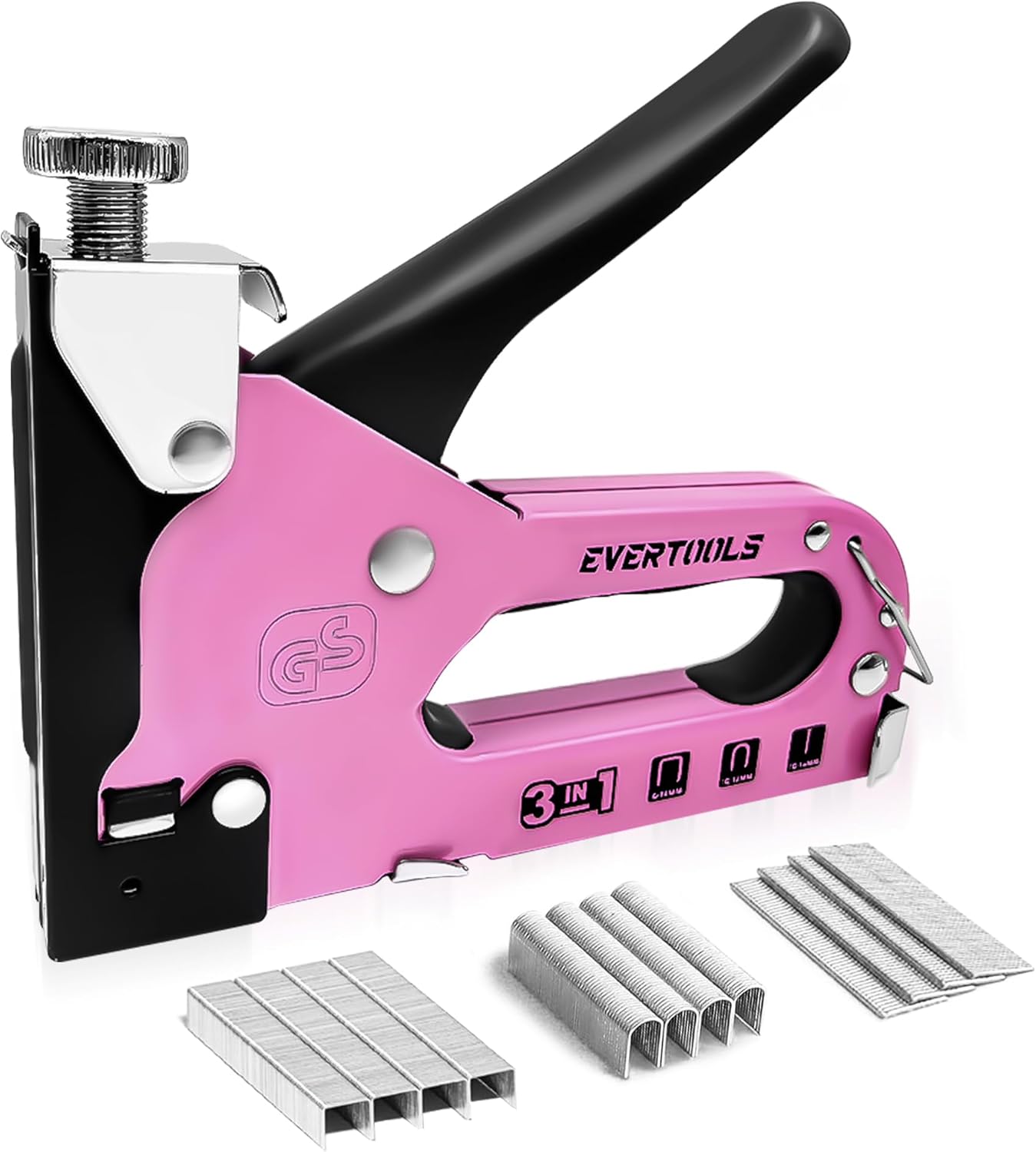
Top Picks to Compare
If you would rather start from a short list, these are popular options on Amazon for this search. Check each listing’s details, size and current price before you buy.



FAQ
Can I use any brand of staples in my staple gun?
You can often use staples from different manufacturers as long as the crown width, wire gauge and leg length match what the tool requires. Because compatibility is not guaranteed across brands, start with the staple type listed in the manual and test-fire a few into scrap material before starting the real project.
What does crown width mean and why does it matter?
Crown width is the flat top of the staple that rests on the material. It matters for two reasons: the tool’s magazine and driver are designed for one crown width, and the crown affects how much surface contact the staple has. A wider crown holds thin materials without tearing; a narrower crown is less visible, which can be useful on trim work.
Are electric staple guns strong enough for wood?
For softwood, plywood, trim and most household tasks, an electric stapler is usually sufficient. For very dense hardwood or thick engineered lumber, you may need a pneumatic or heavy-duty stapler that can drive longer legs and thicker wire with more force. Check the tool’s spec sheet for the recommended staple size and material range.
Why does my staple gun jam repeatedly?
Repeated jams usually come from the wrong staple size, bent or damaged staples, a worn driver, or debris in the magazine. Clear the jam, confirm that the staple matches the manual, and inspect the tool for damage. If the problem continues, have the stapler serviced or replace it.
Choosing the right staple gun and the right staples keeps your projects clean, safe and fast. Read the manual, match the staple to the tool, and follow the safety steps every time you work. For more detail on the different styles of fastening tools and picking a model, see the staple guns guide.